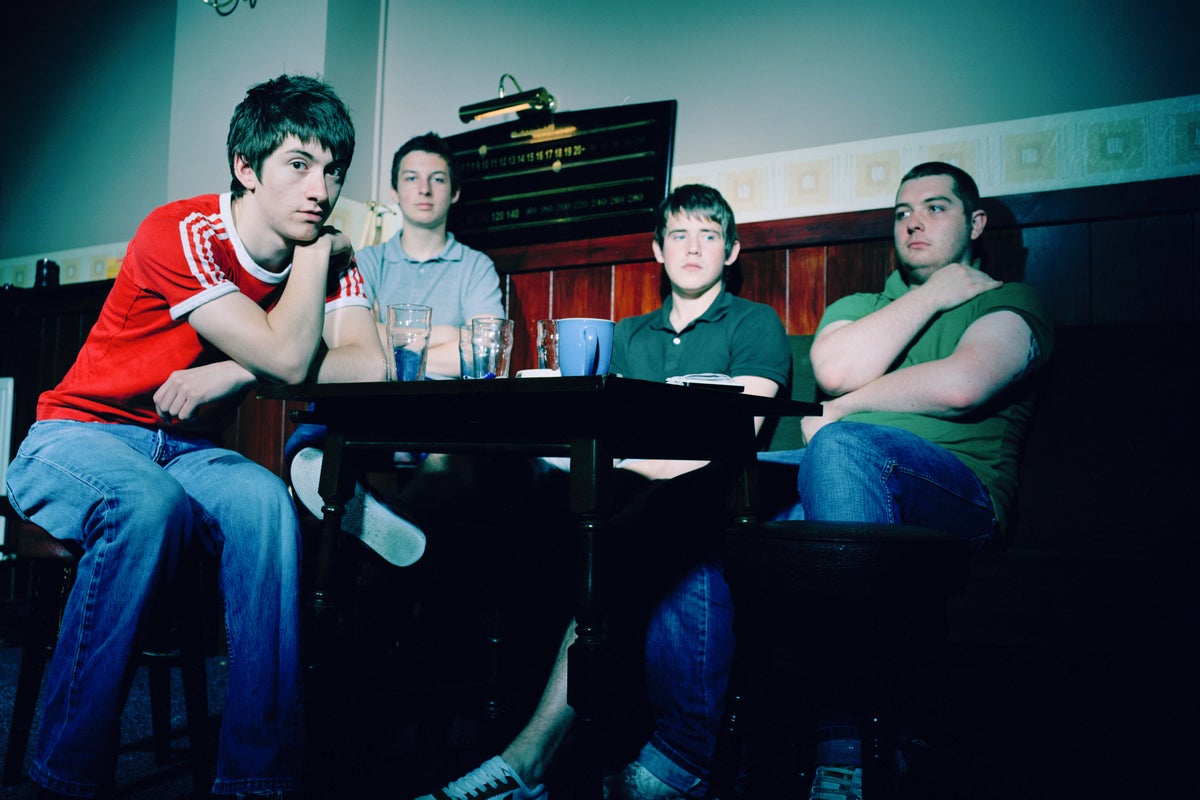
It was following a “vibey” recording session with a local community music project called Sudan Juki that the bolt of history struck Sheffield’s 2fly Studios. The young guitarist popped his head round the door of the tiny control room to thank in-house producer Alan Smyth for a good time. Smyth remembers the moment clearly: “He said, ‘We’ve got another band, me and Matt [Helders, bongos], called the Arctic Monkeys. We’re playing next weekend, do you want to come and see us?’”
The guitarist was a 17-year-old Alex Turner, the gig was Arctic Monkeys’ second ever time onstage, and the demos that Smyth agreed to record over the coming months would spark a genuine rock phenomenon.
Upon its release 20 years ago – spurred by a global buzz around their early demos and number ones with their first two singles, “I Bet You Look Good on the Dancefloor” and “When the Sun Goes Down” – Arctic Monkeys’ first album Whatever People Say I Am, That’s What I’m Not became the fastest-selling debut for a British band ever, on its way to three million sales. Today, it stands as the peak achievement of the effervescent UK rock scene of the 2000s, the launchpad for one of its most successful, exploratory and uncompromising careers and the bedrock of contemporary British guitar music, as inspiring to subsequent generations as The Strokes were to theirs. And it all began not in a major label boardroom or primetime TV studio, but in a tumbledown shack of a building in the courtyard of a former knife-making factory.
The band that Smyth saw play White Stripes, Beatles and Undertones covers, plus a few originals, to 15 people at the Sheffield Boardwalk that weekend, though, were a very formative sort of sensation. “I could tell that it was good already and I liked the way they looked,” he recalls. “They did about seven or eight songs and their own, quality-wise. sounded the same as the things that they were karaoke-ing, so to speak. They were just a bunch of kids playing guitars and writing songs.”
They were just a bunch of kids playing guitars and writing songs
Indeed, the Arctic Monkeys who turned up at 2fly the following week to begin a series of demo sessions over the next 18 months were the archetypal schoolmate band. Turner (the son of a music teacher) and Helders were close friends and neighbours in High Green, Sheffield, where guitarist Jamie Cook lived nearby. They met original bassist Andy Nicholson at secondary school and began playing instrumentals together in 2002, since Turner was initially reluctant to sing. Back then he was a retiring sort of presence, happy to hide behind his more effusive bandmates and secretive about his lyrical ambitions.
“I’ve been penning things since school,” he told NME during their first interview in 2005. “I’ve been writing for longer than my friends realise. You couldn’t be creative at school, could you? You’d have the p*** ripped out of you… But I’d always write things down in secret and one day I just thought, ‘F*** it!’”
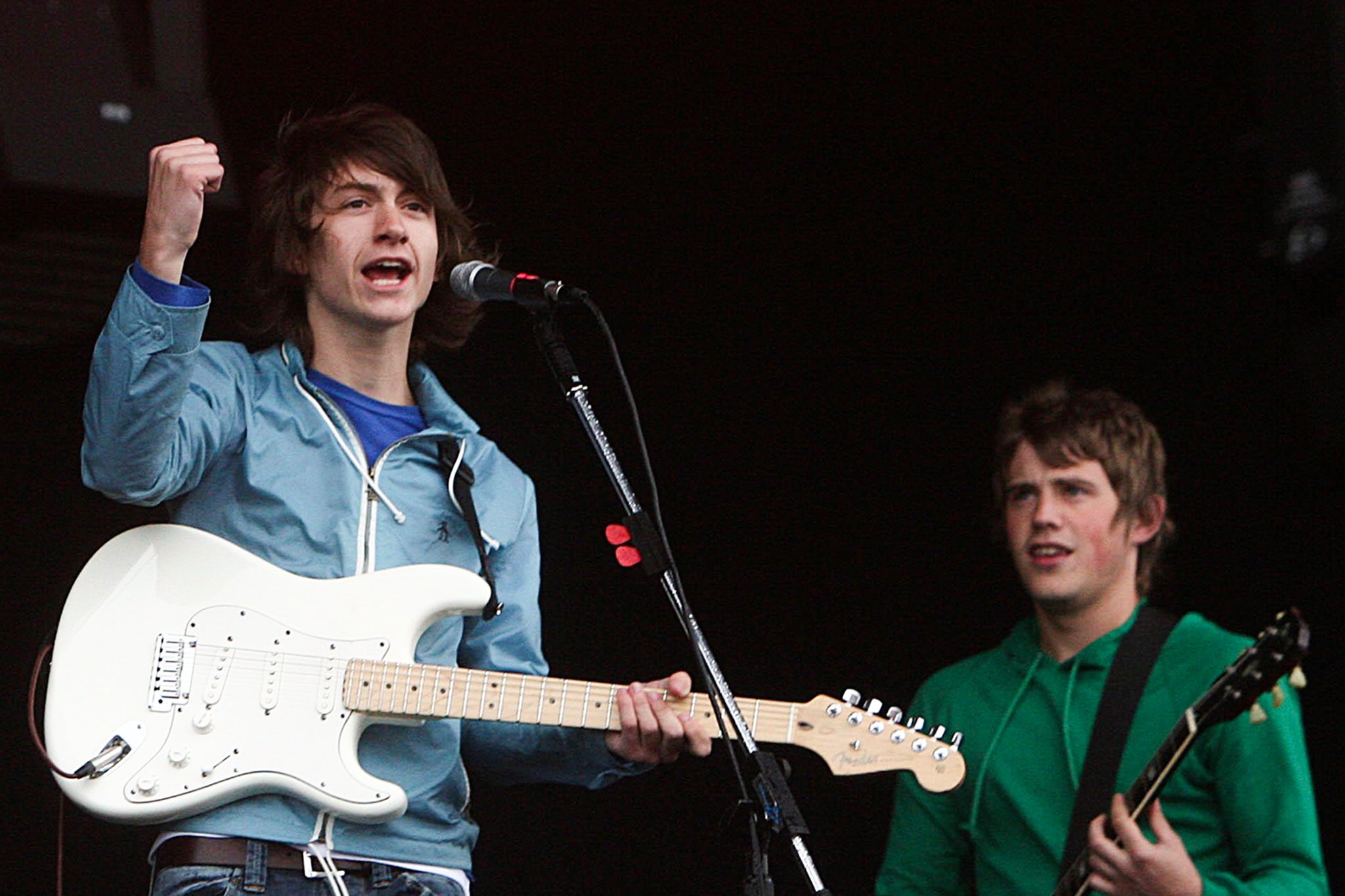
During early sessions for tracks such as “Curtains Closed” and “Knock A Door Run”, Smyth remembers Turner being withdrawn around strangers. “He was lovely to talk to,” he says, “but if anyone else came into the studio at that time, someone he didn’t know very well, Alex was kinda quiet.” Turner preferred to wait for others to speak. “He wasn’t going to say anything until he was ready to say it, but the lyrics themselves spoke volumes to me.” Smyth thought Turner’s earliest songs were more generic, but he quickly found his footing. “‘Mardy Bum’, when you start listening to the lyrics and thinking about it, that’s powerful stuff from a 17-year-old.”
Coming to guitar music from an early love of hip-hop, Turner’s lyrics were naturally infused with a sardonic social commentary. And as the band grew older, plunged deeper into Sheffield’s clubland and rock scene and brushing up against the seedier elements of society loitering near their Neepsend rehearsal room, his words gained a grainy sense of experience, midway between the thrill of young adulthood and the wary cynicism of inner-city street-life. Lashed to Helders’ machine gun drums and the band’s incendiary guitar work – where New York punk and new wave collided at crunching speed with the scuzz-rock energies of the era – Turner’s conversational Sheffield drawl made for a gritty and scintillating typhoon of hookline and insight.
By the third demo session, the classics began to appear. “I Bet You Look Good on the Dancefloor” and “Dancing Shoes”, inspired by the club scene meat markets. “Fake Tales of San Francisco”, drawn from Turner’s shifts behind the bar at the Boardwalk, listening to local rock poseurs spouting bandwagon fantasies of becoming the next Strokes. “When the Sun Goes Down”, originally titled “Scummy”, spot-lit the sex workers and ne’er-do-wells of Neepsend, who would check out their gear for its black market value or make indecent street proposals to Nicholson. “The engineer [would say] ‘Oh, when you’re in here at night, make sure you lock the door, because it changed when the sun goes down,’” Turner told NME. “You’d be packing your guitars away and somebody’d walk past and be like, ‘How much is one of them worth?’”
It was in performing his compositions, Smyth recalls, that Turner came out of his shell. “When it came to the lyrics and Alex singing, we only ever did two or three takes,” he says. “He’d say ‘shall I do it again?’ and I’d say ‘no, it sounds fantastic’.” One demo section was so perfect that they ended up on the debut album. “‘When the Sun Goes Down’, on the album, that’s the original take for the first bit,” confirms Smyth. “The opening guitar and him singing, it’s never changed.”
Such was the dynamism and excitement of the 18 demo tracks the band recorded – “the energy we got out of them right at the beginning was absolutely beautiful,” says Smyth – that 2fly Studios would never be able to contain it. Within weeks of the first session Geoff Baradale, Smyth’s old bandmate in Nineties rockers Seafruit, called up to ask if Smyth had heard any good new bands he could check out in his new role as A&R for Wildlife Entertainment. “I said ‘you know what, yes I have’,” Smyth told him; he’d soon become the Monkeys’ manager (“Lucky Geoff!”).
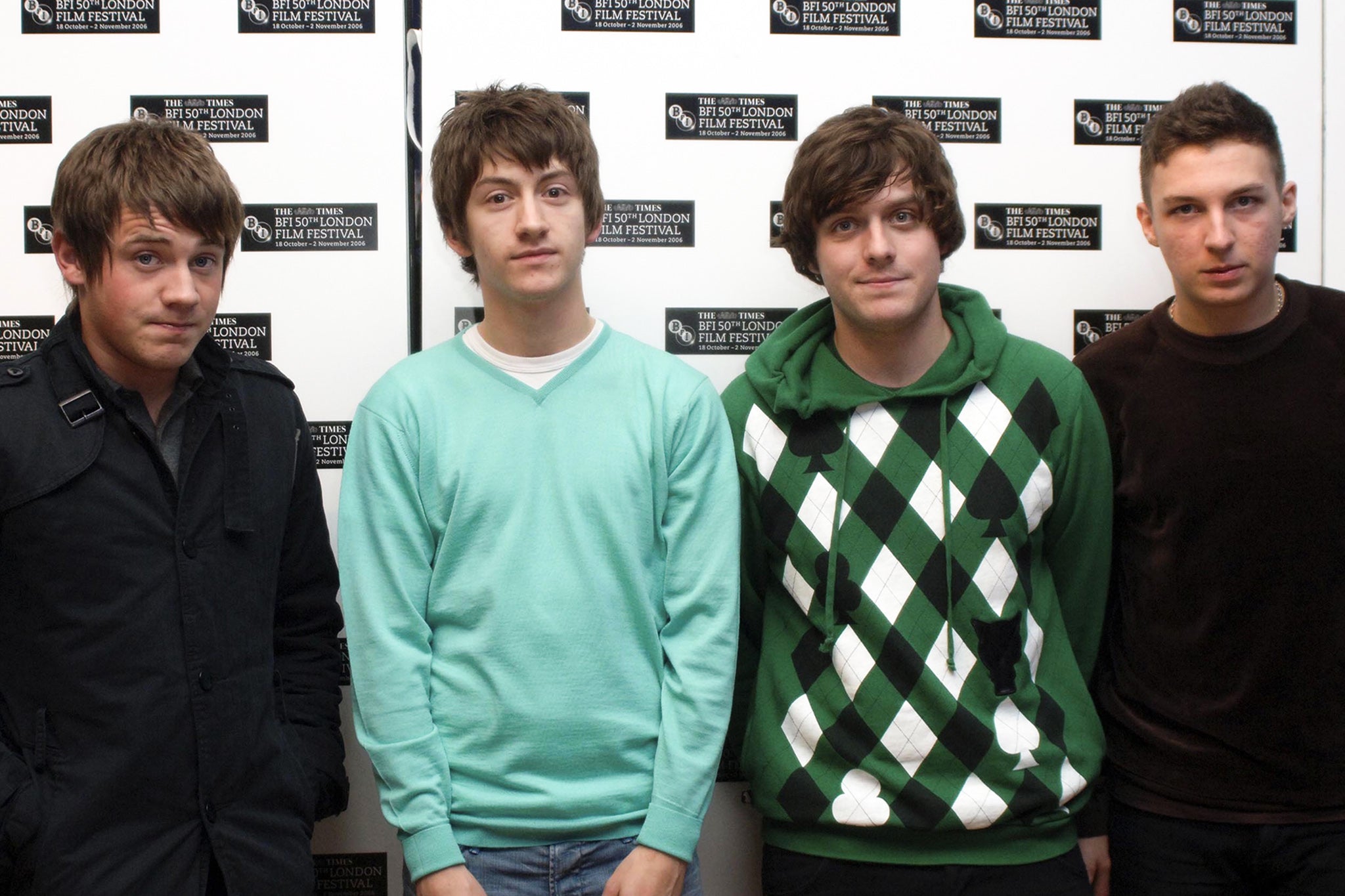
And as the band began spreading batches of demos around town, now collectively dubbed Beneath the Boardwalk, they found themselves swept along on the technological zeitgeist. “We didn’t have a label then, so we used to make little CDs up and hand them around,” Turner said to NME. “And it’s through that that people took it and put it on the sites and stuff.” With file-sharing in its excitable infancy, fans posted the tracks to their MySpace pages and shared them between each other across cities and continents. While the band themselves were barely active on MySpace or forum culture, they became the first breakout success of the internet’s free-music revolution.
In the subsequent label scrum, Domino emerged triumphant and Kasabian and Editors producer Jim Abbiss signed up to record the debut album (although Smyth returned briefly to record “Mardy Bum” in Munich). “The demos had this amazing rawness and energy but sounded a bit small and thin,” Abbiss tells The Independent. “The newer recordings sounded much better but the band’s takes were a little lacking. [Domino] asked if I could marry the two by getting them back in the studio.” Abbiss was particularly taken by the Gang of Four spikiness of the Monkeys’ music. “I think guitar bands had grown a bit stale as The Strokes effect had started to die away and people were looking for something new,” he says.
Recording at the quaint, rural Victorian Chapel Studios in Lincolnshire, Abbiss first found the band a shy and insular unit, until they relaxed into the ultimately fun, rewarding sessions. “They were incredibly young and they’d arrived at a studio with people they didn’t know,” he says. Recording “…Dancefloor” early on, already designated by Domino as the first single, was a high-pressure introduction. “It was early days in our session and I hadn’t earned the band’s trust yet…I knew I wouldn’t get many takes from them. But luckily they literally hammered it out in three takes. Alex pretty much snarled the vocal take. I think their attitude added to its impact.”
The album doesn’t glamorise life, quite the opposite, and it has self-deprecating British humour running through it
Whatever People Say I Am… was arranged like an evening out in Sheffield’s clubs, beginning with the anticipatory pre-drinks (“The View from the Afternoon”) through the dancefloor courtships to the post-club rumbles (“Riot Van”) and degradations of dawn (“From the Ritz to the Rubble”). “There’s five songs on the album, spread throughout like five little segments, from the evening to the morning sort of thing,” Turner explained. It told a familiar story of beer goggles and pool cues, lust and fear, laughter and regret, and told it with such poetic flair and sonic vitality that the whole world wanted to play wingman. “The album doesn’t glamorise life, quite the opposite, and it has self-deprecating British humour running through it,” Abbiss says.
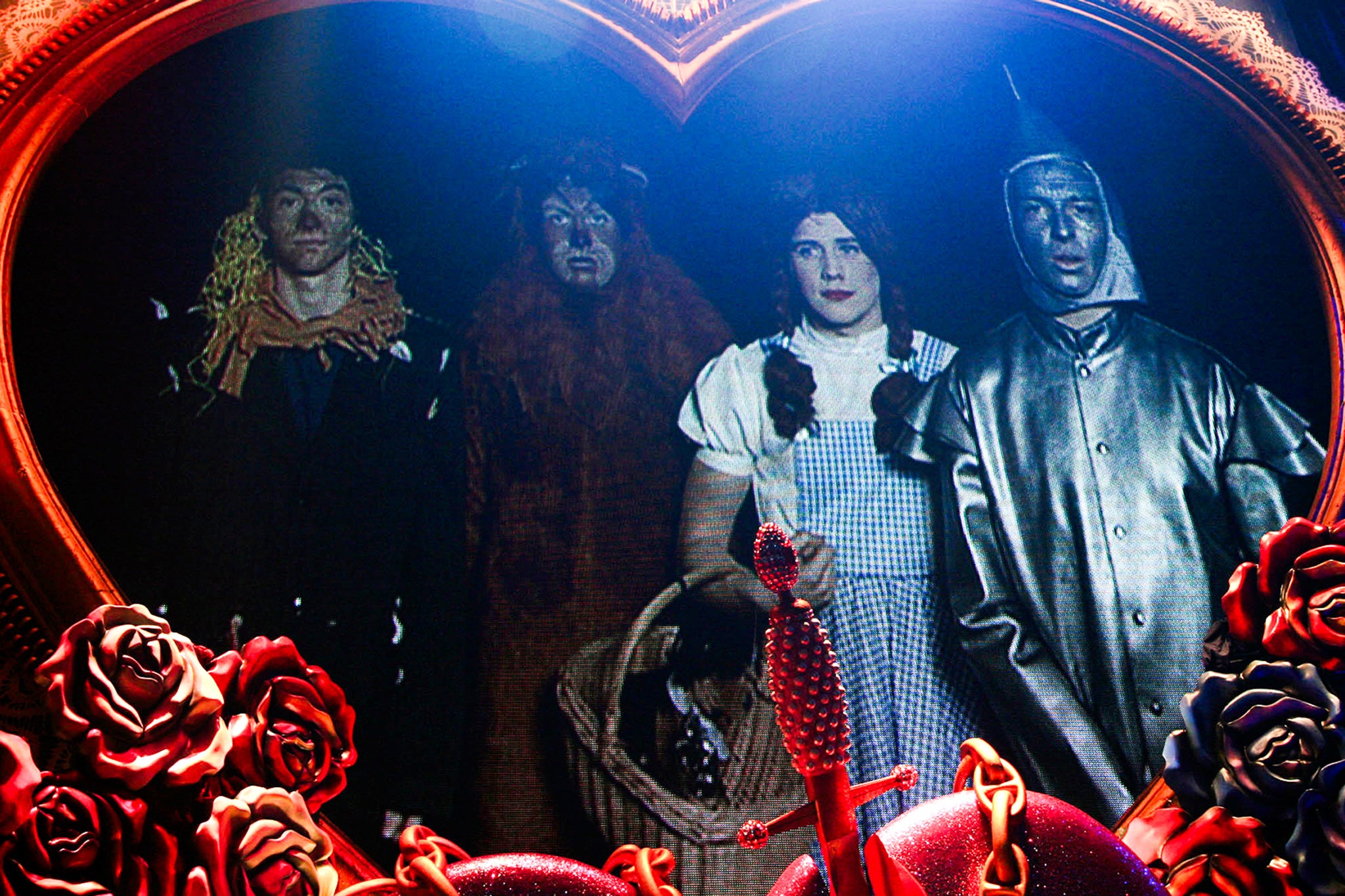
As their first two singles topped the charts, the Monkeys celebrated on the town with friends: “We went for a KFC and we were saying ‘I wonder if anybody’s been to KFC this soon after finding out they’re number one?’” Turner told me in 2006. But they treated their success with what would become a characteristic nonchalance. As their phenomenon made national news and international charts – it was the fastest-selling independent album in US history – they shunned mainstream media, refused to perform “…Dancefloor” on Top of the Pops and turned up to collect their 2007 Brit Awards for the record dressed as Wizard of Oz characters.
“If we were a bit older it probably would have been more of a headf***,” Turner said. “We were just young…so I didn’t take it that seriously or think it was the end of the world if it all ended. If we were a few years older, maybe [had] a few more responsibilities and that, we would have thought ‘we’ve got to make this right’.” The following year, he’d admit to me a certain degree of rabbit-in-headlights behind his attitude. “Seventeen, I suppose. It didn’t seem frightening at the time but looking back at it maybe it was a bit unnerving.”
The immediate impact of the record over the remains of the decade was akin to a cultural H-bomb. As with Oasis and Britpop, the tsunami of major label soundalike bands that flooded the charts and music press in the wake of Whatever People Say I Am… ultimately acted as a cultural fire blanket suffocating Britain’s Noughties guitar explosion. Once the tabloids and accountants get hold of a movement, history tells us, it’s already over.
But even as the Monkeys themselves moved onto richer textures on subsequent albums – desert rock, funk, hip-hop, space lounge – and even greater success with 2013’s four-million selling AM, the adrenaline of their debut album seeped into the groundwater of British rock. From Jamie T through The Maccabees, The Vaccines and Circa Waves, to the post-punk revival and the swathes of young bands building fanbases across the north and hitting the top of the album charts, UK guitar music is still coasting on the momentum of Whatever People Say I Am…, essentially our Is This It?. “That’s how I felt,” says Smyth. “The very first gig I saw of them I could tell that their energy was the same [as The Strokes]. And it’s still going strong.”