Deep in the Lombardy foothills, Lake Como extends in a long, forked reach pushing towards the Alps, its edges lined with cypress, azalea, and villas draped in wisteria. Light slides across the surface in metallic planes, which drew Giovanni Segantini north. Teak boats cut clean lines across the lake, lacquered and exact. Facades hold their symmetry a little too perfectly, as though under observation.
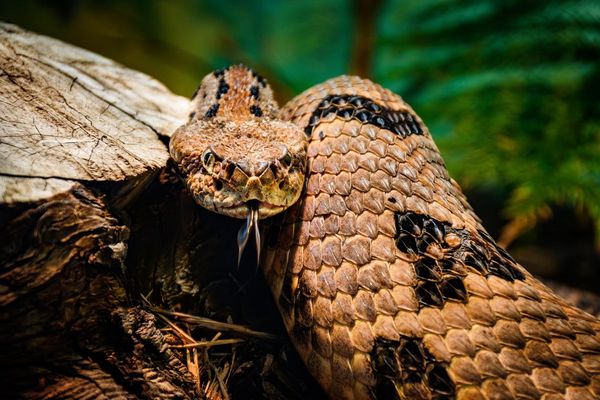
Then something shifts. The lake does not freeze, even in hard winter. Beneath, it falls away beyond four hundred metres, cold, active. Pliny the Elder wrote of movements he could not account for. Later, they were given form in the Lariosauro, turning somewhere below the surface, never seen, nor entirely dismissed.
In 1816, a storm drove a small group indoors at Villa Diodati, where Mary Shelley began Frankenstein - a being assembled rather than born, not dangerous at first, made so by rejection. At Dongo, Benito Mussolini was stopped while attempting to leave - not imagined, nor assembled, but shaped in full view, and judged by what followed. Three forms, one lake: imagined below, made above, lived at its edge.
Elsewhere, silk still passes through Como’s workshops to houses such as Hermès. Old paths once used to cross into Switzerland now carry walkers. Then, the newer layer arrives.
A new EDITION
The Lake Como EDITION sits at Cadenabbia, facing Bellagio, where Donatella Versace keeps a home. Opened in 1830 as the Grand Hotel Britannia Excelsior, it was conceived for travellers in motion - arriving by carriage, then steamer, pausing before continuing north. ‘It doesn’t matter where you look,’ says the receptionist.
The facade remains. Inside, Neri&Hu with Milan-based De.Tales have reset the building with marble, terrazzo, walnut, and glass. Arches connect. The lobby bar, with its height, Steinway piano, and billiard table, centres on a counter where Andrea, the mixologist, builds a fine Alaska around local Rivo gin. Later, a perfect Gibson, requested on our first day, arrived unannounced on the second once the onions had landed.
Rooms follow suit, with Calacatta Gold bathrooms. Below, a longevity spa turns to cold exposure, infrared, and oxygen. At the waterline, a floating pool rests directly on the lake. Villa Carlotta, with its Technicolor azaleas and sensuous marble figures, unfolds within walking distance.
Born in Argentina to an Italian mother, Mauro Colagreco runs the kitchens - his first project in Italy. At Cetino, under executive chef, Francisco Gerardo Roscianot, carrot, orange, and Laphroaig forms an unlikely but resolved aperitif, followed by opulent leeks bagna cauda and spaghetti with caviar. Cutlery rests on pebbles from the shore. The maitre d’s tattoo reads ‘I am greater than my downs.’ Tingling pink peppercorn macarons close.

On the terrace at Renzo, breakfast centres on free range eggs gathered eight kilometres away. At dinner, a plush local Verdese Bianco from Cantine Angelinetta is recommended by a head of beverage who knows me from London. Baking across the building is precise, from in-room brownies to Colagreco’s bread.
To move beyond the shoreline, Lo Schioppo II offers a different reading. Built locally in 1967, abandoned for nearly two decades, and restored in 2021, it runs on its original engines, reaching 45 knots. Passing Villa Pirelli, I learn the lake is not just observed, but worked - its water feeding rice production inland.
There is symmetry. The hotel has been stripped back and reset; the boat recovered and rebuilt. Both feel less like restorations than refinements - returned with a clearer purpose.
Palazzo San Gottardo, Como
Further south, Palazzo San Gottardo is a haven between Piazza Cavour and Piazza Volta, in a quarter once known for pewterers, goldsmiths, and apothecaries. This is Como as a city of light, claimed by its most famous son, Alessandro Volta, whose work made electricity portable.

Opened as a hotel in 1926, then left dormant decades later, it has returned ahead of its centenary, reworked by Ultrapresent Studio. With gargoyles, the façade holds. Inside, a café where breakfast is Japanese-accented and pastries are plentiful, and, above, Radiante under Sicilian chef, Danilo Vella, looking across terracotta roofs towards the lake.
Dinner begins with the toll of nearby bells. Small things first - pizzette, unexpectedly rich, filled with celery; a wild garlic Parker House roll with bright olive oil. Then the line sharpens: bonito; ditalini with raw mantis shrimp; tortelli of beef with peas, Primo Sale, and mint; milk-fed lamb, deeply yielding, lifted by a sea urchin sauce pushed into full ripeness, with samphire alongside. A caper leaf sorbet resets the table before a layered pistachio dessert.
The cooking leans towards vegetables without declaring it, though a full vegetable tasting menu exists. Wines are handled by head sommelier, Davide Di Palma, including a Moscato di Trani from his home. Above, under stars, is Lumi bar.
Step outside and Como justifies itself on foot. The cathedral draws you in with its layered façade - Gothic base, Renaissance additions - a record of accumulation. Nearby, CASABIANCA reframes the town: a 1930s villa reopened to reveal a four-decade collection centred on Arte Povera and post-war work, arranged as a house still lived in.

The Brunate Funicular, running since 1894, climbs sharply above the town. Behind the main routes, streets narrow quickly - stone courtyards, quiet passages, and workshops where silk still moves through careful hands.
Evening gathers at the Teatro Sociale (1813), where When Dylan Discovered Electricity plays at close range. It is my daughter, Lyra’s first encounter with Bob Dylan. Though it runs late, she holds her focus. Walking back, the streets - once marshland - carry a low, steady current.
Boats still leave for Torno, Blevio, Moltrasio, though the pull back to Como remains.
Four Seasons Milano
Then Milan, days ahead of Salone del Mobile, the April migration which pulls the design world in, spilling into Fuorisalone, where Brera, Tortona and beyond fill with installations, private views, and rooms open briefly to the public. Among them, Alessi presents La Bella Tavola at Palazzo Stampa di Soncino, an oversized reading of the rituals of the table. At its centre: bread.
At Four Seasons Hotel Milano - the brand which taught hotels how to work properly, and still does - the property occupies a former 15th-century convent off Via Gesù, within the Quadrilatero, a few turns from Via Montenapoleone, where decisions about dress travel far beyond Italy. Reworked under Patricia Urquiola, it keeps the original plan: cloisters intact, cells reassigned, a green, rose-scented courtyard drawing everything to its centre, fragments of fresco surfacing along the walls.

Below ground, the spa offers a counterpoint to the lake - enclosed, deliberate, built around heat, water, and time. After Como, it recalibrates, trading horizon for enclosure.
Milan is where Campari Seltz was poured from 1860, and where Angelo Motta let panettone rise three times in the 1930s. At Stilla, the Negroni Maturo carries that lineage forward - a darker, more settled expression.
At Zelo, beneath lights shaped like oversized macarons, Fabrizio Borraccino moves from Italian caviar with eggs at breakfast to oysters later - Greay Friandise, Signature Sanchez - before sea urchin is worked through lobster pasta, rich but held in line. Sommelier Alessandra Breda pours blind, explaining only after; in our case, a composed Curtefranca from Ca’ del Bosco, drawn from Franciacorta by Lake Iseo - a second lake, further east, away from Como.

Step beyond the cloisters and Milan resolves in layers. Behind Casa degli Atellani, the vineyard granted to Leonardo da Vinci by Ludovico Sforza was lost, then replanted from traced rootstock. At the Duomo di Milano, a red light marks a nail said to be from the Crucifixion, reached once a year by a sixteenth-century lift. At Palazzo Morando, L’Uomo Gentile: Style and Jewelry for Men reads the dandy across eras; it was here I learned of Italy’s former bachelor tax, levied in 1927 as part of a drive to raise birth rates.
And for a last supper, Seta. Antonio Guida is present, the room set around a kitchen-facing courtyard framed with woven leather screens, a birthday in front, a table deep into bottles behind, service moving with pace and accuracy.

To the sound of Dave Brubeck, a gazpacho sharpened with mustard and anchovy opens, met by a pale Franciacorta rosé, then Krug 173 with blue lobster, barely cooked, in bagna cauda and bisque. A scallop wrapped in chard sits beside a turnip which first presents itself as the scallop - a neat visual feint. Then the signature risotto: Carnaroli with butter, Parmesan and Castelmagno, finished with raspberry powder, not for sweetness but for cut. Sommelier Inma Mauro guides throughout. The cooking stays light, never thinning on flavour.
After a few days, what first reads as studied dress settles into the norm. It is only at the airport, among slack silhouettes and undone edges, that the difference becomes clear. The lake extends attention outward across distance. Milan draws it back, and tightens the frame. When you leave, do you revert, or does something stay set?
radissonhotels.com/en-us/hotels/radisson-collection-lake-como