On a Saturday morning at Stanford University, a discussion of deterrence theory was followed by a debate over one of the technology industry’s defining questions: will the future of artificial intelligence be led by open or closed frontier models?
Get breaking news anytime, anywhere. Download the TOI app now!
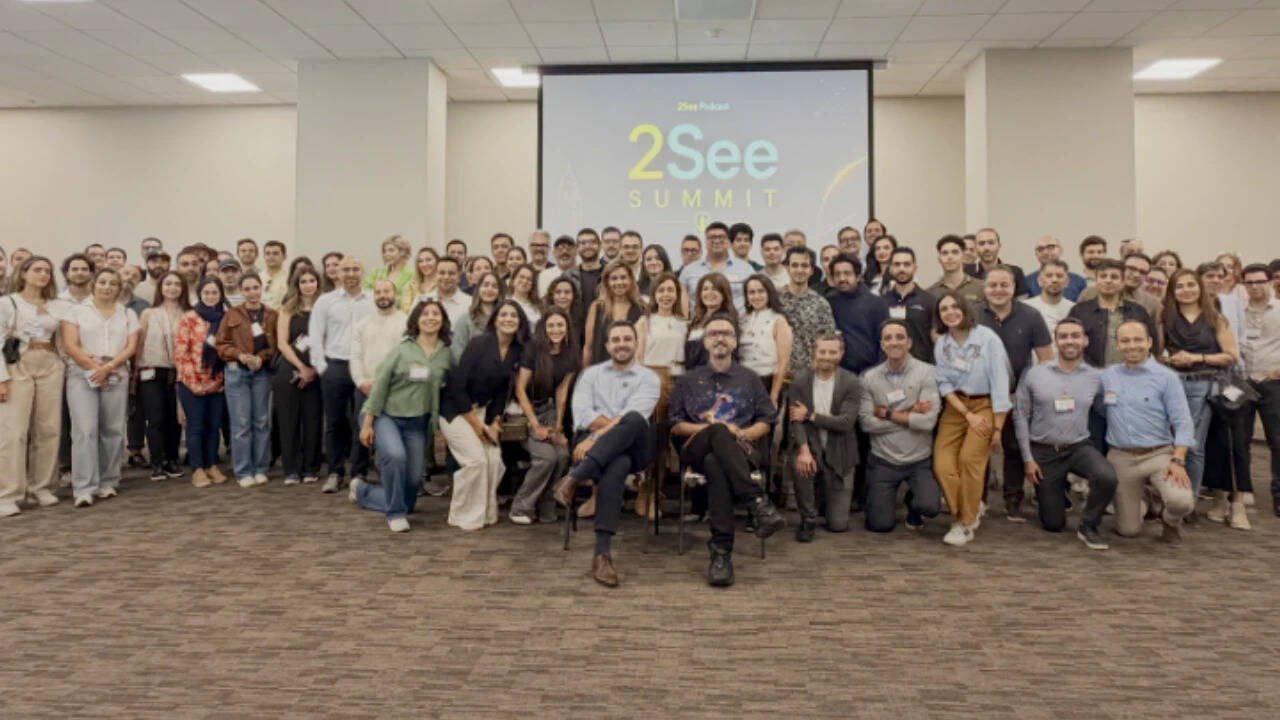
The conversations were part of the inaugural 2See Summit , an in-person gathering organized by the hosts of the Persian-language 2See Podcast , Saleh Dadkhahipour and Mehrzad Sajjadi. Held on July 18, the event brought nearly 120 members of the Iranian technology, business, scientific and academic communities together on the Stanford campus.
Rather than structuring the event around a conventional panel, Dadkhahipour and Sajjadi opened it with a short live episode of their podcast.
Dadkhahipour drew on material from a Harvard course on nuclear deterrence taught by Matthew Bunn. He discussed how classical deterrence theory explains credibility, escalation and the risks of miscalculation, and how concepts developed during the Cold War can still illuminate contemporary conflicts.
“Deterrence is often reduced to the idea of possessing more weapons or making stronger threats,” Dadkhahipour said. “But much of the literature is really about psychology, signaling and whether the other side believes both your capability and your willingness to act.”
Sajjadi then turned the conversation toward artificial intelligence, drawing on discussions from a strategy course at Stanford Graduate School of Business taught by economist Susan Athey. His segment examined the competition among frontier AI companies, the capital and computing resources required to train advanced models, and the strategic trade-offs between open-weight and closed systems.
“The question is not simply whether open or closed models are better,” Sajjadi said. “It is also about where value will be created, who can afford the next generation of compute, and how companies build durable advantages as models become more capable.”
The contrast between the two subjects—national-security strategy and AI strategy—reflected the broader purpose of 2See Podcast. The hosts created the show to bring ideas encountered at Stanford and Harvard to Persian-speaking audiences in an accessible format.
Sajjadi studies business and computer science at Stanford and biotechnology at Harvard. Dadkhahipour earned his MBA from Stanford Graduate School of Business and is pursuing a Master in Public Administration at Harvard Kennedy School. Across more than 30 episodes, they have discussed technology, economics, public policy, science, leadership, culture and global affairs.
The name 2See , pronounced similarly to “Tusi” in Persian, references the Iranian polymath Nasir al-Din Tusi. The word also means “grey” in Persian while also conveying the English phrase “to see.” That triple meaning reflects the podcast’s interest in examining a wide array of subjects from multiple perspectives and its attention to the nuanced grey area.
After the live episode, the summit shifted into an extended networking session. Attendees included professionals working across artificial intelligence laboratories, biotechnology companies, universities, startups and investment firms. Among the organizations represented by individual guests were OpenAI, Google DeepMind, NVIDIA, Meta, Apple, Microsoft, Genentech, Abbot, Eli Lily, Tesla, Stanford and UC Berkeley. The institutions themselves were not organizers or official participants.
The gathering also created encounters across fields that often operate separately. AI researchers met biotechnology professionals, students spoke with experienced founders and executives, and investors connected with entrepreneurs building new companies.
For Dadkhahipour and Sajjadi, the response suggested that members of the Iranian diaspora are looking for gatherings that combine community with substantive discussion.
"As a young Persian engineer, I felt proud and inspired to connect with so many accomplished Iranians, and the thoughtful conversations and welcoming hosts made it feel like a real community." – Nariman Tavakolli said, who currently works as a software engineer at Meta.
“We wanted to create something where professional connection begins with ideas,” Dadkhahipour said. “The goal was not only for people to exchange contact information, but to leave with a new question, a new relationship or a new way of looking at the world.”
The day concluded with a World Cup watch party, shifting the atmosphere from academic discussion to a more informal community gathering.
Following the summit, the two hosts plan to continue producing 2See Podcast and exploring future in-person events. Their aim is to create a bridge between ideas developed in universities and the wider Persian-speaking public—while building spaces in which the global Iranian community can learn and connect.
2See Podcast is available on YouTube, Spotify, Apple Podcasts and Castbox.