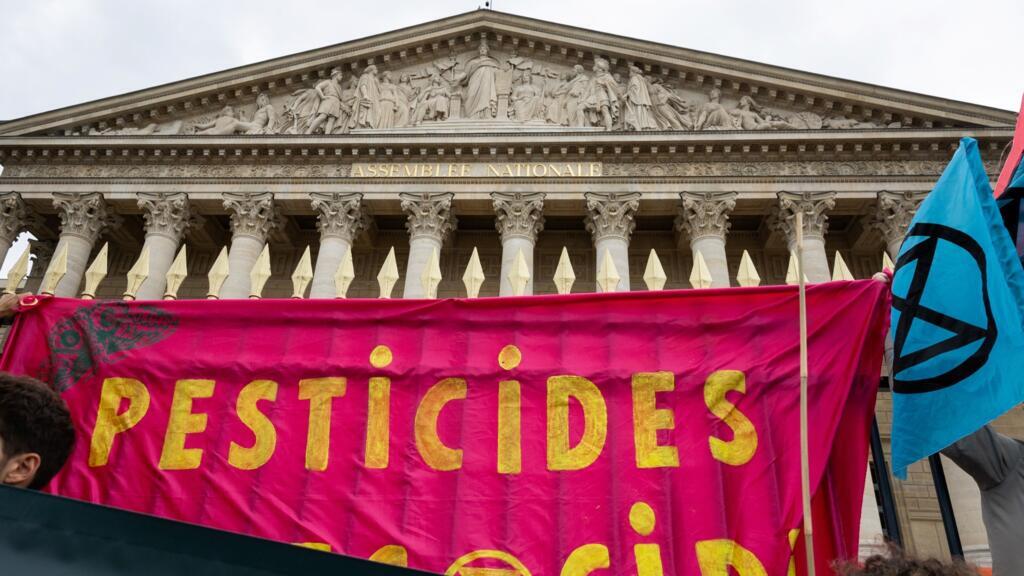
France officially banned food imports containing traces of five pesticides that are already banned in the EU. The government announced the ban on Wednesday. The move aims to reduce farmers' opposition to the Mercosur trade deal with four South American countries.
The decree, published on Wednesday, prohibits food imports containing traces of the fungicides mancozeb, thiophanate-methyl, carbendazim and benomyl, as well as the herbicide glufosinate.
These substances, used on crops ranging from avocados and mangos to wheat, soybeans and potatoes, are already banned for use within the EU because of health and environmental risks, but were previously tolerated at low residue levels on imported produce.
According to the agriculture ministry, France now considers those maximum residue levels too high and wants to ensure that foods entering its market respect the same safety standards as those applied to domestic production.
Enhanced border checks are expected to follow, with officials stressing that the measure is framed as a public-health and “fair competition” move rather than a targeted strike against any single region.
EU-Mercosur agreement
The announcement comes as EU agriculture ministers meet in Brussels for an extraordinary session where the long-delayed EU–Mercosur agreement is again on the agenda.
More than 25 years in the making, the accord would progressively create what officials describe as the world’s largest free-trade area between the 27-nation EU and Brazil, Argentina, Paraguay and Uruguay.
Mercosur meets in Brazil, EU eyes January 12 trade deal
French farming unions, already mobilised over concerns about income, environmental standards and foreign competition, are urging Paris to block the deal, fearing a surge of cheaper imports produced under looser rules.
Prime Minister Sébastien Lecornu has framed the pesticide move as a “first step” to protect consumers and farmers against what Paris sees as unfair competition from producers not bound by EU-level restrictions.
EU Commission to scrutinise French move
Under EU law, unilateral restrictions on imports must be cleared by the European Commission, which will examine the French measure on 20 January.
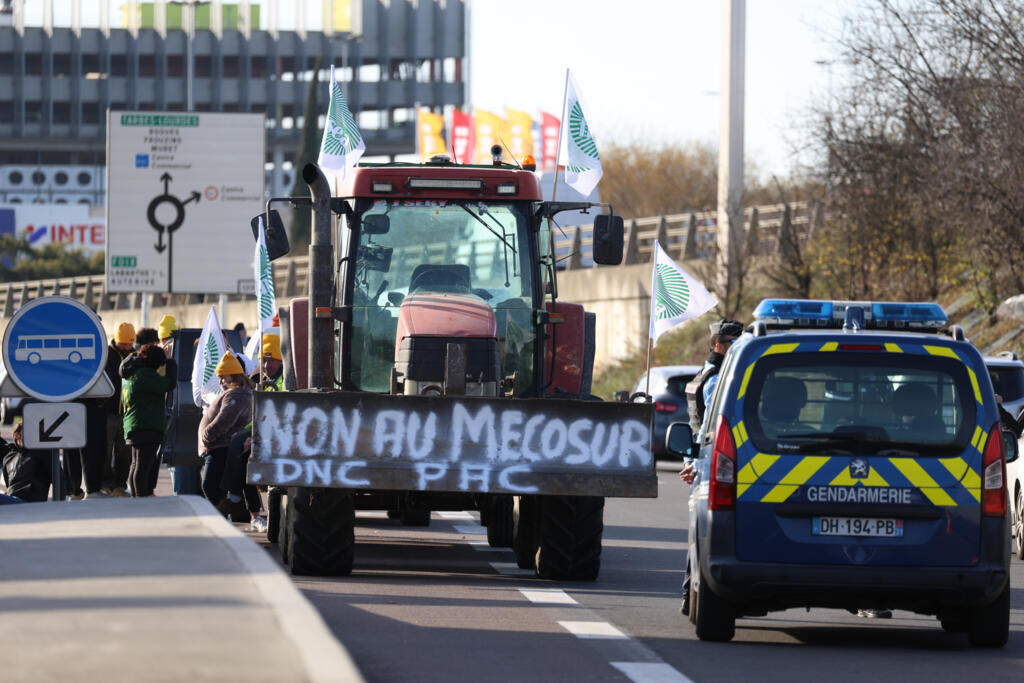
Commission officials have signalled they are open to revisiting rules on trace residues of banned pesticides, although they note that such substances currently affect only a small fraction of the bloc’s overall food imports.
If Brussels approves the French decree, it could set a precedent for other EU states seeking to align trade policy with stricter environmental and health standards at home.
But it may also complicate already fraught talks with Mercosur partners, who have warned against what they view as disguised protectionism dressed up as green or health-based conditionality.
(with newswires)