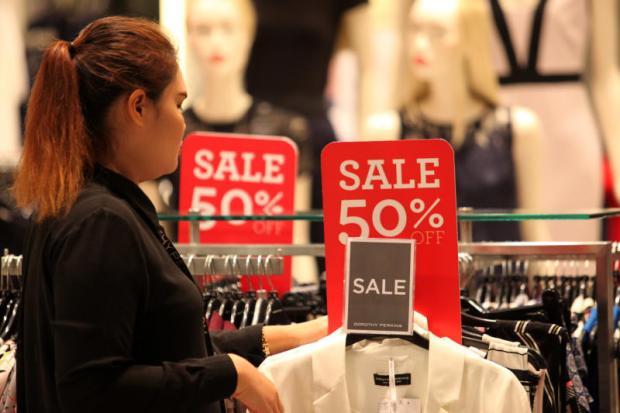
Thailand's economic growth is expected to bounce back to at least 4% in the October-to-December quarter after hitting a speed bump in the previous quarter as domestic consumption accelerates, says the Fiscal Policy Office (FPO).
If the forecast holds true, full-year GDP growth will come in at 4.3%, said Pisit Puapan, executive director of the Macroeconomic Policy Bureau.
The FPO had forecast GDP growth of 4.5% in 2018.
Thailand delivered the best annual growth in five years of 4.9% in the first quarter of 2018, but the pace cooled to 4.6% in the second quarter and 3.3% in the third.
For the first nine months, the economy grew by 4.3% year-on-year.
The weaker economic performance in the third quarter prompted the government's think tank, the National Economic and Social Development Board, to downgrade its 2018 GDP growth forecast to 4.2% from the previous 4.2-4.7% range.
The Bank of Thailand is another policymaker that cut its 2018 economic outlook, to 4.2% growth from 4.4% predicted in September.
Amid dim economic prospects weighed by the US-China trade spate and the decline in Chinese arrivals after the Phuket boat disaster in July, the government has launched a raft of economic stimulus measures, including the government's 86.9-billion-baht splurge on low-income earners, the elderly and retirees, and a maximum 15,000-baht income tax deduction for purchases of tyres, books and One Tambon One Product items to boost growth in the fourth quarter.
Mr Pisit said domestic factors such as private consumption and investment were the main drivers of the economy in November.
Inflation-adjusted value-added tax (VAT), a proxy of private consumption, surged 9.6% year-on-year last month, the highest growth in four years, while commercial pickup sales, an indicator of private investment, shot up 16.9%, he said.
Meanwhile, Pongnakorn Pochakorn, director of the macroeconomic analysis section at the FPO, said seasonal factors and the government's cash handouts to recipients of the government's welfare and subsidies for the poor and elderly bolstered domestic consumption late in the year.
Domestic consumption accounts for 51% of the country's GDP, private investment 18%, state investment 6%, public spending 15% and net exports 11%.
Although November exports shrank 0.95% year-on-year, merchandise shipments to major markets such as the US and Japan, as well as to Cambodia, Laos, Myanmar and Vietnam, still expanded at a high level.