
A FORMER British diplomat has drawn up a strategy for Scottish independence which could trigger a war with the rest of the UK.
Craig Murray, once Britain's ambassador to Uzbekistan and now a campaigner for independence, has put forward a three-point plan he said could see Scotland leave the Union.
But the plan is unlikely to gain the backing of mainstream independence parties given that it proposes outright confrontation with the British state, including a call for Scots to participate in a “peaceful and friendly civilian blockade” of military bases in Scotland.
Firstly, Murray argues that the First Minister should write to the Prime Minister asking for a referendum but that if one is not confirmed, the Scottish Parliament will declare the country’s independence on a set date. Murray proposes September 14, 2029.

Andy Burnham would also be told that there would be a “confirmatory plebiscite” the following February.
At the same time, Murray envisages John Swinney writing to the foreign ministers of all United Nations states informing them of this plan, the history of Scotland as an independent country, and the repeated refusal of the UK Government to an independence referendum. The letter would also explain how Scotland planned to “establish clear control” over its territory and “play its full part as a member of the international community” after Holyrood declared independence.
Murray added: “This should be followed up with extensive in-person lobbying of member states, at the UN and other international organisations, including but not limited to the Council of Europe, OSCE, BRICS, African Union and other regional organisations.”
If spending public money on this were to be blocked, Murray said, this lobbying operation could be carried on with the backing if not the financial support of the Scottish Government.
He said: “Liberation and Salvo have already proved that other nations are prepared to engage with Scottish independence representatives right up to senior ambassadorial level.
“I have done it myself. Representatives from or credentialed by Scotland’s governing parties will be still better received.”
Those groups, as has been previously reported in The National, have already lobbied the UN on the case for Scottish independence, including in a trip to Geneva last year.
Murray said: “As part of a team from Liberation Scotland and Salvo, I have been lobbying diplomatic missions of the UN to this end for 18 months now. We have found enormous support for Scottish independence and literally no outright hostility.
“What we have repeatedly met [with] is astonishment that the Scottish Government and/or the governing party the SNP has made no effort to carry the case to the international community.”
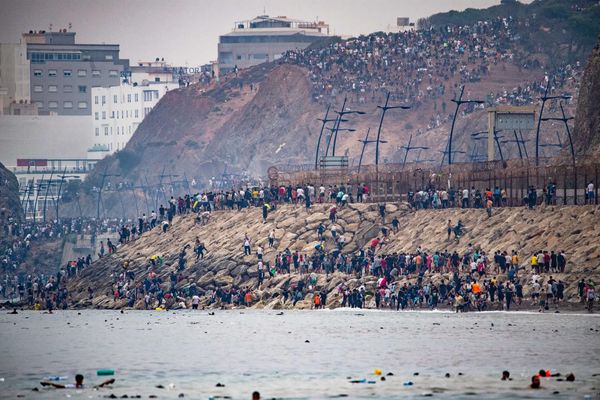
Murray goes on to outline the steps Scotland would need to take to ensure its unilateral independence declaration would not meet the same fate as Catalonia did when it saw a ferocious crackdown from the Spanish authorities after holding a wildcat independence referendum.

He said: “The single most important criterion that states take into account in deciding whether to accord recognition of a state, is whether its government actually has de facto control of its territory.
“This is where Catalonia failed. Its referendum was disrupted by brutality to which it had no answer. Scots must be prepared to stand for Scotland.”
This would include forcing civil servants – whether employed by the Scottish or UK Governments – to take “oaths of allegiance to the government and community of Scotland” while renouncing any other oaths they previously made as soon as independence was declared.
Those who failed to comply would be immediately suspended from their duties and given a “two-week grace period to reconsider” or else face dismissal.
Murray stressed this would be particularly important for the police, judiciary, and the security services.
The nascent Scottish state would also need to establish “central bank accounts”, said Murray. He added: “The Inland Revenue is already established separately in Scotland and should be instructed to pay all revenue, both personal and corporate, into Scotland’s accounts.
“Other revenue-collecting departments, principally customs and excise, should act similarly with all necessary arrangements planned in advance.”
Key departments such as defence, foreign and home ministries would need to be established in “embryo” form, complete with “prepared key personnel”.
Any cross-Border authorities – which include things like the Civil Aviation Authority, the Driver and Vehicle Licensing Agency, and the Office for Nuclear Regulation, among a host of others – would be told they “no longer have authority in Scotland”.
These bodies would also be told to “identify their Scottish operations for full autonomy in cooperation with the Scottish Government”.
The most potentially explosive parts of Murray’s strategy follow. The public would be urged to “take physical control of all UK Government buildings in Scotland”, as well as courts and BBC offices.

He said: “This needs to be a popular movement to regain independence.
“The people should be mobilised to take physical control of all UK Government buildings in Scotland, and of key institutions like the law courts and the BBC, to guard against any attempt at physical retention by Unionist holdouts.”
Then Scottish military units would be required to take the new oath of allegiance to the Scottish state and the public would again be “mobilised” to block barracks or stations containing troops “not loyal to Scotland”.
Murray said: “In the immediate term to avoid any repeat of tanks in George Square, military establishments containing troops not loyal to Scotland should be subject to peaceful and friendly civilian blockade, not allowing armed forces to leave base with their weapons.
“It is worth a side note that independence support is strongest in what we historians call the fencible section of the population: where indeed it is overwhelming.
“The Scottish Government has three years to prepare this activity: again legal challenges may mean some work has to be done outside government structures. There is no shortage of ability or willingness in the SNP itself and the independence movement, if the Scottish Government will seek to collaborate rather than to exclude.”
All this, Murray argued, would put Burnham under a great deal of pressure to “avert a constitutional crisis and a situation with potential to turn violent”.

He added: “Burnham would be in a politically very weak position – all he is being asked for to avert this serious crisis is a democratic vote.
“There is no compelling reason to refuse the democratic vote other than naked retention of power over Scotland, but nothing is being done to highlight the issue and make it important.”
Murray said that his plan would require Scots to be willing to put their lives on the line for independence, concluding: “Ultimately Scotland will take its independence – preferably with London’s cooperation, but if necessary without it.
“Let me put it this way. If, in the end game, you are not prepared to stand unarmed in front of a British army tank to achieve independence, you are not actually a supporter of Scottish independence at all.”
A Scottish Government spokesperson said: "The Scottish Government is committed to ensuring the people of Scotland have the democratic right to choose their constitutional future, and following the election in May the Scottish Parliament agreed the UK Government should devolve the power to hold a referendum on Scottish independence.”
The SNP were approached for comment.