- Doug Field, Ford's chief EV, digital, and design officer is leaving the company.
- Field joined Ford from Apple in 2021. Before that, he helped lead Tesla's Model 3 program.
- The departure comes amid a broader rethink of Ford's EV strategy.
Doug Field, the executive in charge of Ford's electric vehicle and software efforts, is leaving the company in May. Ford announced the leadership change as part of a wider restructuring on Wednesday.
“I'm honored to have been a part of leading Ford during an unprecedented period of technology and market disruption,” Field said in a statement. “I believe Ford now has a winning technology strategy and plan."
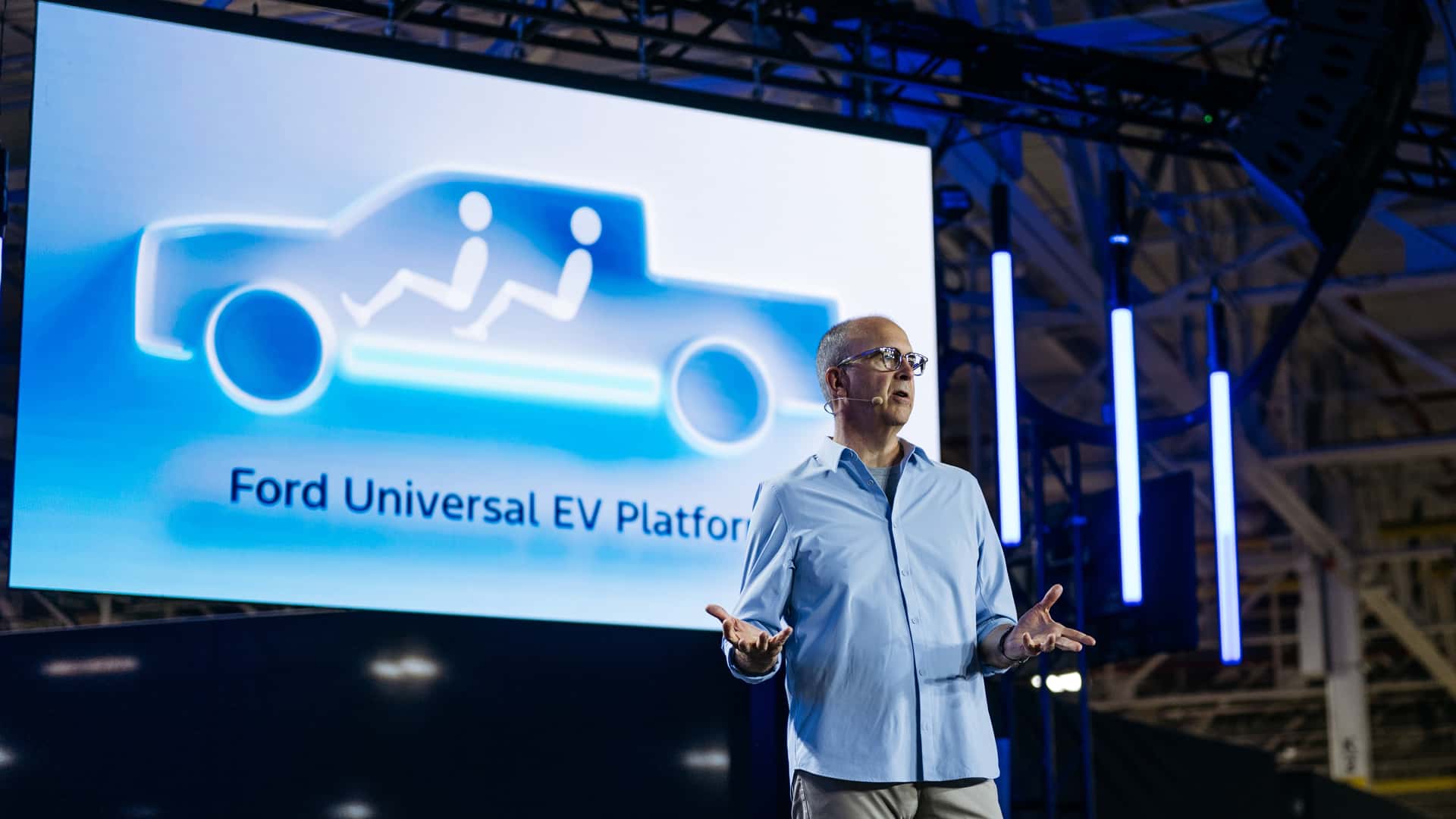
Field joined the Detroit automaker from Apple five years ago. Before that, he helped bring the Model 3 to market at Tesla. He was an executive at Segway from 1999 to 2008. At Ford, Field spearheaded the creation the so-called "skunkworks" team, which is developing the automaker's next-generation EV platform in California. The idea is to create new EVs from a blank slate, more in the image of Tesla or a Chinese startup than a traditional auto company.

For example, the Universal Electric Vehicle (UEV) platform uses large "unicastings" in the place of dozens parts that traditionally would be welded together, a process Tesla pioneered. Alan Clarke, another ex-Tesla engineer who leads the group, will step up to vice president of Advanced Development Projects.
The company's EV, digital, and design teams, which Field led, will be integrated into a new division, which Ford calls Product Creation and Industrialization. Led by Ford COO Kumar Galhotra, will be tasked with "scaling Ford’s digital, design, and electric vehicle breakthroughs across its global industrial system," the company said.
The shakeup comes during a pivotal time for Ford's electric vehicle ambitions. Late last year it canceled the F-150 Lightning pickup and a number of future models, while taking a $19.5 billion write down as a result. That came after a separate costly EV-related pivot in 2024, which saw the cancellation of a three-row electric SUV project.
The company's EV future, at least in the near term, rests on the UEV platform that Clarke's team is developing. A midsized pickup truck based on the platform is planned for production in 2027, followed by more models using the same technology. Ford has said the economics for large consumer EVs just don't work right now, so it's focusing on smaller, more efficient models.
On Wednesday, Ford signaled that the company will push ahead with new technology projects even after Field's departure. By 2030, Ford said, 90% of the company's vehicles by volume will have updated electrical architectures and "next-generation over-the-air capabilities for continuous improvement in experiences and services." Also by the end of the decade, Ford says that nearly 90% of its lineup will offer an electrified option of some kind, whether that's a full EV, a hybrid, or an extended-range electric vehicle, like the next F-150 Lightning will be.
Contact the author: Tim.Levin@InsideEVs.com