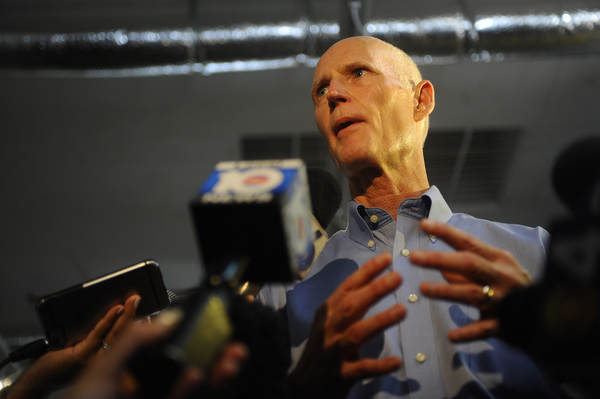
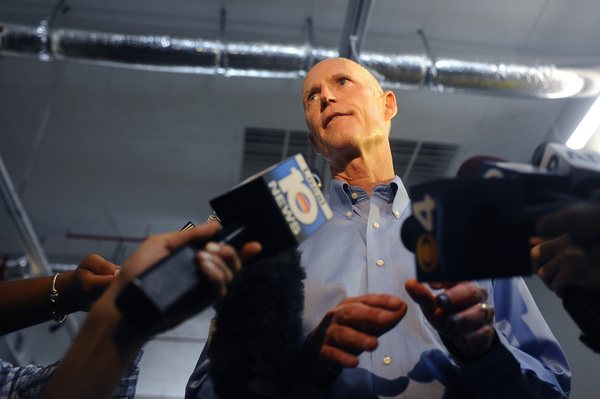
MIAMI _ Gov. Rick Scott zigzagged around the Wynwood area of Miami on Thursday morning, talking with local business owners about what the state can do to combat the spread of Zika.
Centers for Disease Control and Prevention Director Tom Frieden also surveyed the neighborhood Thursday morning, saying he was "impressed" by efforts to control the mosquito population in the area.
"They've got over a hundred teams in the field and ensure that people hear the key messages, which is get rid of anywhere the mosquito can breed," Frieden said. "This is a very difficult mosquito to control and this is a very vibrant neighborhood."

Frieden made the remarks with Miami-Dade Mayor Carlos Gimenez before addressing members of Congress and Scott privately at the Wynwood Community Center.
"There is no information to suggest there is a risk anywhere else in Miami," Frieden said. "In fact, the area we are concerned about is about 500 square feet right in the middle of the one-mile radius where there have been infections."
State health officials have said, however, they are investigating one locally transmitted Zika case that falls outside of the one-mile radius in Wynwood.
The 500 feet that Frieden mentioned is about the size of one apartment. He didn't confirm Thursday if a specific residence or business is where the cases were found.
"That one-mile radius gives you a buffer zone around that 500 square foot area," Frieden said. "We encourage women all over the U.S. to protect themselves."
As of Wednesday, the Florida Department of Health reported 15 locally transmitted Zika infections in Miami-Dade and Broward counties: 13 in Miami-Dade and two in Broward. Most of the cases stem from mosquito bites that occurred in and around Wynwood, health officials have said. The 15 cases are the first local Zika cases in the nation.

The Centers for Disease Control and Prevention on Monday warned pregnant women not to travel to Wynwood, the first such CDC travel warning against a neighborhood in the continental United States. Pregnant women are most at risk because if they get bitten by a mosquito carrying the Zika virus, they can deliver babies with severe birth defects, including babies born with brains that are not fully developed.
Meanwhile, Scott was displeased that Congress has not reconvened in Washington to fund Zika prevention. Congress recessed in July for a seven-week break that will last into early September without adopting a Zika funding package, which has been under debate since February when President Barack Obama requested $1.9 billion in emergency funding to help states combat the infectious disease.
"The president and Congress have to figure out how to work together," Scott said. "I have to work with my Legislature if I want to get anything done. This is a national, international issue and I think the federal government has failed us."
Scott did not acknowledge the funding issues that Miami-Dade mosquito control has faced, saying that "we have very successful mosquito control around the state."
"If you look at what we've done with dengue fever, chikungunya, we've stopped the local transmission of those," Scott said. "We're going to do the same thing with this. We have good mosquito control and good county health departments that are working well together."
With Scott in Miami to talk Zika, Miami-Dade Commissioner Daniella Levine Cava called for a special meeting _ ideally involving county, state and federal authorities _ to review a shared action plan, she said.

Cava said the meeting is needed to better coordinate efforts and information on response efforts and resources, including the county's share of funding from the $26 million in state funds that Scott authorized to be spent on Zika preparedness and response. Miami-Dade Commissioner Chairman Jean Monestime set the meeting for Aug. 9.
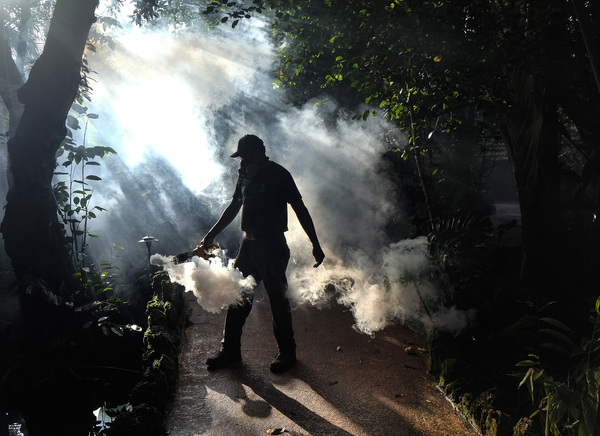
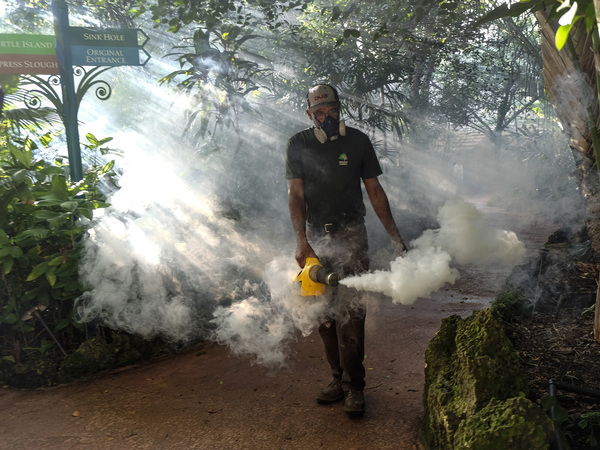
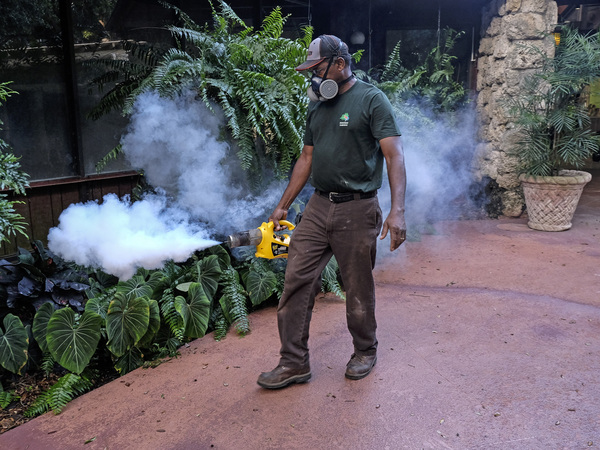
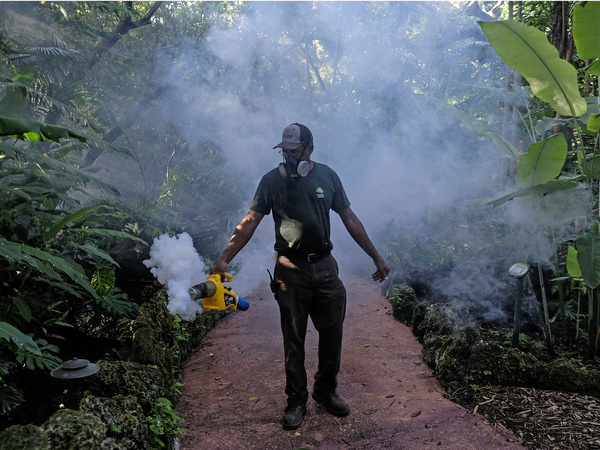
The Florida Department of Health and Miami-Dade mosquito control workers have been on the ground in Wynwood since early July, conducting an epidemiological investigation and spraying for insects.
"We have been on the ground going door by door, house by house, doing the right thing to address the spread in a concentrated area," Cava said. "However, this problem is much bigger than Wynwood. The fact that Congress recessed without addressing it is a tragedy. The fact that we don't have clear direction from the state as to their specific investment calls out for greater communication and coordination, and then we need our county commissioners who are accountable to their districts and constituents to be fully informed about the plans going forward."
Cava said she felt confident that county mosquito control and the state health department were conducting the same door-to-door investigation and spraying in the area of Miami-Dade where the latest locally transmitted Zika case was reported. But she said the case also highlighted the need for more information and coordination between state and county leaders.
"We need to know as a body what is the roll out plan, what is the deployment plan," Cava said, "so we can offer whatever words of guidance caution to the residents."
In addition to 13 locally transmitted cases, Miami-Dade has 102 travel related Zika infections acquired by people while traveling outside the country.
There is a high demand, particularly among pregnant women, for Zika testing around the state; Scott said individuals in Wynwood will get tests before people in other parts of the state.
"We're buying more tests. .... we have no idea what the demand will be," Scott said. "We've said that anybody that is in this impacted area the one mile square radius north of downtown needs to be tested, go to the county health department and get tested for free. We're rolling it out around the state and adding tests as we can get them."
Scott has pledged that Zika tests will be provided free for all pregnant women statewide. But since testing supplies are limited, and not all the available tests are equally effective at detecting the virus, the explosion of demand has overwhelmed the public health agencies that Floridians are relying on for answers, said Ellen Schwartzbard, an OB/GYN at South Miami Hospital.
"I don't feel the Department of Health is prepared for this right now," she told the Herald.