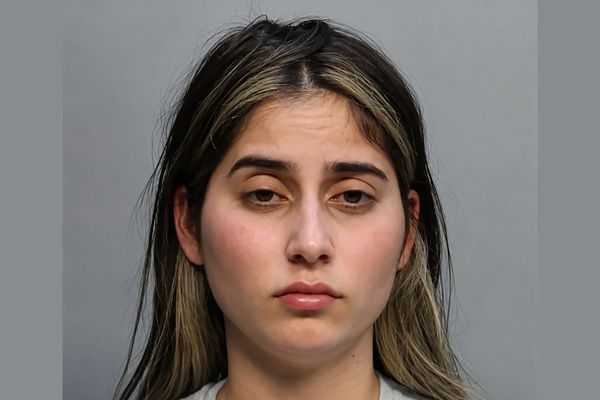
Just as Florida Democrats appear to be making their most significant gains among South Florida's Hispanic voters in a quarter-century, the party has nominated a democratic socialist for one of the state's most important races.
That contradiction was quickly identified by Republican strategist and Latino voting expert Mike Madrid after state Rep. Angie Nixon defeated retired Army Lt. Col. Alexander Vindman in Florida's Democratic primary for the U.S. Senate.
"Largest Hispanic shift away from Republicans in South Florida in 25 years and Democrats nominate...a...checks notes...socialist," Madrid wrote on X.
Largest Hispanic shift away from Republicans in South Florida in 25 years and Democrats nominate….a….*checks notes*….socialist https://t.co/4NHPh9H7sd
— Mike Madrid (@madrid_mike) August 19, 2026
His comment captured the immediate political danger for Democrats. After years of losing Cuban, Venezuelan and other Latino voters to Republicans, the party may finally have an opportunity to reverse some of those losses. But Nixon's nomination gives the GOP the exact message it has used successfully across South Florida for years: Democrats cannot be trusted because their candidates embrace socialism.
Nixon, a Jacksonville state representative and member of the Democratic Socialists of America, defeated Vindman with 540,629 votes, or 54%, compared with his 460,992 votes, or 46%, according to results shared by election analyst Adam Carlson. She will now face Republican Sen. Ashley Moody in the November special election to complete the final two years of Marco Rubio's term.
Moody, Florida's former attorney general, was appointed to the Senate after Rubio became President Donald Trump's secretary of state.
The Republican attacks virtually write themselves. Nixon supports Medicare for All, a $25 federal minimum wage and ending U.S. funding for Israel. She has also been associated with calls to abolish ICE, an especially volatile issue in a state where immigration enforcement is beginning to cost Republicans support among some Latino voters.
The timing could hardly be more complicated for Democrats.
A Reuters report published in April found signs that Republican support was eroding among South Florida Latinos. Interviews with voters, politicians and business leaders pointed to frustration over the cost of living, a weak economy and an immigration crackdown affecting Cuban and Venezuelan families that once saw Trump as their political ally.
Democrats have also registered notable local victories. Eileen Higgins became Miami's first Democratic mayor in nearly three decades, while Emily Gregory flipped a Republican-held seat. Those results suggested the GOP's grip on the region was not as permanent as it appeared after the 2024 election.
That year, Trump became the first Republican presidential candidate to carry Miami-Dade County since 1988. He won the heavily Hispanic county with 55.35% of the vote, compared with Kamala Harris' 43.9%, reversing decades of Democratic dominance.
Trump also received nearly two-thirds of the vote in Miami-Dade's majority-Hispanic precincts, according to a Miami Herald analysis. He won more than 75% in Hialeah and more than 60% in Doral, two cities with large Cuban and Venezuelan populations.
The broader statewide picture is equally difficult for Democrats. Trump carried Florida by 13.1 percentage points in 2024, the largest presidential margin in the state since 1988. Republicans now hold a registration advantage of more than 1.5 million voters, with 5.57 million active Republicans compared with 4.04 million Democrats as of June 30, according to the Florida Division of Elections.
Florida has not elected a Democratic U.S. senator since Bill Nelson won reelection in 2012.
Nixon's primary victory was impressive on its own terms. She defeated Vindman despite a massive financial disadvantage. Vindman had raised approximately $16.3 million by the end of July, while Nixon had collected about $975,000. He also refused her repeated requests for a debate and focused much of his campaign on Moody instead of his Democratic opponent.
But winning a Democratic primary and winning a Florida general election are entirely different exercises.
Nixon's candidacy will now test whether economic and immigration concerns are powerful enough to move Hispanic voters toward Democrats even when Republicans can deploy their most effective cultural and ideological weapon. For a party that spent years trying to escape the socialist label in South Florida, nominating a DSA member at the precise moment Latino voters appear ready to reconsider the GOP could prove either a daring bet or a spectacular act of political self-sabotage.
.png?w=600)