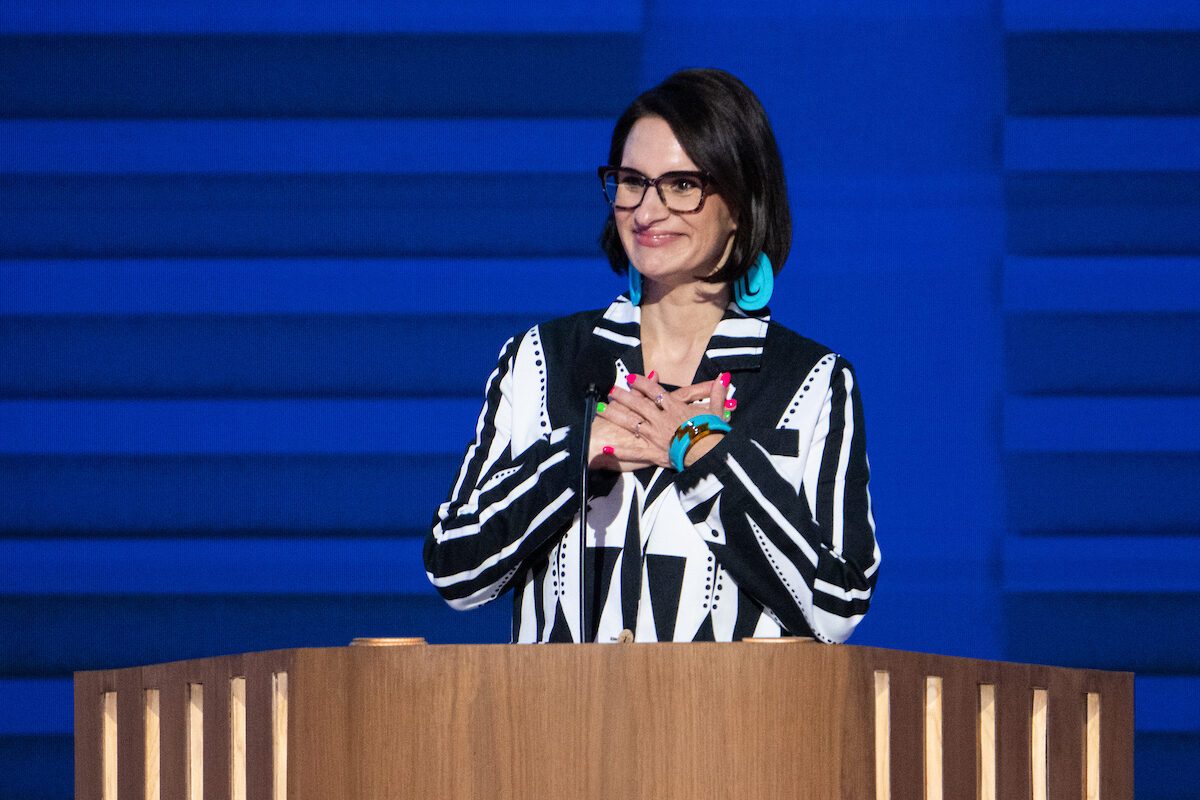
The progressive momentum in Democratic Senate primaries continued Tuesday, with Minnesota Lt. Gov. Peggy Flanagan defeating the more moderate Rep. Angie Craig in a high-stakes contest.
But progressives were dealt a setback in neighboring Wisconsin, with state Rep. Francesca Hong, a self-described democratic socialist and the perceived front-runner in the Democratic primary, losing to Milwaukee County Executive David Crowley.
With more than 95 percent of votes counted, Flanagan was leading Craig, 59 percent to 39 percent, The Associated Press reported. Four other candidates split the remaining votes in the race for the seat of retiring Democratic-Farmer-Labor Sen. Tina Smith.
Flanagan is now set to face Republican Michele Tafoya, a former NFL sideline reporter, who comfortably won a nine-way Republican primary. If elected, Flanagan, a member of the White Earth Band of Ojibwe, would be the first Native American woman to serve in the Senate.
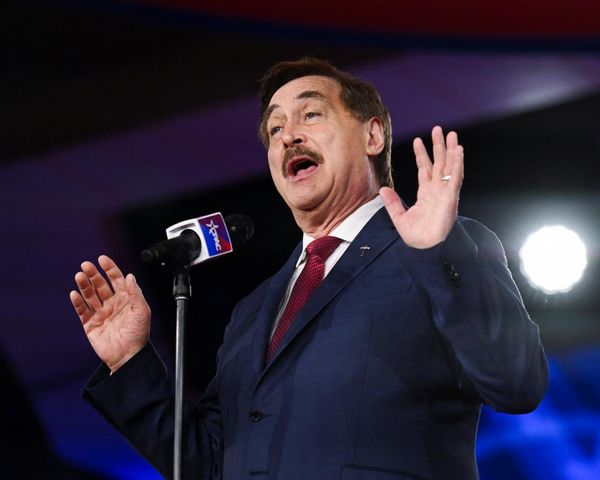
Meanwhile, Minnesota appears poised to elect its first female governor this fall. Amy Klobuchar, the state’s senior senator, easily won the Democratic primary Tuesday in the race to succeed Gov. Tim Walz, who is stepping down after two terms. The Republican primary represented another defeat for President Donald Trump, with his endorsed candidate, former MyPillow CEO Mike Lindell, losing to state House Speaker Lisa Demuth.
Flanagan, who has served as lieutenant governor under Walz since 2019, staked out the progressive lane in her primary. She had the backing of Smith and Sen. Bernie Sanders, I-Vt. She also criticized Craig for her 2025 vote for legislation known as the Laken Riley Act, which imposed stricter punishments on undocumented immigrants accused of theft and violent crime.
Craig was far from the only Democrat who joined Republicans in supporting that measure, which was approved in the earliest days of President Donald Trump’s second term. But Flanagan’s attacks proved resonant in the wake of Operation Metro Surge, which saw federal immigration agents deployed to the Twin Cities and two state residents killed by federal agents.
Still, like other progressives who have won Senate primaries this year, Flanagan had to overcome a significant spending disadvantage. She trailed Craig in fundraising throughout the campaign and also had less support from outside groups.
Flanagan begins the general election as the favorite in a state that last elected a Republican to the Senate in 2002. While Republicans have been excited about Tafoya’s candidacy, Senate Leadership Fund, the super PAC with ties to the chamber’s GOP leadership, hasn’t yet made any fall ad reservations in the state.
Still, South Carolina Sen. Tim Scott, the chair of the National Republican Senatorial Committee, recently told Semafor not to “sleep on Michele Tafoya.” Republicans are expected to try to tie Flanagan to the statewide fraud scandal over social safety net programs that earlier this year prompted Walz to not seek reelection.
Inside Elections with Nathan L. Gonzales rates the Senate race Likely Democratic.
On the House side, progressives also claimed victory in the Democratic primary for Craig’s 2nd District seat. With more than 95 percent of votes in, former state Sen. Matt Little was leading centrist state Sen. Matthew Klein 47 percent to 30 percent, while state Rep. Kaela Berg trailed with 17 percent, the AP reported.
Little had endorsements from the state DFL, the campaign arm of the Congressional Progressive Caucus and its chair, Rep. Greg Casar, D-Texas. He will next face Republican state Sen. Eric Pratt, who was unopposed in his party’s primary. While the seat, located south of the Twin Cities, has historically been competitive, Inside Elections rates the race Likely Democratic.
In the 1st District in southern Minnesota, public school teacher Jake Johnson won the Democratic nomination to take on GOP Rep. Brad Finstad in what Democrats hope will be a pickup opportunity this fall.
And in the 8th District in the state’s Iron Range, former reality show star Luke Gulbranson lost the Democratic primary to former U.S. Citizenship and Immigration Services official Trina Swanson, who starts off as a decided underdog against Republican Rep. Pete Stauber this fall.
Wisconsin
Republican Rep. Tom Tiffany easily won his party’s gubernatorial nomination in Wisconsin and will next take on Crowley in the race to succeed Democratic Gov. Tony Evers.
Preelection polls had suggested Hong was a strong favorite to claim the Democratic nod over the establishment-backed Crowley, who had Evers’ endorsement. But the AP called the race early Wednesday morning, with Crowley leading Hong by less than half a percentage point, 39.8 percent to 39.4 percent, and more than 95 percent of votes in. Five candidates carved up the remaining vote, including three who had suspended their campaigns in the primary’s closing weeks but remained on the ballot.
Crowley had dropped out of the Democratic race last month amid poor polling and endorsed Lt. Gov. Sara Rodriguez. But after Rodriguez ended her own bid following revelations of campaign finance woes, Crowley reentered the contest with Evers’ support. Moderate Democrats, including Evers, warned that Hong, whose past social media posts have come under scrutiny, could have a more difficult time defeating Tiffany than Crowley.
Notably, Hong also did not win support from prominent progressives such as Sanders or Rep. Alexandria Ocasio-Cortez, D-N.Y., who have weighed in on other key races this year.
On the House side, a battleground district in southwestern Wisconsin is set for a rematch from 2024. Democrat Rebecca Cooke clinched the party nod to challenge Republican Rep. Derrick Van Orden, who defeated her by 3 points two years ago in the 3rd District.
With more than 95 percent of votes in, Cooke was leading her more progressive rival, former Eau Claire City Council President Emily Berge, 61 percent to 39 percent, according to the AP.
Cooke, who had the backing of the Democratic Congressional Campaign Committee, also counted both the moderate Blue Dog PAC and Vermont’s Sanders among her supporters.
In the 7th District, which Tiffany vacated to run for governor, Michael Alfonso, the son-in-law of Transportation Secretary Sean Duffy, clinched the Republican nomination over four other candidates. The 26-year-old had Trump’s backing but faced nepotism claims, with a recent ad from an outside group branding him a “nepo baby.”
He’ll be the heavy favorite in November in the deep-red district, which Trump carried by 23 points two years ago, according to calculations by Inside Elections.
And in the 1st District in southeastern Wisconsin, Republican Rep. Bryan Steil will take on emergency room nurse Mitchell Berman, who prevailed in the Democratic primary Tuesday. The seat, which Trump carried by just over 4 points in 2024, is on Democrats’ target list this year, though Inside Elections rates the race Solid Republican.
Alabama
Alabama held special primary elections Tuesday in four House districts, whose boundaries shifted under a Republican-drawn map the state switched to earlier this year.
In the 2nd District, a formerly plurality-Black seat which shifted red under the new lines, state Rep. Rhett Marques easily won the GOP primary to take on Democratic freshman Rep. Shomari Figures.
Former Rep. Jerry Carl is set for a congressional comeback from the redrawn 1st District after winning a four-way Republican primary for the ruby-red seat.