

The 2026 World Cup brought unparalleled attention to soccer in the United States and Canada, with over 50 million tuning in for the USMNT’s final match against Belgium in the round of 16 and 69% of Canadians tuning in at some point during the tournament.
If one thing became clear over the last month, it’s that North American sports fans are loving soccer more than ever, and there might just be an appetite to keep consuming the beautiful game rather than waiting for next summer’s women’s World Cup and the next men’s World Cup in 2030. Luckily, there are plenty of options, including Europe’s top leagues on TV and Major League Soccer at home.
For North Americans looking to keep the fun going on their own shores, MLS is the top option. The 30-team league is set to resume with rivalry matches on July 17 and has the second half of the season to play before the run to the MLS Cup playoffs, which will culminate in the trophy being awarded in mid-December.
Here, Sports Illustrated outlines five reasons why a World Cup fan might want to give MLS a try for the rest of 2026, before the league switches to a winter-based schedule in 2027–28, starting with a 14-game sprint season in the first half of 2027.
Lionel Messi and the World Cup Players
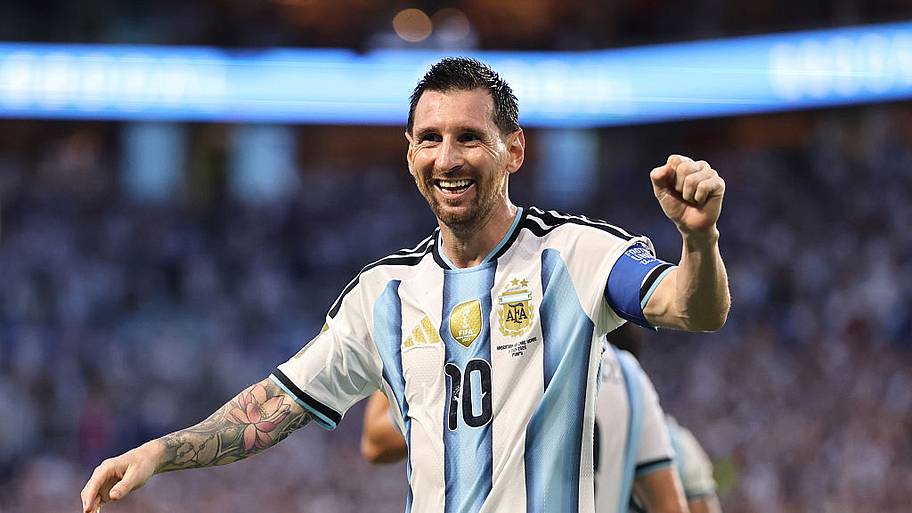
Even at 39 years old, Lionel Messi showed throughout the World Cup that he is still among the best in the world. The Argentine’s time at Inter Miami kept him sharp and ready for this summer’s showpiece event, and the work paid off; Messi already scored the most goals he ever has at a single World Cup tournament.
After recording 29 goals and 19 assists in 28 games to help lead the Herons to the 2025 MLS Cup last season and capture his second straight MLS MVP Award, Messi has 12 goals and 8 assists in 14 games this year, chasing more personal accolades and titles. His performances have been spellbinding, and now that he’s in the twilight of his career, it’s worth embracing each one.
Yet he’s far from the only World Cup player to find himself in MLS. He has 46 others alongside him, making MLS the top league outside of England, Germany, France, Spain and Italy represented at the World Cup, with nine stars from each of the USMNT and Canada.
In total, there are five World Cup winners currently playing in MLS, including Germany’s Thomas Müller with Vancouver Whitecaps, France’s Hugo Lloris and Antoine Griezmann with LAFC and Orlando City respectively, and Argentina’s Messi and Rodrigo de Paul with Inter Miami.
The Parity and Playoffs

If you liked the World Cup knockout stage or the Cinderella runs from Norway and Switzerland, you’re in luck—the MLS has underdogs delivering every season, and teams play knockout games through the MLS Cup playoffs to crown a champion, rather than simply rewarding the top team from the regular season.
While it’s different from Europe’s top leagues, the playoffs offer tense matches to end the season. In contrast, the parity means that nearly every year, a team surprises and challenges for silverware, either in the regular season, in cup competitions or for the ultimate prize of MLS Cup.
For example, after more than a decade of mediocrity, the Vancouver Whitecaps made a run to the MLS Cup last season. They signed Müller as their crowning piece, along with other smart recruits. This season, last year’s regular-season champions, the Philadelphia Union, have dropped to last place, while the team that finished 20th last year—the San Jose Earthquakes—now sits second and just signed Scotland World Cup goalkeeper, Aaron Gunn. Things move fast in MLS.
For the gripes some have about MLS not having promotion or relegation, that aspect certainly adds a different level of excitement. At the same time, the salary cap (teams can spend a maximum amount of money, aside from three Designated Players and other avenues) keeps all clubs within a similar realm of financial might.
You Can Go to the Games

World Cup ticket prices were out of reach for plenty of North Americans, but MLS offers a cheaper, more accessible way to see high-level soccer across the U.S. and Canada. Plus, unlike European leagues, kickoff times and fan experiences are tailored to North American fans.
At the same time, the supporter cultures bring European and South American flair to the stands across the 30 teams. That mix makes it a unique experience as well.
Some MLS atmospheres are better than others, and some stadiums allow for more mingling. Still, each offers a unique, local aspect while providing a welcoming, accessible place for new fans. Some teams even offer free tickets if it’s your first time attending a match of that club, in an effort to draw newcomers.
If you’re looking for the best atmospheres in MLS, few teams rival the Seattle Sounders, Portland Timbers, LAFC, Nashville SC and FC Cincinnati anytime—or Vancouver Whitecaps, Toronto FC and Atlanta United when the teams are good.
The Young Stars

Oh, you thought MLS was a retirement league? There are indeed plenty of veteran superstars like Messi, Müller, and Son Heung-min, but the youthful talents that could take the European game by storm at some point are also in the league.
It’s taken a few decades for MLS academies to fully get up and running in producing top talent, but the 2026 season has already brought some of those potential names to the forefront.
Sixteen-year-old Cavan Sullivan has started to get more opportunities and has three goals and four assists in 772 minutes across all competitions, turning heads at Manchester City, which he will join when he turns 18. Then there’s 18-year-old Julian Hall, who has nine goals in 15 games games, and 19-year-old Zavier Gozo, who has six goals and five assists in 14 matches. He was even in late contention for the USMNT’s 2026 World Cup roster.
Other young stars include Red Bull New York 17-year-old midfielder Adri Mehmeti and Vancouver Whitecaps 21-year-old Tate Johnson, among others. There’s plenty of hope for some of those players to move on soon as well, given recent history.
At just 20 years old, Obed Vargas left Seattle Sounders earlier this season for Atlético Madrid and played for Mexico at the World Cup. Alex Freeman, meanwhile, broke out with Orlando City last season before establishing himself with Villarreal and the USMNT.
The Unexpected

Think of some of the best World Cup games. Are you thinking of Argentina’s near-losses to Egypt and Cabo Verde, England’s 3–2 win at the Estadio Azteca over Mexico or maybe some of the other close matches? Amazing, because that’s the chaos you’ll find in MLS almost every week, for better or worse.
While some of Europe’s top leagues have the best possible attackers and defenders, MLS teams, given the salary restrictions, tend to have far more talented attackers than they do defenders or goalkeepers. That makes for some high-scoring matches, some unexpected—but eye-catching— mistakes and, overall, some random moments that don’t seem to happen as often in Europe’s top leagues.
As MLS continues to grow and bring in more talented players, the overall level will improve, and mistakes will become less common. For now, though, that element means you can’t take your eyes off the game. This season, we’ve seen former NCAA defenders make a fool of World Cup winners and even a goalkeeper score to tie the match in stoppage time.