Republican presidential candidate Marco Rubio says he has noticed the climate is changing dramatically but says he can’t explain why because he’s “not a scientist”. He has concluded, however, that humans do not have anything to do with it.
Taking large-scale action will destroy the economy, the Florida senator says. But in his home state, the effects of climate change are set to be among the most alarming in the US.
Florida state officials might not be allowed to talk about it, but scientists in the state have been warning politicians for years that human-fueled climate change is here and, without action, its advance is going to be catastrophic for the state. “Admitting you are ignorant is no excuse,” Peter Harlem, a geoscientist at Florida International University’s south-eastern environmental research center, told the Guardian.
Here are the five threats to Florida from climate change that might force Marco Rubio to take action.
1
The threat
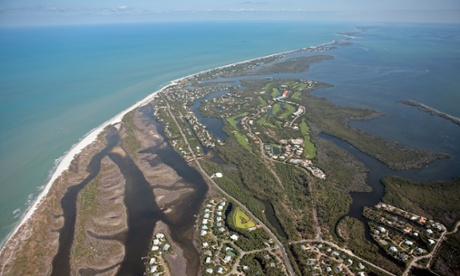
Miami drowns. And it’ll take the Florida Keys, the Everglades and Cape Canaveral with it.
The evidence
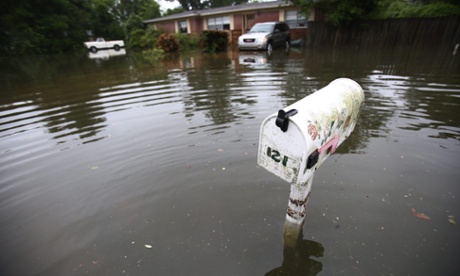
In parts of Florida, rising ocean levels already mean that streets built high and dry 50 years ago now flood with seawater every month, Harlem said. “I can drive Senator Rubio to a spot on Biscayne Bay under a full moon and he can watch the high tide come in over the road.” Expensive pumping systems (for example in Miami Beach) and sea walls are futile in the long term. Climate change is forecast to push sea levels in southern Florida three to six feet higher this century, perhaps more. Some 5.5 million people in Miami live just six feet above sea level.
2
The threat
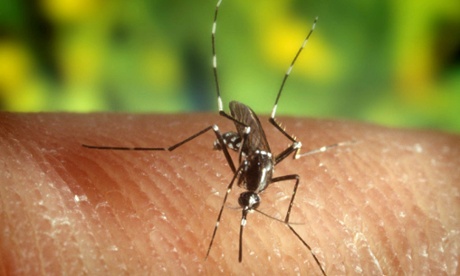
Extreme heat and more diseases. Rising temperatures and the spread of tropical illnesses hit older people hard – that puts Florida’s large retiree population at great risk.
The evidence
Dengue fever is being kept at bay in the Florida Keys only by the sustained efforts of health officials. It re-established itself around 2009 after being eliminated decades ago. Warming temperatures boost mosquito populations and increase the incidence of West Nile virus and chikungunya, while bringing the threat of malaria ever closer to the Florida swamps. The Natural Resources Defense Council predicts Florida will suffer the most dramatic increase in the summer heat index (temperature plus humidity) in the country. That may prove deadly.
3
The threat
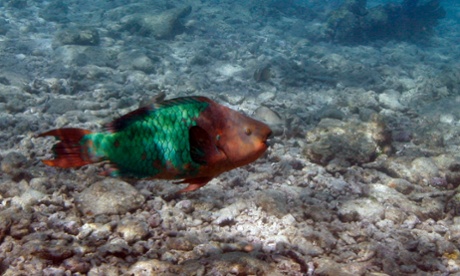
Coral-free reefs, sand-less beaches.
The evidence
The magical coral reefs of the Florida Keys have been dying since the 70s due to overfishing and pollution. But some coral is better than no coral – which climate change may lead to because of rising sea temperatures – for the state’s $50bn tourist industry. And before rising seas inundate the sparkling white beaches, a lot of their sand will be raked away by advancing waves and tidal erosion, already a big problem in the Gulf-facing south-west.
4
The threat
Shriveled oranges, rotten tomatoes. More heat and rain might seem like a boon to Florida’s fruit bounty, but the longer-term outlook is sour.

The evidence
Volatile rainfall patterns and temperature fluctuations wreck fruit yields. Early growth is followed by destructive frosts, fierce rainstorms by long dry spells. More heat brings more pests (and pesticide run-off is already poisoning the water table and ocean). The University of Florida Institute of Food and Agricultural Science warns that global warming is “potentially catastrophic” to the state’s farming industry, which provides work for two million and is the state’s second biggest employer behind tourism.
5
The threat
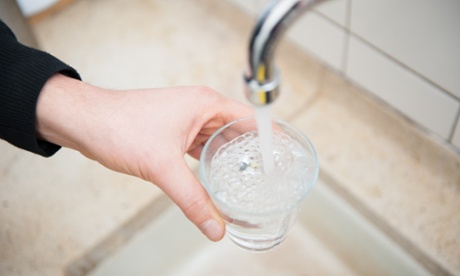
Salt in drinking water, sewage and irrigation.
The evidence
Three quarters of Florida’s population of 14 million lives in a coastal county and they expect fresh water when they turn on the taps, and the toilet to flush nicely every time they go. And why not, with up to 60in of rain a year? Salt water is already seeping up, however, especially in south Florida where the limestone bedrock is as holey as Swiss cheese. Higher tides and rising oceans don’t just threaten flooding on the coast but a gradual infiltration into the groundwater for household use, irrigation canals and sewage systems. And what Floridians don’t need for quenching their thirst, and salt water doesn’t contaminate, the fierce sun is already evaporating from the state’s lush landscape at a dangerous rate.
That’s the bad news for Rubio. But there is some good news. Scientists can’t agree on whether climate change will lead to more hurricanes, though it is expected to increase the intensity of those that do occur.