A 15th-century royal tragedy involving a young monarch has turned into South Korean’s biggest cinema hit in years.
The King’s Warden, a historical drama about exiled Joseon monarch Danjong and the village chief tasked with guarding him, has drawn more than 10 million admissions at the domestic box office, the first film in nearly two years to hit the milestone.
Directed by Jang Hang Jun, the film follows the sixth monarch of the Joseon dynasty, King Danjong, who ascended the throne in 1452 at the age of 12 and was forced to abdicate three years later in a coup led by his uncle. The young boy was stripped of his titles and exiled to a remote mountainous region, where he was eventually killed at the age of 16.
Rather than focusing on palace intrigue, The King’s Warden tells this story through the eyes of the official tasked with watching over the dethroned monarch. The film follows the wary relationship between the anxious chief and the fragile teenage monarch as it gradually evolves into a tale of loyalty and protection.
Released on 4 February, the film has already climbed beyond the 11 million admissions milestone this past weekend, reported Variety. Produced on a budget of around $6.9m, the film has already grossed $74.3m from 11,503,742 admissions.
The film’s runaway success has triggered a wave of royal mania across the country, with tourists heading in droves to Yeongwol, the mountainous county in Gangwon province where the king was historically exiled. Tourism officials have said the area is now receiving an average of about 2,000 visitors a day, with numbers rising to as many as 6,000 on weekends.
According to Yeongwol county, two of the region’s key heritage attractions – Cheongnyeongpo, the secluded peninsula where Danjong was confined, and Jangneung, the royal tomb where he was buried after being posthumously restored to royal status – drew more than 10,000 visitors over a single recent weekend. Jangneung is one of the 40 Joseon royal tombs designated as a Unesco World Heritage Site.
County officials said the combined visitor total to the sites had already exceeded 109,000 this year as of Sunday, approaching last year’s 110,000-visitor mark, which was not reached until June.
Even local residents who never visited these spots have turned into tourists. “My hometown is Yeongwol, but I had never been to Cheongnyeongpo until I watched the film with my family last week,” one visitor told The Korea Herald. “My son was so touched by King Danjong’s story that he actually proposed this trip.”
Cheongnyeongpo is surrounded by the Dong River on three sides and covered by steep cliffs, which gives it the isolation of an island. The area can only be reached by boat, even today, and is the likely reason it was chosen for the king’s exile.
Near the royal residence where Danjong spent the last few years of his life, tourists can head to the “Eom Heung Do Pine” tree which leans or “bows” towards the house, as a way to show respect to the village chief. Also close is Gwaneumsong, a centuries-old pine tree, whose name is a reference to a belief that it “watched and listened” to the teenage king’s grief.
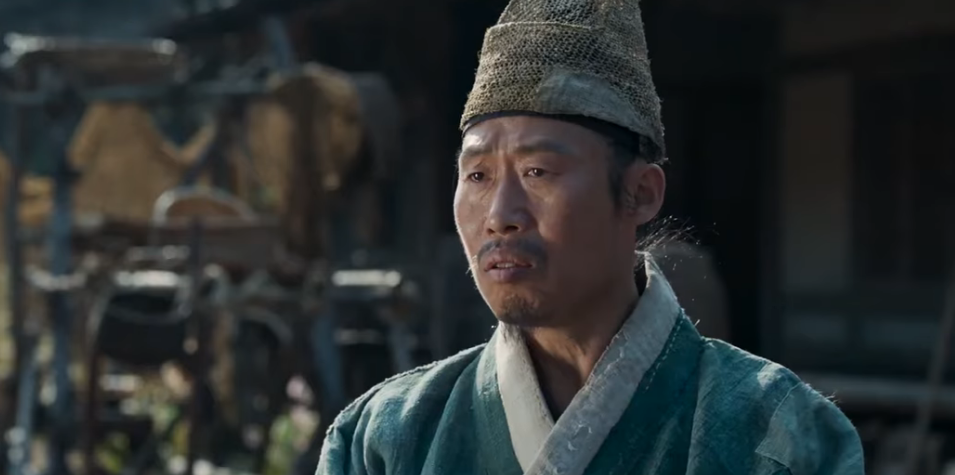
Veteran South Korean actor Yoo Hae Jin plays Eom Heung Do, the village chief who watches over the exiled king, and Danjong is played by Park Ji Hoon, who played the lead in 2022’s Weak Hero. Park went on an intense diet regime, explaining that he wanted the audience to see him as “nothing more than just skin and bones”.
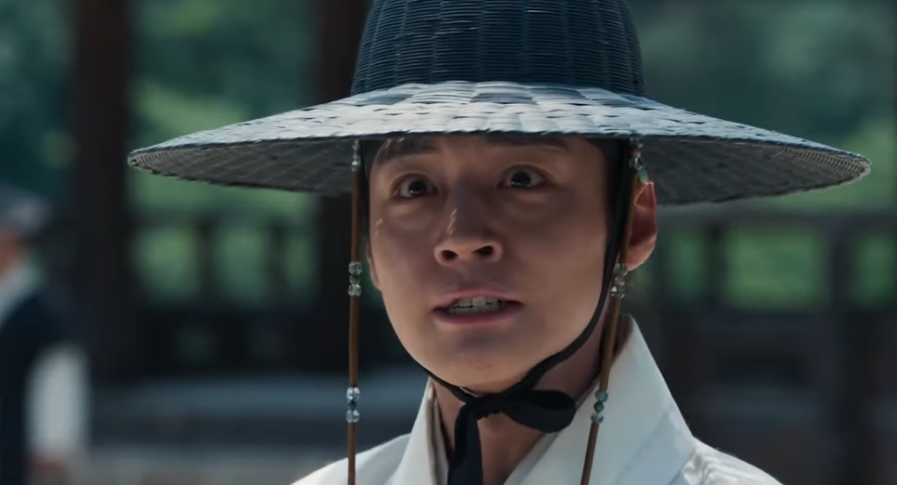
“Not simply thin, but someone who looked deeply pitiful. felt like I had to portray a more isolated and powerless kind of sorrow, like being at the very bottom of a cliff,” he said, according to Korea Joongang Daily.
There is no conclusive historical record of how Danjong really died; reports differ between the king being strangled and given poison, the latter being the custom for royals condemned to death.
Records also say that Danjong’s uncle, King Sejo also decreed that the boy king’s body be thrown in the river and whoever recovered and buried it would be punished for three generations.
However, the chronicles name a low-ranked official named Eom Heung Do, who is believed to have secretly retrieved Danjong’s remains and buried it in the spot that is now known as Jangneung, before going into hiding.
While Jangneung is seeing a renewed note of respect, King Sejo and his court are facing the opposite. On Naver, the search engine used in South Korea, citizens have been leaving one-star reviews on King Sejo’s tomb, and of his councillors.
“How could you do that to your own nephew?” read one review.
영화 <왕과 사는 남자>가 천만 관객을 돌파했다는 반가운 소식을 들었습니다. 2024년 이후 2년 만에 이룬 성과이기에 더욱 뜻깊습니다.
— 이재명 (@Jaemyung_Lee) March 7, 2026
이처럼 많은 이들이 한 영화를 찾았다는 것은 작품이 전하는 진심이 관객의 마음을 움직이며 깊은 울림을 이끌어냈다는 뜻이겠지요. 소중한 공감의 장을 만들어…
South Korean president Lee Jae Myung, who watched the film with first lady Kim Hea Kyung during the recent Lunar New Year holiday, congratulated the film’s cast and crew for its success and for “creating such a precious space for shared empathy”.
“Korean cinema has steadily grown through the passion and challenges of its creators, as well as the love from audiences,” he wrote in a post on X, formerly Twitter. He added that the government will foster conditions where “creative freedom thrives and culture becomes a source of national pride”.
Major Asian nation bans residents from travelling to Iran
Seoul prepares for up to 260,000 fans as BTS return for first concert since hiatus
Kim Jong Un warns North Korea could ‘completely destroy’ South
North Korea says it’s willing to ‘get along’ with US – but there’s a catch
Kim Jong Un calls women ‘physically weak’ with ‘plain faces’ in bizarre IWD address