
Once you've roasted a chestnut over an open fire, what do you do with it?
Are sugar plums really good enough that visions of them would dance in your head? Why would anyone want to go a-wassailing? And just what the heck is a figgy pudding?
This Christmas, we decided to look at the edible side of Christmas carols and poems. We all know the words, but do we ever think about what they mean?
Chestnuts, for instance. Nat King Cole made the act of roasting them over an open fire an iconic part of the holiday. And this time of year in New York, vendors roast them on almost every corner.
But what good are they?
Chestnuts actually taste wonderful by themselves. They are nutty, of course, but slightly sweet and with a mild, mellow flavor. Their texture is also unique; light and softer than other nuts.
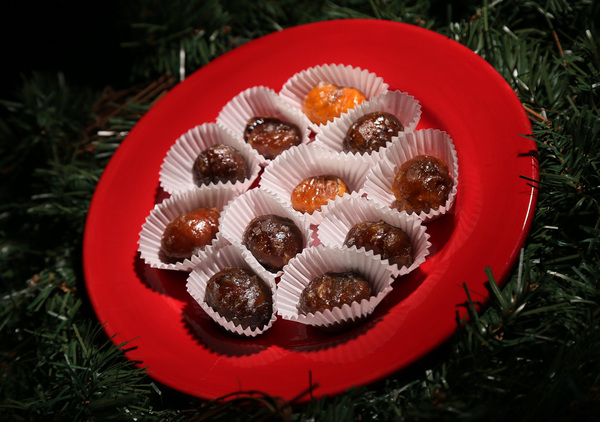
But chestnuts by themselves are not festive enough for the holidays. So I decided to make candied chestnuts, known to the French as marrons glaces.
These are delicate marvels of creamy, nutty sweetness. You make a fragrant simple syrup of water, sugar and vanilla, briefly boil peeled chestnuts in it, and you wind up with a treat that one famous mail order company has the gall to charge $45 for a box of eight.
But yes, they're that good.
It does take a few days to make them, but you only boil the chestnuts for a couple of minutes each day. The rest of the time they soak in the syrup, so it takes very little effort.
The only difficult part involves peeling the chestnuts. There is an easy way and a hard way to peel chestnuts. I did it the hard way. I greatly recommend the easy way.
The easy way involves cutting a horizontal slit in the shell with a sharp knife, splashing on a bit of water and cooking in a microwave for one minute. And if you peel them while they're still hot, the inner membrane comes right off with the shell.
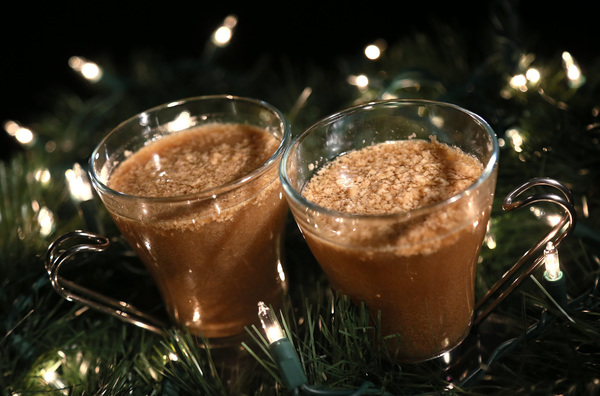
Next up, wassail, the prime focus of (and best excuse for) going wassailing.
Wassailing goes back to the time of Saxon England, more than 1,000 years ago. One person would raise a tankard of a spiced ale punch with apples and say "waes hael," which meant "good health" or "good fortune." His drinking partner would raise his own tankard and respond, "drinc hael." And then they would take a lusty swig of their punch.
By 1600, the punch itself was being called wassail. Revelers in England would take a big bowl of it and knock on people's doors, singing carols and sharing the wassail _ sometimes expecting to be paid.
To make my own wassail, I turned to Alton Brown, who adapted an ancient recipe. It begins with a base of ale and madeira wine, into which a number of baked apples are added. The punch is then flavored with spices (cloves, allspice, cinnamon, ginger and nutmeg) and topped with a layer of whipped eggs.
The taste is marvelous and surprisingly complex. Beer and wine don't sound as if they would go well together, but when seeped with the right spices and a healthy hint of apple, they turn into a deliciously hearty punch.
The other two carol-inspired treats seem to fall right along the fruitcake fault line. Though I don't have empirical evidence as proof, it appears that people who like fruitcake will also enjoy sugar plums and figgy pudding. But those who hate fruitcake would probably be happier staying away from them and quaffing more wassail.
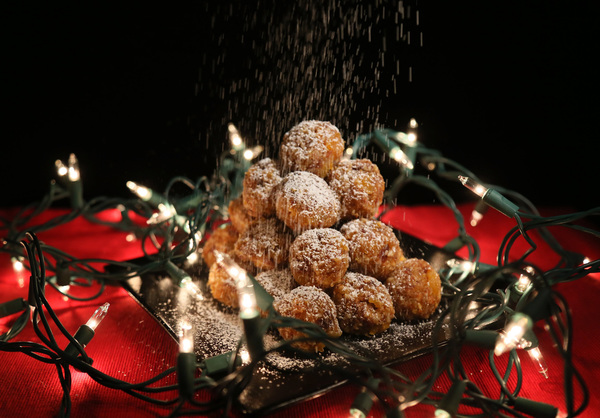
Sugar plums are not what you may think they are. There is no plum in them at all, except in the sense that "plum" used to be the word for all dried fruits. In this case, the sugar plums are made with apricots and dates, chopped fine along with almonds, sweetened with honey and spiced with the flavors we have come to associate with Christmas _ cinnamon, nutmeg, cloves and orange.
In other words, they are kind of like a fruitcake, without the cake (and without citron, which, let's face it, nobody likes). The ingredients are rolled into little balls and topped with powdered sugar.
They are certainly worthy of dancing visions.
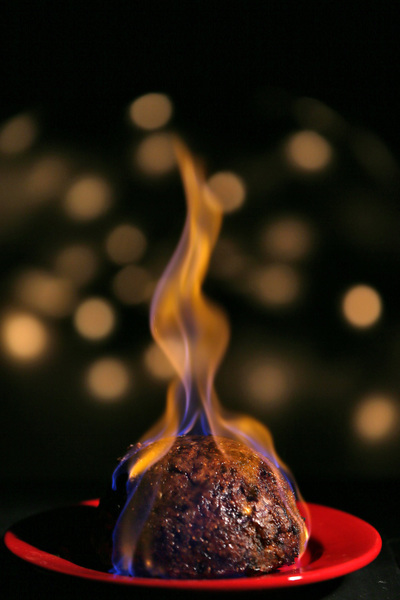
Figgy pudding also has a definite fruitcake vibe to it. And just as sugar plums aren't plums, figgy pudding isn't pudding _ except in that the British call this type of thing "pudding." Figgy pudding is more like a dense cake, a cake that is cooked with steam.
But the figgy part is accurate; it uses quite a lot of chopped figs, plus raisins and currants. These are mixed with dark brown sugar, self-rising flour, bread crumbs, grated apples and allspice.
And brandy, of course. Brandy goes into the batter, making it even more like fruitcake. And then, if you really want to put on a show, you can pour heated brandy over the finished product and set it ablaze.
That is the traditional way to serve it. But for an extra-special treat, you could also serve it with a caramel-flavored sauce. It's easy to make _ no actual caramelizing necessary _ and it goes great with figgy pudding.
Your friends will want you to bring the figgy pudding to them, and bring it right there.