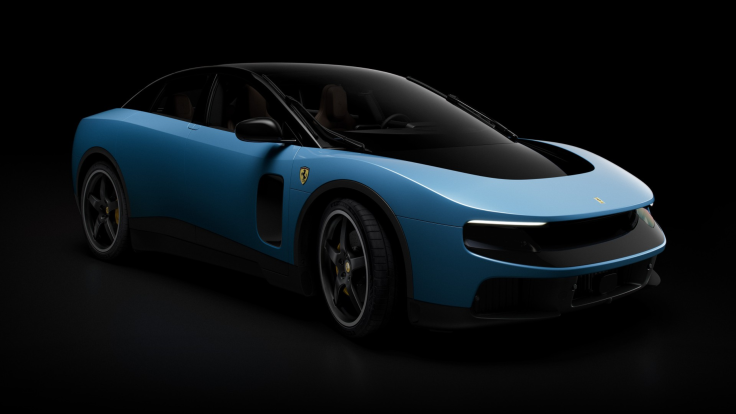
On 25 May 2026, Ferrari officially unveiled the Luce, its first fully electric sports car, marking a major milestone in the Italian marque's transition towards electrification.
Positioned as a regular production model rather than a limited-run experiment, the Ferrari Luce combines up to 1,050 horsepower from a four-motor electric drivetrain with radical new styling and advanced aerodynamics. With a starting price of €550,000 (approximately $640,000 or £475,000), the Ferrari EV sports car immediately enters the ultra-luxury performance segment, where expectations are as high as the price tag.
Ferrari Unveils Luce Electric Sports Car
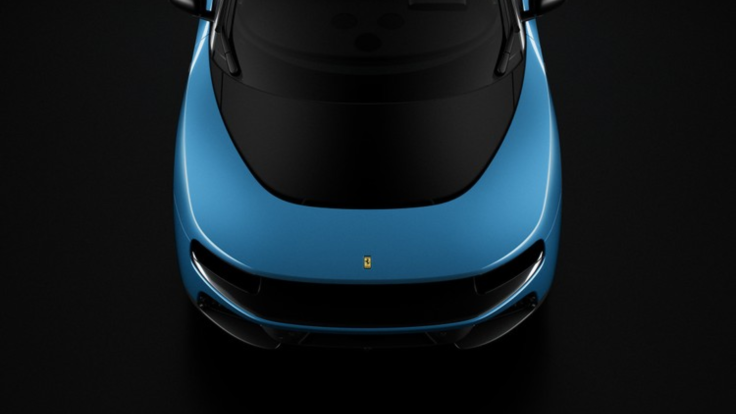
The Ferrari Luce represents one of the brand's most significant product shifts in decades. Built on an all-new electric platform developed in Maranello, the model sits alongside Ferrari's existing lineup rather than replacing its combustion-engine cars.
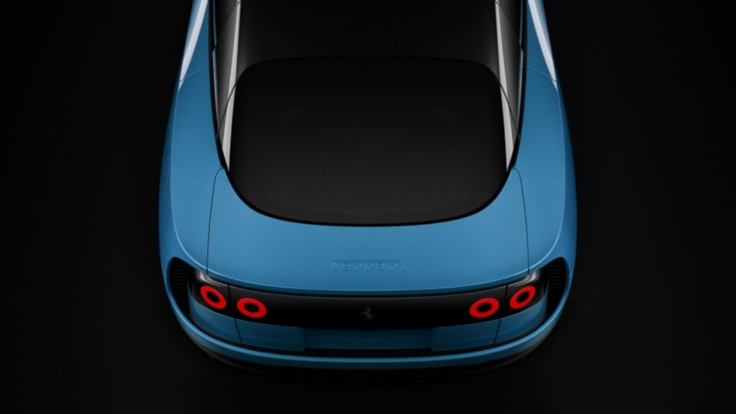
The launch signals Ferrari's intent to compete at the highest level of the electric supercar market while retaining its identity as a performance-focused luxury manufacturer. Orders open immediately following the global reveal, underscoring Ferrari's confidence in demand for high-performance EVs.
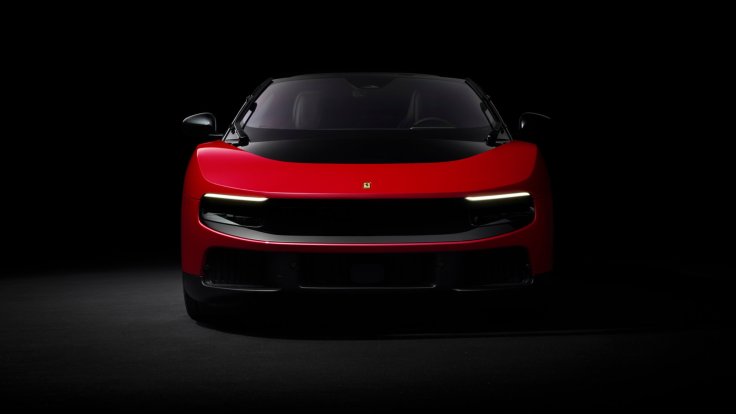
Price and Positioning in the Luxury EV Market
The Ferrari Luce starts at €550,000 before options and bespoke customisation, placing it firmly in the upper tier of electric performance vehicles. Industry observers expect final purchase prices to climb significantly once personalised paint, interior trims, and accessories are added.
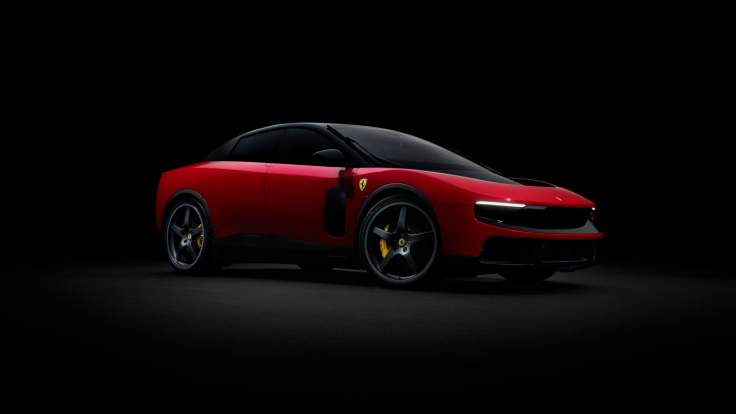
Unlike many EV launches that target broader markets, the Luce is aimed squarely at high-net-worth buyers and collectors seeking exclusivity, performance, and brand prestige in a fully electric format. Ferrari has positioned it as a mainstream production model within its range, not a one-off halo project.
Ferrari Luce Exterior and Design Collaboration
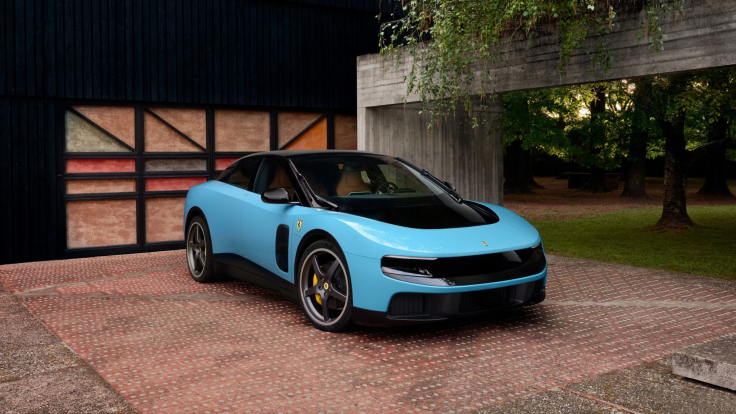
Styling for the Ferrari Luce was developed jointly by Ferrari's Centro Stile in Maranello and LoveFrom, the design studio founded by former Apple chief designer Sir Jony Ive. The approach prioritised aerodynamic efficiency before visual detailing, resulting in a streamlined silhouette with a drag coefficient of 0.254 Cd.
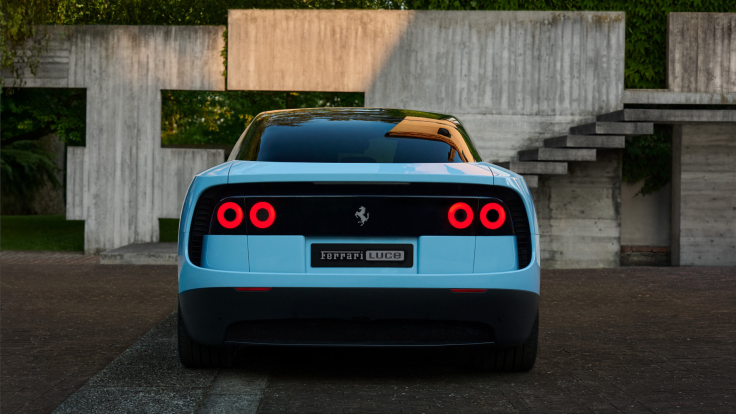
The design features a teardrop-shaped passenger cell, unusually large 23-inch front and 24-inch rear wheels, and a body structure that eliminates traditional supercar proportions. Ferrari says the result reflects a balance between engineering function and refined industrial design principles.
Performance From a Four-Motor Electric System
At the core of the Ferrari Luce is a four-motor electric drivetrain, with each wheel independently powered. The system produces up to 1,050 horsepower in Launch Control mode, delivering 0 to 100 km/h in 2.5 seconds and 0 to 200 km/h in 6.8 seconds.
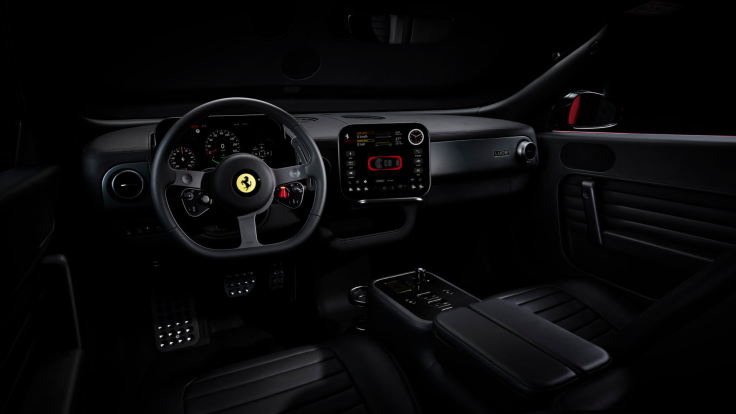
Top speed is rated at 310 km/h. Ferrari has introduced a driving system called E-Manettino, offering multiple modes that adjust power delivery and drivetrain behaviour. A new Torque Shift Engagement system replaces traditional gear changes, allowing drivers to adjust torque response using steering wheel paddles.
Battery Technology, Range, and Charging Capability
The Luce uses an 800-volt battery system integrated into the chassis structure, lowering the centre of gravity compared with Ferrari's Purosangue SUV. The battery was developed in collaboration with SK On and is designed for both performance and long-term adaptability.
Fast charging is rated at up to 350 kW, while Ferrari also offers an eight-year unlimited-mileage warranty on the powertrain. The architecture is engineered to support future battery cell developments, signalling a long-term platform strategy for Ferrari EV production.
Ferrari Luce Interior Design and Sound Engineering
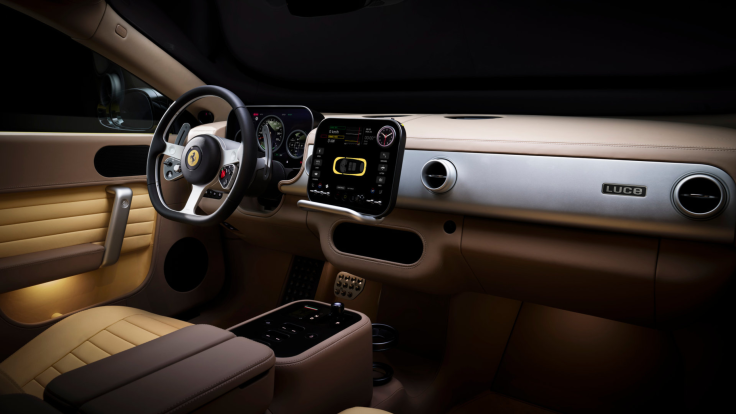
Inside, the Ferrari Luce features a minimalist cabin influenced heavily by Jony Ive's design philosophy, with a focus on aluminium and glass finishes. Screen usage is limited, with a central display that can rotate towards the passenger.
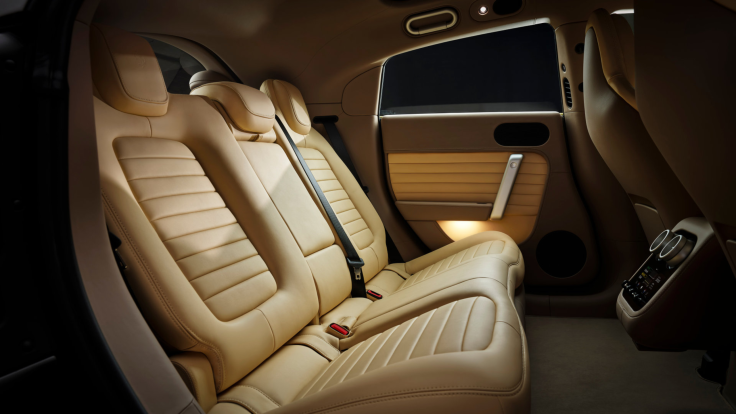
For the first time in a Ferrari sports car, the Luce offers five seats due to the absence of a transmission tunnel, along with 21.1 cubic feet of luggage space. Instead of synthetic engine sounds, Ferrari uses real vibration data from the electric motors, processed through an algorithm to create an adaptive acoustic experience that can be adjusted or disabled depending on driving mode.