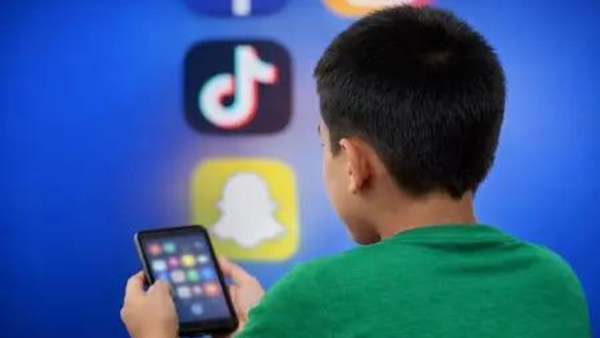
France's National Assembly overwhelmingly approved a major bill on Tuesday to enforce a strict social media ban for children under 15, making it the first European Union nation to legally bar young teenagers from platforms like TikTok.
The legislation, backed heavily by President Emmanuel Macron, places the enforcement burden directly on technology companies, warning they must verify user ages by September or immediately close unverified underage accounts across the country.
Two-Stage Rollout Begins September
A growing number of international governments have recently moved to restrict digital access, following mounting warnings from health professionals regarding the psychological impact of endless scrolling on adolescents.
France's public health watchdog warned last year that platforms were harmful to teenagers, particularly girls, though they were not the singular cause of declining mental health.
The legislation dictates a two-staged rollout. Under-15s will be blocked from creating new accounts beginning 1 September, while these rules will apply to all existing accounts by January 2027. Following approval by the Senate earlier on Tuesday, lower house members passed the bill by 279 votes to 81.
Digital Minister Anne Le Hénanff defended the rapid timeline ahead of the vote, stating that age-verification tools already exist and others are currently in development. She stressed that the legal onus rests squarely on the tech companies to impose the restriction.
'For four months, all of us in France will have to prove our age,' Le Hénanff told journalists. 'If someone is under 15, the account will be closed.'
Enforcing this measure by September aligns with another provision banning mobile phones in high schools at the start of the academic year. The minister assured that user data would remain protected.
Following the vote, President Emmanuel Macron posted on X, stating, 'I had committed to it, and now it's been voted on: social media will be banned for those under 15 starting back-to-school. Thanks to the parliamentarians. It's up to the Constitutional Council to rule, then on to action to make this measure concrete and protect our children online.'
Je m’y étais engagé, c’est désormais voté : les réseaux sociaux seront interdits aux moins de 15 ans à la rentrée. Merci aux parlementaires. Au Conseil constitutionnel de statuer puis place à l’action pour rendre cette mesure concrète et protéger nos enfants en ligne. pic.twitter.com/jC79unxX67
— Emmanuel Macron (@EmmanuelMacron) July 21, 2026
Blanket Ban Prevails Over Two-Tier System
While lawmakers agreed on the necessity of regulation, the two legislative chambers initially clashed. French senators pushed for a two-tier system, distinguishing between blacklisted platforms deemed dangerous to child development and those accessible with parental consent. Ultimately, the National Assembly's blanket ban prevailed.
Centrist Senator Catherine Morin-Desailly noted that a blacklisting system would have required lengthy consultations with the European Commission and carried a small risk of non-compliance with European law.
However, the blanket approach still faces sharp criticism from left-wing politicians, who have highlighted the speed of implementation, privacy concerns, and the high likelihood of teenagers circumventing the digital barriers.
The text provides exceptions for educational platforms and online encyclopaedias, avoiding financial penalties for parents or children who break the rules. 'The major platforms are, in my view, largely ready,' assembly member Laure Miller stated.
Macron hailed the vote as a major step forward, stating on X that the Constitutional Council must now rule on the measure. The ban represents a significant domestic reform for the president before he leaves office next year.
France's implementation will be closely monitored by the rest of Europe. The European Commission is evaluating an age verification application that member states have begun testing, while Commission President Ursula von der Leyen recently suggested children should have 'phased and gradual access' to platforms.
With Australia passing similar legislation last December, regulators will soon discover whether demanding tech giants police their own users will effectively protect adolescents, or if teenagers will find ways to circumvent the rules.