What are some of the things most commonly recommended to foreign visitors who want to experience Japanese culture? Maybe a stroll around the otaku heartland of Akihabara, or an afternoon at sumo -- perhaps even a hike up Mt. Fuji for the more adventurous.
All of these undoubtedly represent aspects of Japanese culture. But what should not be excluded is watching a soccer match.
It is a little frustrating for someone like myself who used to play rugby, which once was more popular than soccer in Japan, but I have to face up to reality.
J.League, Japan's professional soccer league, was established in 1993. Since then, soccer has become firmly rooted in local communities across the country and the league enjoys widespread support. Most would agree, soccer is now part of Japanese culture.
Football stars such as Makoto Hasebe and Guido Buchwald are familiar names among soccer fans around the world. Both played for Urawa Red Diamonds, commonly known as Urawa Reds.
Based in Saitama Prefecture, just north of Tokyo, the club boasts some of the most passionate supporters in the league. Fox Sports Asia in 2017 included Urawa Reds in its ranking of the top-five clubs with the "most hardcore" football fans in the world, with Spain's Barcelona and England's Liverpool also appearing in the list.
The average attendance at Urawa's home matches this season is close to 40,000. Although attendance has dipped slightly, the figure is still the highest in the league.
Just one hour by train from central Tokyo, the Reds' 63,700-seat capacity home ground, Saitama Stadium 2002, is the largest soccer stadium in Japan.
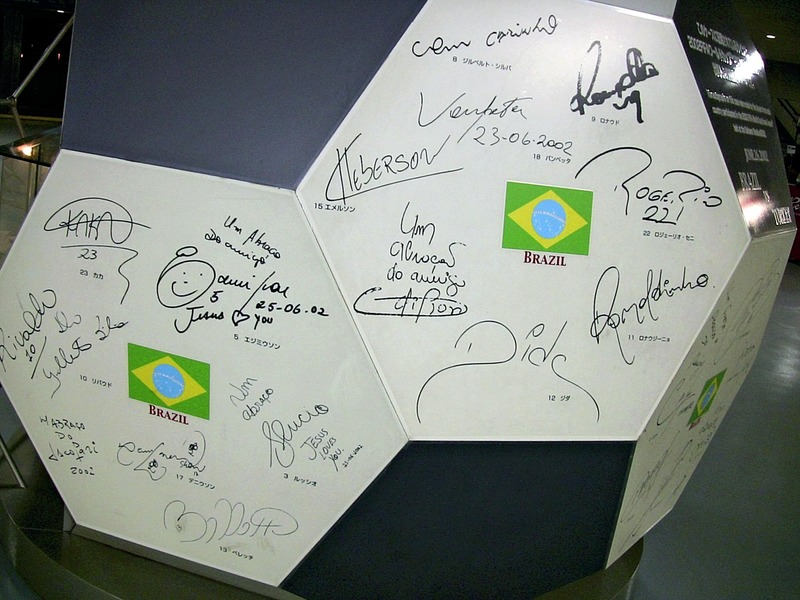
It hosted the 2002 World Cup semifinals between Brazil and Turkey and will also be used as a soccer stadium for the 2020 Tokyo Olympics. There are three other pitches in the complex in addition to the stadium pitch. And the park surrounding the stadium is open to the public.
The stadium is a 15-minute walk from the nearest station, Urawa Misono on the Saitama Railway, along a clearly signposted route.
On June 19, I visited Urawa's home ground to watch the first round of the AFC Champions League 2019 knockout stage against Ulsan Hyundai and must confess, this was the first time I had watched a professional soccer game at a stadium in Japan.
About 20 years ago while studying in Britain, I watched a Premier League match in Coventry. The enthusiasm of the supporters was overwhelming. I vividly recall being genuinely concerned that if the home team Coventry had lost the match, the supporters would have rioted. I also watched a few Premiership Rugby games in those days but they were peaceful in comparison to soccer matches. The atmosphere was totally different.
So what is it about Urawa Reds supporters that has given them such a reputation?
I met an English teacher from Plymouth, England, outside the Reds' home ground who has lived in Saitama for two years. Chris Hough, 34, a passionate fan of soccer -- or "football" as he prefers to call it -- said he has visited 29 soccer stadiums in Japan so far.
"In England stadiums are filled with anger. They are threatening [places]. I like Japan because it's more welcoming," he said.
It was his second visit to Saitama Stadium. "I was impressed by the passionate supporters. It's one of the best soccer stadiums in Japan."
'Heartful Soccer in Asia'
Akihiro Matsumoto, 35, a spokesman for Urawa Reds, said: "At first, the team was like excess baggage in the J.League. Since [those early days], we have accumulated victories and won the Asian championships twice. But there's something else that makes me most proud of this club."
The club holds soccer classes in disadvantaged areas of Southeast Asia as part of its activities called "Heartful Soccer in Asia," which aims to foster compassion and a willingness to work hard. In December 2018, Urawa Reds received the "HEROs Award," for its efforts to build a better future through sports.
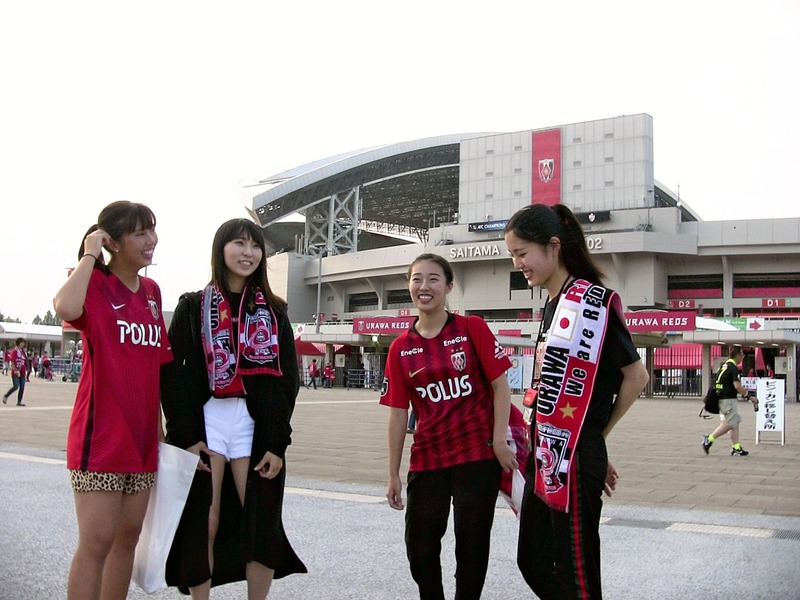
Attendance was just over 20,000 supporters on the day of the Champions League fixture against Ulsan, partly because the game was on a weeknight and also because the fixture wasn't included in the club's season-ticket package. Nevertheless, the stands were awash with red as supporters waved team flags while soccer chants roared around the stadium.
The stands were filled with men and women of all ages. Suzuka Matsuda, 21, was among a group of young female supporters. "We come to every home game to support the Reds. You can make friends with people of all ages. Being able to share the emotion of the moment with people around you is part of the appeal," she said.
Seated behind the goal, where the most passionate soccer fans are usually found, the group of young women was on their feet for most of the game. A 17-year-old in the group said: "My dad's a supporter, so I've been coming to the stadium and supporting the team since I was in my mom's belly."
The stadium was filled with such fans.
There were about 20 Ulsan supporters from South Korea wearing their team's blue uniform, enthusiastically beating drums. Nam Ki Yeol, 43, was visiting Japan from South Korea on a three-day trip with his son to support the team.
"I'm envious of the J.League because South Korea's K-League is not as popular," he said. As some of Ulsan's players used to play in the J.League, there was even a small contingent of Japanese fans cheering for the South Korean side.
When I went over to see a group of Urawa Reds ultras, a security guard stopped me. "You'd better not for your safety," he said, warning me that the blue polo shirt I was wearing might not go down too well.
In fact, a note in a corridor in the home section read: "Wearing the visiting team's gear is forbidden in this area." Visitors take note.
Urawa was the first to score but allowed Ulsan to come from behind late in the game. When the stadium screen displayed a notice indicating that there were four minutes remaining, the supporters seemed to become even more energized as they erupted in cries of support, urging their team not to give up.
Urawa ended up losing the game, but when the players walked over to the stands for the traditional post-match bow, the supporters cheered for the team as if it had won.
Few fans could be heard discussing the result after the loss, having seemingly shaken off the fervor that filled the stands during the match.
The fixture happened to be around the time of a so-called Strawberry Moon. "Even though tonight's moon is our color -- red ..." a supporter said wistfully, reflecting the sentiments of the many crestfallen fans as they made their way home.
Read more from The Japan News at https://japannews.yomiuri.co.jp/