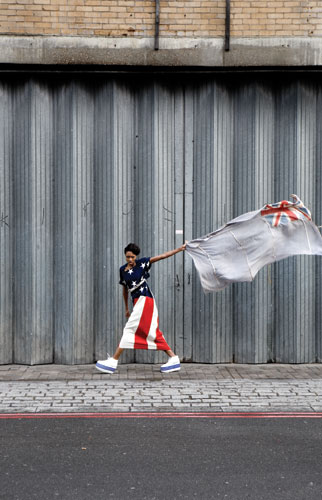
Knowing the amount of fabric wastage is approximately 15% of a design’s material usage, I aimed to create a zero waste capsule collection. The unpredictable quality of pattern shapes is a big challenge in the fashion industry. To reduce fabric waste to 0, fabric can be cut and folded without using patterns and the fabric/materials can be reusable too, no shape or size is exempt. I used vintage flags, utilising the entire flag as is, with all its character and finishing to create my garments. Using folds and tucks, pleats and ruching I used the whole flag, letting the size of it dictate a majority of the silhouette’s outcome and to help form the pieces. To keep them in the shape I used zips that are sewn into flags to replace the seams. When the garment is unzipped, the garment will instantly transform back into a flat rectangular shape. Photograph: Sean Michael/guardian.co.uk
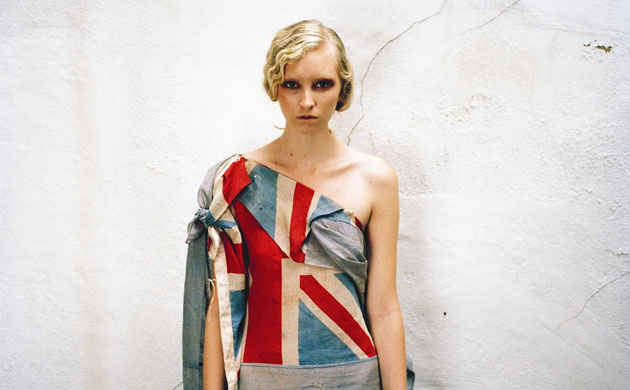
Knowing the amount of fabric wastage is approximately 15% of a design’s material usage, I aimed to create a zero waste capsule collection. The unpredictable quality of pattern shapes is a big challenge in the fashion industry. To reduce fabric waste to 0, fabric can be cut and folded without using patterns and the fabric/materials can be reusable too, no shape or size is exempt. I used vintage flags, utilising the entire flag as is, with all its character and finishing to create my garments. Using folds and tucks, pleats and ruching I used the whole flag, letting the size of it dictate a majority of the silhouette’s outcome and to help form the pieces. To keep them in the shape I used zips that are sewn into flags to replace the seams. When the garment is unzipped, the garment will instantly transform back into a flat rectangular shape. Photograph: Sean Michael/guardian.co.uk

In responding to the context of sustainability, my approach was to make use of second hand existing clothes by giving them a second, third or fourth life. Reworking second-hand clothes is highly sustainable and makes the garment fresh. It has very little waste, as it is not creating more waste from making new things. It is also cheap and affordable to do. This cycle of updating the old to look new not only increases sustainability in fashion but encourages a more personnel, doable, skilled customisation approach to design, that many, if they just learn a few darning skills can do. Photograph: Tomer Halfen/guardian.co.uk
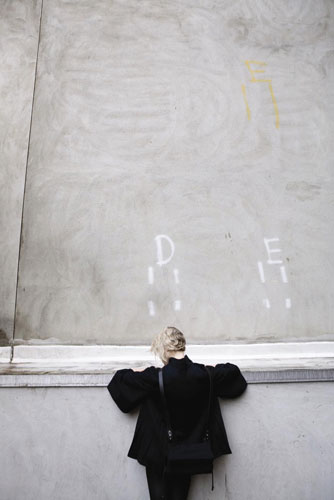
Driven by consumer culture and the desire for new products, garments are often turned into waste long before their expected lifespan. It is the responsibility of designers who aid in this consumerism, to consider the whole product lifecycle and in effect ‘design for the death’ of a product to limit its environmental impact. The inspiration behind establishing Luxury Ethical brand Cue is to assist in changing the perception of environmentally conscious fashion and promote the idea of ‘slow fashion’ in order to combat conspicuous consumption. Inspired by observing everyday scenarios of city living and personal transportation, the collection will be a product of social responsive design, responsibly executed for the needs of the ‘Urban Commuter’, with a strong emphasis on functional clothing for the female cyclist. Photograph: Sean Michael/guardian.co.uk

This project, Partimi, has endeavoured to create strong and desirable designs that use organic, recycled and sustainable materials and highlight environmental issues. The fabrics include: organic hemp, undyed organic cotton, sustainable acetate, bamboo, digitally printed organic cotton and sequins handmade from plastic sandwich cartons. Partimi strives to attract the wearer with new and unusual tactile fabrics and further engage them by creating awareness about certain issues. However even if the customer isn’t interested in the deeper meanings in the clothes they still cannot help but play a part as 5% of profits are donated to The End of the Line Bluefin Tuna campaign. Photograph: Sean Michael/guardian.co.uk
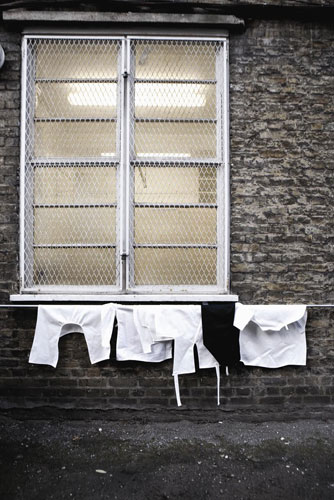
Many lifecycle assessments have proven that for the majority of garments, the consumer phase emerges as the largest environmental burden in terms of water usage. The repeated use of washing machines accumulatively consumes high volumes of water during a garment’s life. We need to change the way we not only produce and consume, but most importantly, use our clothing to make any beneficial reductions in water dependency. The aim of my project was to develop a design strategy informed through primary research that encourages the wearer to reduce the frequency of laundering, and therefore reduces the overall water consumption of the garment. Photograph: Sean Michael/guardian.co.uk
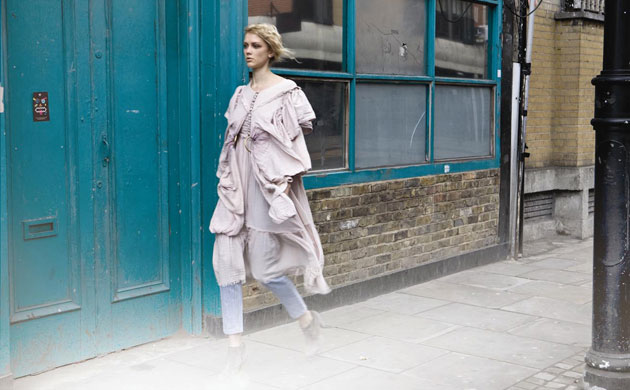
Sustainability is very much a new consideration within my designs that I recognised because of the natural look of the fabrics I tend to go for. This made me look at eco fabrics a lot closer, examining further a fabric’s life span, asking where it came from, what processes it has been through in order to achieve a sustainable final outcome. I recognise that beauty and desirability in a fashion garment are essential to give the garment longevity and quality. Through the huge amount of cutting each dress takes to the intricate detailing I so often use, the ability to mass manufacture these pieces is near impossible, making then beautiful, limited ones-offs, a statement themselves against the mass fashion trends of today. I like to think my dresses would be worn for life. Photograph: Sean Michael/guardian.co.uk
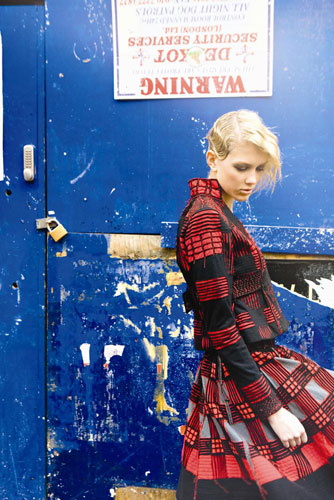
It is estimated that of the 26 million tons of cotton fibre consumed in India, 0.21 million tons is wasted during yarn manufacturing and 30% of waste is generated during bulk garment cutting. My concept is to live and work in India in collaboration with Pratibha Syntex, India’s first fully vertical integrated garment manufactures and second largest producer of organic cotton, in a collaborative effort to reduce textile waste in the fashion industry by providing an alternative low impact material. I’ve named the initiative the Reinstated Fibre Project. It is an effort to reduce fibre, energy, and water consumption by sourcing from self-generated factory waste. My role as designer is to lead a team of fabric developers, patternmakers, printers, and operators to create a garment collection of ‘reinstated’ fabrics that not only showcase recycled fibre, but as well as implements the concept of zero-waste design in a number of pieces. Photograph: Sean Michael/guardian.co.uk
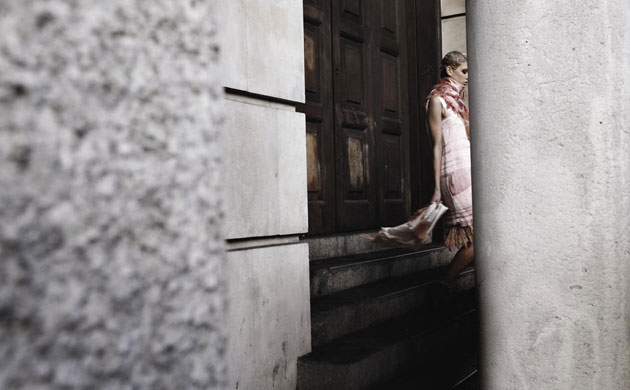
The material used lends itself perfectly to the brief. The hemp plant is a natural, renewable and eco-friendly resource, which can be used to not only create fibres and fabrics, but also provide food and fuel. Hemp satin was the fabric of choice as it is a lightweight, elegant and fairly fluid fabric that was quite easily frayed to create the desired effect. The idea behind the products was to create garments with minimal waste through a handmade craft technique. By using only a 1 metre by 150cm fabric piece, slicing it in half and meticulously fraying the fabric at the edges, I created the shape of the front and back of a pattern piece for a simple shift dress. Natural dye extracts were used to colour the fabrics and ensure the eco friendly element would still be strongly present. These dyes are very concentrated, water soluble and inter-mixable powders, which are made mainly from plants. Photograph: Sean Michael/guardian.co.uk
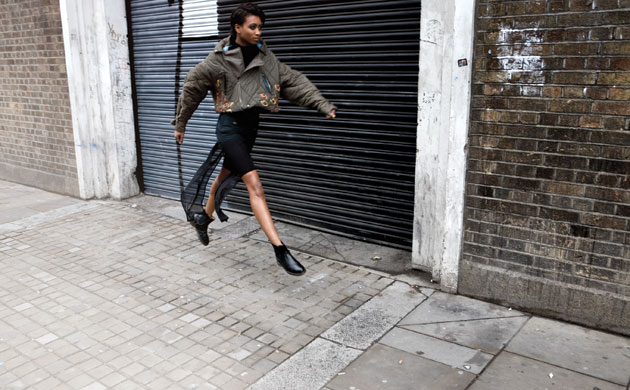
R&B is eco and sustainable in the sense that fabrications are entirely recycled from one reliable and extensive source - the military. The label, seeking not to rehash existing garments, deconstructs pieces completely, so for example, a damaged ex-army sleeping bag can become a luxurious quilted biker jacket. The fact that materials are recycled is irrelevant to the final outcome, as the designers seek to elevate the art beyond using it as a gimmick. Acquiring pieces from the army directly there are countless fabrics and possibilities, and in looking to such a source there is also the possibility of putting any design into production with vast multiples available, so with one sleeping bag being sufficient for one jacket, any number of almost identical jackets could be produced. Photograph: Sean Michael/guardian.co.uk
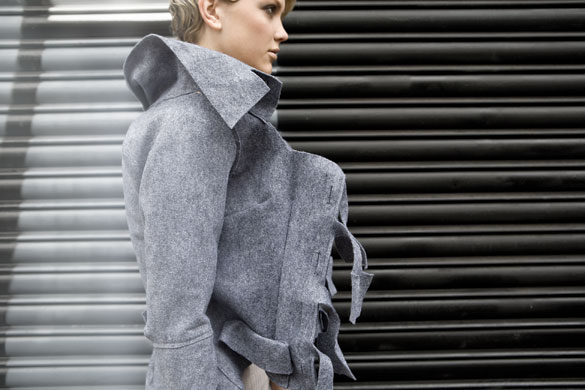
In developing my low- to no-waste pattern I initially considered every aspect of the material at hand, from raw material to finished garment. I wanted to create the quintessential sustainable garment and solve all of the problems we face globally, locally, emotionally, ethically and physically. I allowed the negative space between pattern pieces on the cloth define a new pattern. The pieces that would have ended up on the cutting room floor become integral parts of the garment design allowing me the freedom to think beyond the normal constraints of the conventional fashion industry. Photograph: Sean Michael/guardian.co.uk
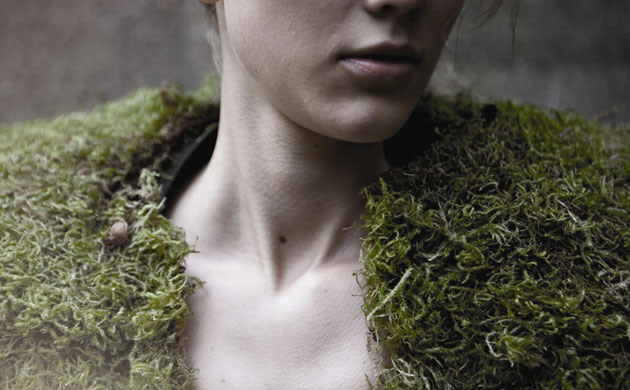
I seek to address this disconnected state of being by exploring fabric and garments as the interface subconsciously adopted between the inner persona and the world the outer persona inhabits. I illustrate this through various artistic processes that act as both reflective and connective forces between people and the environment they inhabit. The mediums of video and music coupled with the physical garments and moss collars are an invitation for the viewer to ‘look closely’ at their surroundings, look at the effects of everyday living on their surroundings and consider a wholesome and participatory path towards a new manifesto for thoughtful engagement. Photograph: Sean Michael/guardian.co.uk
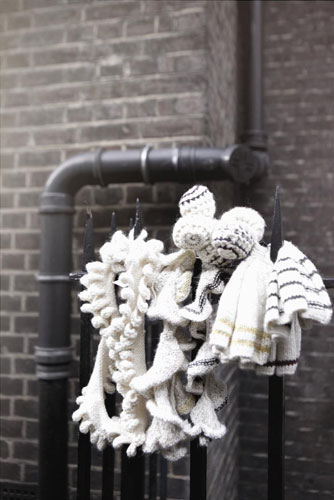
Make Do Re-Do Mend revolves around the concept of slowing down the fashion cycle and concentrating on adapting, adjusting and re-making old garments. New hand-knitted pieces are fastened onto basic wardrobe staples to create a completely adjustable wardrobe that is only limited by the wearer’s imagination. Using 100% British wool from local sources reduces distribution costs and pollution. By adding colour from recycled old yarn and reusing materials that have already been through one lifecycle, the consumer who is concerned about ecological fashion will have prolonged the desirability of their garments. Make Do Re-Do Mend hopes to enthral the wearer and make them feel part of the design process, leading them to fall in love again with their pieces and cherish their increasing longevity. Photograph: Sean Michael/guardian.co.uk