MINNEAPOLIS _ Attorneys representing George Floyd's family on Monday released findings of their own autopsy that say he was asphyxiated while Minneapolis police officers knelt on his back and neck, pinning him to the ground.
The findings directly challenged preliminary results from the examination by the Hennepin County medical examiner's office that there were "no physical findings" of asphyxia, but he instead died from other factors, including being restrained.
"George died because he needed a breath, a breath of air," family attorney Ben Crump said during a news conference Monday afternoon. "For George Floyd, the ambulance was his hearse."
Crump added that Floyd "was living, breathing, talking until we see those officers restrain him while he's face down in handcuffs with Officer Chauvin having his knee lodged into his neck for over 8 minutes, almost 9 minutes, and the other officer having both his knees lodged into his back. And the doctors will explain the significance of that, as to the cause and manner of death."
Crump's co-counsel, Antonio Romanucci, said that not only was Chauvin's knee on Floyd's neck, "but so was the weight of the other two police officers on his back. ... That makes all of those officers on scene criminally liable, and without a doubt, civilly responsible."
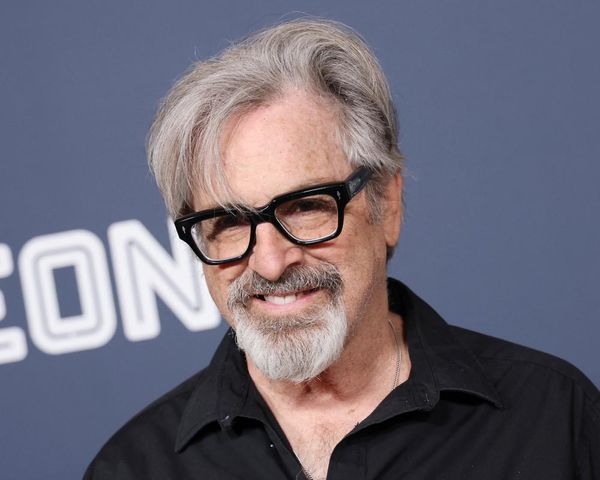
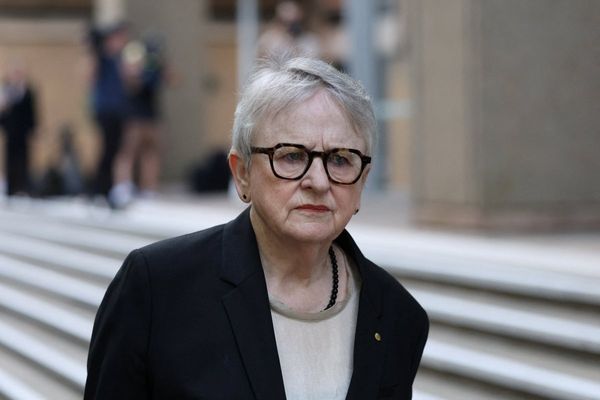
Dr. Allecia Wilson, director of autopsy and forensic sciences at the University of Michigan and one of two examiners on behalf of the family, said, "The evidence is consistent with mechanical asphyxia as the cause of death and homicide as the manner of death."
Second autopsies do have their limitations, Wilson said, including that "we are not seeing the tissues in their original state and some items may have been kept by the original pathologist. With that acknowledgment, we feel those items will not change or alter the primary cause of death of mechanical asphyxia."
Dr. Michael Baden, also working for the family, said the second autopsy shows that Floyd "had no underlying medical problem that caused or contributed to his death. ... He was in good health. The compressive pressure of the neck and back are not seen at autopsy because the pressure has been released by the time the body comes to the medical examiner's office.
Baden said the belief that someone is breathing if they can talk "is not true. I am talking and talking and talking and not breathing in front of you." Floyd repeatedly said "I can't breathe" while on the pavement.
Crump said that all the evidence to date points to Floyd having died at the scene and not later that night, when he was at Hennepin County Medical Center.
"The medics, based on the EMT report that we have in our possession, performed pulse checks several times finding none and delivered one shock by their monitor, but George's condition did not change," he said. "They delivered him to the hospital, continued ventilation, but that last report was the patient was still pulseless."
Crump said last week that relatives sought their own autopsy because the first examination's findings "do not address in detail the effect of the purposeful use of force on Mr. Floyd's neck and the extent of Mr. Floyd's suffering at the hands of the police."
He added that the family and its attorneys "are not surprised, yet we are tragically disappointed in the preliminary autopsy findings. ... We hope that this does not create a false narrative for the reason George Floyd died. Attempts to avoid the hard truth will not stand."
The criminal complaint, citing the medical examiner's preliminary disclosure of autopsy results, said the examination "revealed no physical findings that support a diagnosis of traumatic asphyxia or strangulation" in connection with Chauvin's knee pressed against Floyd's neck.
Instead, the charges continued, Floyd died from a combination of being restrained, potential intoxicants in his system along with various underlying medical conditions including heart disease and hypertension.
"What we know is clear," said Romanucci, Crump's co-counsel. "George Floyd was alive before his encounter with police, and he was dead after that encounter. We believe there is clear proximity between the excessive use of force and his death."
It's too early to tell whether the family's autopsy will play a role in Chauvin's criminal case.
"I don't even know how this goes," said Bradford Colbert, a practitioner in residence at Mitchell Hamline School of Law. "It's not exactly clear to me, because in a criminal case, it's the state vs. the defendant. Theoretically, the victim does not have the right to be involved. That's how it rolls."
If they find the results favorable to their case, either the prosecutor or a defense attorney could choose to enter the results of the family's autopsy into evidence at a criminal trial, Colbert said. The results could also be used in a civil trial, if Floyd's family decides to sue.
Floyd's family, through their attorney, used the new findings to call for the other officers to be charged, though they did not specify with which particular crimes. They also asked that Attorney General Keith Ellison, who has taken over the case, pursue a first-degree murder charge against Chauvin.
Also Monday, a brother of George Floyd spoke at East 38th Street and South Chicago Avenue, where Floyd was detained by police and pinned under the knee of Chauvin for several minutes until he was left unresponsive and died later that night.
Terrence Floyd is "the first member of (George Floyd's) family to visit the site of his murder," said Sanford Rubenstein, a New York civil rights attorney who accompanied the brother to Minneapolis.
The Rev. Kevin McCall, who is part of the delegation with George Floyd's younger brother on this visit from Brooklyn, said Monday morning that Terrence Floyd went to the site "to feel his brother's spirit at the memorial."
A large ring of flowers surrounding chalked messages of hope and determination dominate the intersection, creating a memorial that has gone barely a moment without people holding vigil. Along one wall of the Cup Foods store is a mural with "George" and "Floyd" in giant yellow letters spreading like wings from his visage.
Video of Chauvin's curbside detention of the handcuffed and unarmed Floyd has ignited sometimes violent and destructive protests for nearly the past week in Minneapolis and cities across the country, though his family has repeated calls for people to instead protest peacefully.
Terrence Floyd's visit comes after a day of protests in the Twin Cities and late-night confrontations between police and demonstrators.
Sunday's protests took a heart-stopping turn two hours before the curfew when tanker truck driver Bogdan Vechirko barreled in the direction of thousands of protesters gathered on the Interstate 35W bridge in Minneapolis, scattering the crowd and narrowly missing what could have been a mass casualty tragedy. Vechirko, 35, of Otsego, was jailed on suspicion of assault and with charges pending, but state Public Safety Commissioner John Harrington said Monday that the driver did not act with the intent of hitting anyone.
The incident came on the sixth day of protests across the Twin Cities. Later that evening, about 150 protesters were arrested near I-35W and Washington Avenue in downtown Minneapolis after they failed to heed the 8 p.m. curfew.
Chauvin, who is white, remains in custody and has been charged with third-degree murder and second-degree manslaughter in connection with the May 25 death of the 46-year-old Floyd, who was black.
Three other officers who were involved in the incident have been fired. Hennepin County Attorney Mike Freeman said that he anticipates the others will be charged as well.
"I want to see all of them get punished to the full extent for what they did to my brother," Terrence Floyd said in an interview Sunday with ABC-TV. "Because when I saw the videos, not only was the dude on his neck ... not only that, you got the other three officers behind the camera, behind the car on him. So he can't move."
In the interview, Terrence Floyd implored those enraged by his brother's death to express themselves peacefully.
"Don't tear up your town," he said. "All of this is not necessary, because if his own family and blood is not doing it, then why are you? ... Because when you're finished and turn around and want to go buy something, you done tore it up. So now you messed up your own living arrangements. So just relax. Justice will be served."