Who were the best and worst Labour leaders?
On the Daily Politics the Labour MP Simon Danczuk said that Ed Miliband was “one of the worst Labour party leaders in history”. Here’s the full quote.
Ed Miliband will probably go down as one of the worst Labour Party leaders in history. He takes us into a disastrous general election and performs very badly. He bequeaths us this system that clearly doesn’t work. He gives permission to the far left in the party to have the space to develop as they have done. He should apologise for those things. He was critical of people who were trying to push him to be stronger on immigration and welfare. There are so many things he should apologise for. He’s been one of the worst leaders we’ve ever had.
The “one of the worst leaders ever” charge is an interesting one, but not normally one that I would have time to pursue. However, by chance there is a book sitting on my desk that makes it possible to shed some light on this. Charles Clarke, the Labour former home secretary, and Toby S James, an academic, have edited British Labour Leaders, which looks at the record of all Labour leaders. It includes a chapter by Clarke in which he measures leaders by how well they did in general elections. The figures are sometimes quite surprising, and will challenge preconceived ideas as to who was best/worst.
Clarke looks at the record of all 15 Labour leaders from Keir Hardie in 1906 who fought a general election and he ranks them according to five separate metrics. The full charts are in the book, but here is a simplified version.
Looking at these figures, Miliband’s record is mixed; not great, to be sure, but certainly a lot better than Danczuk is suggesting.
One figure does come out very badly using this system to evaluate leaders; Gordon Brown. He is near the bottom of most of these charts. In some respects that just shows how flawed this system is a means of evaluating politicians, because Brown also contributed to the success of New Labour when Blair was prime minister but does not get the credit using the Clarke methodology.
Will Clarke lose any sleep over this? Probably not. When he and Brown were in cabinet together, they were bitter rivals.
Here are the five measures of success.
Best by seats gained/lost at an individual general election
The two leaders at the top are not surprising, but it may be a shock to some to see Ramsay MacDonald in the top three. The fact that he also comes last, having lost more than 200 seats in 1931, is not unexpected, although it is odd to see Attlee in the bottom three too. He is not normally remembered as a great election loser.
On this measure Miliband is in the bottom half, but only just; there were eight elections where Labour lost more seats.
Best
1 - Clement Attlee in 1945 - 239 seats gained
2 - Tony Blair in 1997 - 147 seats gained
3 - Ramsay MacDonald in 1929 - 136 seats gained
Worst
1 - MacDonald in 1931 - 235 seats lost
2 - Gordon Brown in 2010 - 97 seats lost
3 - Attlee in 1950 - 78 seats lost
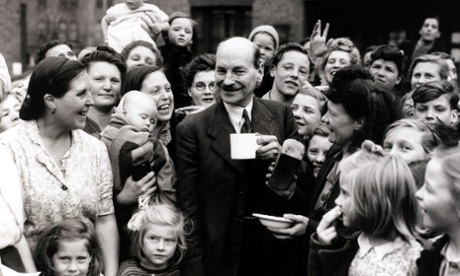
Best by share of vote gained/lost at an individual general election
The early Labour leaders had an advantage on this metric, because this was a time when Labour was emerging from nowhere as a party. Increasing the share of the vote was not that hard.
On this measure Miliband’s 2010 performance (where Labour’s share of the vote went up, even though the party lost seats) is roughly in the middle of the table.
Best
1 - William Adamson in 1918 - up 14.4%
2 - Attlee in 1945 - up 10%
3 - John Robert Clynes in 1922 - up 8.9%
Worst
1 - Michael Foot in 1983 - down 9.3%
2 - Arther Henderson in 1931 - down 6.2%
3 - Brown in 2010 - down 6.2%
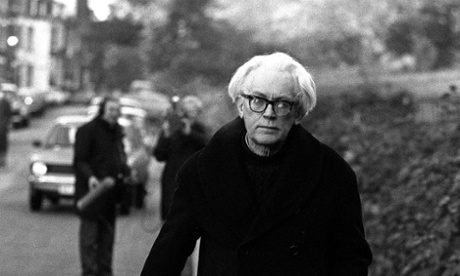
Best by seats gained/lost in general elections cumulatively (ie, in all elections fought)
This is arguably a better measure, because it takes in overall performance. Interestingly, in this table Neil Kinnock (remembered as an election loser) beats Harold Wilson (remembered as a winner).
On this measure, Miliband is the fifth worst Labour leader.
Best
1 - Attlee - 225 seats gained cumulatively (in five elections)
2 - Clynes - 85 seats gained cumulatively (in one election)
3 - Blair - 84 seats gained cumulatively (in three elections)
4 - Neil Kinnock - 62 seats gained cumulatively (in two elections)
5 - Wilson - 61 seats gained cumulatively (in five elections)
Worse
1 - Brown - 97 seats lost (in one election)
2 - MacDonald - 90 seats lost cumulatively (in four elections)
3 - Foot - 60 seats lost (in one election)
4 - Callaghan - 50 seats lost (in one election)
5 - Miliband - 26 seats lost (in one election)
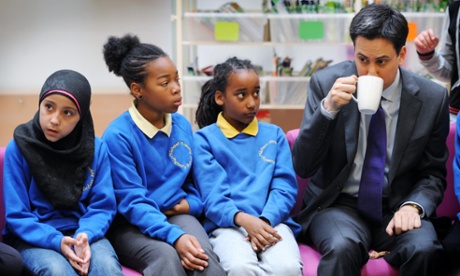
Best by share of vote gained/lost in general elections cumulatively (ie, in all elections fought)
This is another measure that benefits the early Labour leaders.
On this metric, Miliband comes seventh out of 15. Labour’s share of the vote when up 1.5 percentage points in 2015.
Best
1 - Adamson - up 14.4% (in one election)
2 - Attlee - up 12.9% cumulatively (in five elections)
3 - Clynes - up 8.9% (in one election)
Worst
1 - Foot - down 9.3% (in one election)
2 - Brown - down 6.2% (in one election)
3 - Wilson - down 4.5% cumulatively (in five elections)
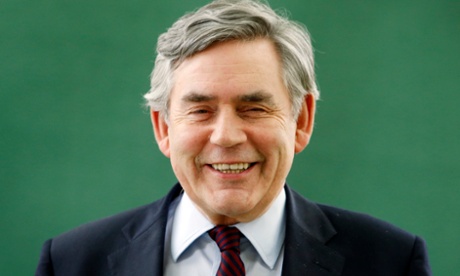
Best by total votes gained/lost cumulatively (ie, in all elections fought)
This measure is interesting because, if you count using this system, Blair emerges as Labour’s second worst leader. That’s because of all those lost votes that people talk about in Labour circles. And Kinnock is the second best Labour leader (because he managed to recover many of those votes lost under Foot.)
In this table Miliband comes sixth out of 15. Labour gained more than 700,000 votes in 2015.
Best
1 - Attlee - up 5.8m
2 - Kinnock - up 3.1m
3 - MacDonald - up 2.4m
Worst
1 - Foot - down 3.1m
2 - Blair - down 2m
3 - Brown - down 900,000
That’s all from me for today.
Thanks for the comments.
Updated
The hearing is over. I’m afraid it was a bit of a snoozeathon. It’s no surprise that the live feed crashed so often; even digital technology might have found it a struggle staying awake.
Osborne says he expects the OECD to update international corporate tax rules later this year. The plans won’t be perfect, but they will amount to a very substantial reform. Britain and Germany initiated this, he says.
Lord Forsyth goes again.
Q: You say you will compensate councils from the overseas aid fund for the cost of housing Syrian refugees. Why will that aid be limited to 12 months?
Osborne says that is all that is allowed under the rules about what counts as aid spending.
Q: Aren’t these rules flawed?
Osborne says Britain signed up to spending 0.7% of national income on aid. Over recent weeks the case for that has become stronger.
Q: But are the rules sensible?
Osborne says, if there were no rules, all countries would claim to be spending 0.7% of their income on aid.
Updated
Q: What evidence has there been of a change in banking culture?
Osborne says there has been a change, but there is more to do.
He says the cost of getting things wrong is now phenomenal. So the risks of having a “dodgy trader” are much higher.
Q: The minimum wage is calculated to take into account what the employment market can bear. But the living wage is based on what you need to live. How will you ensure that, when tax credits are cut, there are not substantial losers?
Osborne says there are several versions of the living wage out there. He followed the approach on George Bain’s approach for the Resolution Foundation, based on 60% of median earnings.
He says he has never pretended that decisions on welfare are not difficult.
Q: How will you ensure people losing money from the cuts to tax credits have time to get used to their lower income?
Osborne says he is proposing a compact to the country. To business, he is saying their taxes will be low, but they have to pay higher wages. And to families he is saying welfare will be less generous, but wages will be higher.
He says current welfare spending is unsustainable.
Ramping up tax credits in a way that made them unaffordable was irresponsible. Originally they were supposed to cost less than £1bn. But they ended up costing £30bn.
Q: How will the social care sector be able to cope with the higher national minimum wage?
Osborne says he is aware of this issue. He plans to address it in the spending review.
Osborne says there is not a completely free market in energy. The energy has to ensure a reliable energy supply. And it has to address the cost of carbon to the environment. So energy is more expensive than it would be if these factors did not apply.
Lord Turnbull goes next.
Q: The price you are paying for Hinkley Point is extremely high. And the French are building reactors to this design, but can’t get them to work. It’s going to be a white elephant.
Osborne says he is not an expert on the design of nuclear power stations. But the government does not bear the risk. If it does not work, EDF lose out.
On the strike price (the guaranteed price for the energy price it will produce), Osborne says it is cheaper than the alternatives. He believes in an energy mix, he says.
Updated
Osborne says the world can learn from how Britain does public/private partnership. There is a very successful example in London, where there is a £6bn project for new sewers. It involves public and private investment.
Q: On nuclear power, are you optimistic that we will get a deal with the Chinese on Hinkley Point, perhaps when the Chinese president visits later this year?
Osborne says he is “pretty confident” that there will be a deal, although talks are still going on. EDF is the main partner, but the government is looking to involve the Chinese as a co-investor.
Updated
I’m following the hearing through the live feed on the parliament website, but it has been crashing a bit.
We’re back up now. Osborne is talking about the EU renegotation.
He says Britain should be able to stay in a reformed EU where its interests are protected. Other EU countries accept that the system is not working for the non-Eurozone countries as well as for the Eurozone countries.
At one of the Greek crisis meetings, a decision was taken by Eurozone countries to use an EU instrument to loan money to Greece. There were no non-Eurozone countries in the room when this was decided. Subsequently he worked hard to ensure that Britain’s interests were protected. But, when he took this up with the commission, he was told that, under qualified majority voting, the non-Eurozone countries did not need to be consulted because the Eurozone countries had a majority.
This is a key issue in the renegotiation, he says.
Osborne says it is unfair to give people in council homes the right to buy, but not people in housing association homes. That is a “public sector anomaly”, he says. He is correcting it.
Q: How will you ensure that there is one-to-one replacement?
Osborne says that detail is coming. It will be in the legislation. Essentially, money from the sales, plus money from the sale of expensive council housing stock, will fund extra homes.
Lord Forsyth, the former Conservative cabinet minister, goes next.
Q: Are you worried about the impact that interest rate rises will have on people?
Osborne says the governor of the Bank of England has said that, when rates rise, their peak will be lower than in previous interest rate cycles.
Lord Turnbull, the crossbencher and former cabinet secretary, say he thinks Osborne is putting too much emphasis on reducing debt.
Osborne says he does not agree.
Back to the Lords, where Osborne says he is determined to keep the Bank of England independent. He does not know what would happen under other parties, he says, in a jibe at Jeremy Corbyn.
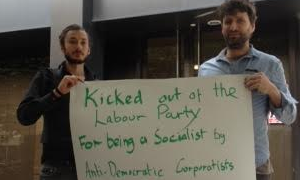
My colleague Rowena Mason says Labour have had to call the police about a protest outside their HQ - involving just two people.
Stefan and Paul travelled to Labour HQ in London from Bristol to protest about being denied a vote in the leadership election, accusing the party of rigging the contest against Jeremy Corbyn. Labour officials called the police on them (and three Met officers arrived, outnumbering the protesters).
The party then sent an email to all its staff restricting access to its HQ.
The Labour peer Lord Layard goes next.
Q: Would you agree that the deficit did not contribute to the financial crash? And why are you pursuing a contractory policy?
Osborne says that when he became chancellor, the deficit was extremely high.
The deficit is now almost 5%. If it were not for the fact that it used to be around 11%, people would be worried about that. If you cannot cut it when the economy is doing well, when can you cut it? He says his opponents seem unwilling to cut the deficit in any circumstances; either the economy is too strong for it to be necessary, or too weak, they say.
Osborne says the M25 and the Channel Tunnel were both bitterly opposed by MPs.
Each general has a responsibility to take big, controversial decisions to review our infrastructure, he says. HS2 is the choice for this generation.
George Osborne's evidence to the Lords economic affairs committee
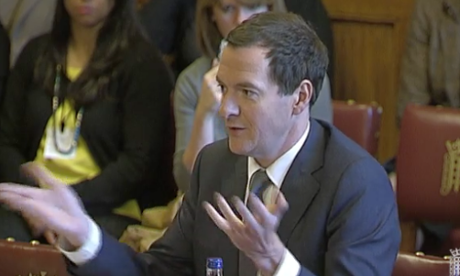
George Osborne, the chancellor, has just started giving evidence to the Lords economic affairs committee.
They start with HS2.
Q: HS2 is due to cost about £56bn in today’s money. What will you do to cut the costs?
George Osborne says he is a stronger believer in the project.
Big infrastructure projects are always controversial. But, over 25 years, we can afford it.
He says French high-speed rail construction is a lot cheaper. He has asked HS2 to look at the reasons for this. He is told that it is because property rights are stronger here, and compensation is higher.
And that’s it. The opening speeches are over.
Yvette Cooper has performed well during the refugee crisis and she put in another good performance today. I would not go quite as far as her Labour colleague Jack Dromey ...
In the finest Parliamentary speech for years, @YvetteCooperMP speaks for all that is best in Britain. #refugeeswelcome to our shores
— Jack Dromey MP (@JackDromeyMP) September 8, 2015
... but it was certainly a very fine speech.
Cooper challenges May to say how many refugees Britain will take in the first year. May says she cannot put a figure on that. It would not be right to put a figure on this, she says. It is more important to ensure that the right support is in place. That is why she cannot commit to a figure now.
Cooper says Britain may be helping to fund assessment centres in Greece. But what happens after those assessments have been carried out? Why won’t Britain take refugees from Greece?
May says every county in Europe is contributing in its own way. Britain is not part of the relocation in Europe scheme, but it is helping in other ways.
Yvette Cooper intervenes. Can May give any good reasons why the UK won’t take refugees from Greece?
May says Cooper implied in her speech that the UK was not working with other countries in Europe. But it is. It is already providing help to Greece.
May says the amount the UK is spending helping refugees from Syria in refugee camps is almost as much as the rest of the EU put together. Without British aid to these camps, the number of people attempting the “perilous” journey to the UK would be even higher.
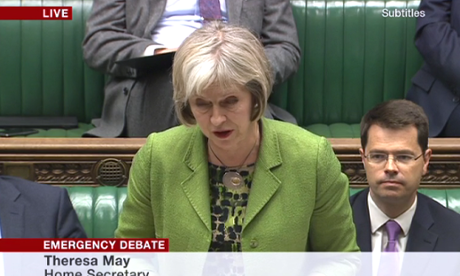
Theresa May, the home secretary, is speaking now.
She says the scenes we have seen have been harrowing. The government is doing everything it can, she says.
Alex Salmond, the Scottish foreign affairs spokesman and former Scottish first minister, asks if the government has plans to help people not in refugee camps.
May says the government does accept asylum claims from people in the UK. It will consider those claims.
Cooper is winding up now.
In the 1680s 50,000 Huguenots fled here from La Rochelle.Two hundred years later, 140,000 Russians fled here from the Czar. And in the 30s, despite the recession and hardship our country faced we took in over 80,000 Jewish and European refugees. And this is a challenge to us in Parliament, not just to our government – it’s not just on them.
And she quotes what David Grenfell, a Labour MP, said at the end of the debate about taking Jewish refugees in 1938. He said:
The House this evening has shown a wonderful unanimity of sentiment and feeling, which must gladden the hearts of members in all parts of the House. Within the framework of a feeling of common humanity and a common standard of civilisation members in all parts of the House have filled in a picture which shows the House of Commons at its very best. We are at the turning of roads.. We could never set our hands to a better thing. Tomorrow may be a hard day for us but I feel that by doing the things that are morally right we shall achieve something which is worthy of the name of the British nation.
Cooper concludes:
Let’s be the House of Commons at our best. Let’s live up to our predecessors. Let’s live up to our history. Let’s live up to the generosity of the country we seek to represent. Let’s decide this week we will do more to help.
Cooper says the government’s proposal implies 4,000 refugees over the next 12 months. We should take more over the next 12 months, she says. But she says it is hard to put a figure on how many people we should take over the whole parliament. That needs to be kept under review.
Cooper says she agrees with the government that Britain should not take part in an EU-run quota system. But that does not mean Britain should turn its back, she says.
Yvette Cooper gives her verdict on David Cameron's response to the refugee crisis. pic.twitter.com/yR9nNdYEc8
— Emily Ashton (@elashton) September 8, 2015
Cooper says 7,000 Syrians arrived in Macedonia on Monday alone. And they are arriving in other countries too.
She is particularly worried about Greece, she says.
Cooper says, as well as disagreeing with the government over numbers, she disagrees with the decision not to take refugees from Europe.
The government wants to stop them coming to Europe, she says. But this argument does not apply, because people are fleeing already.
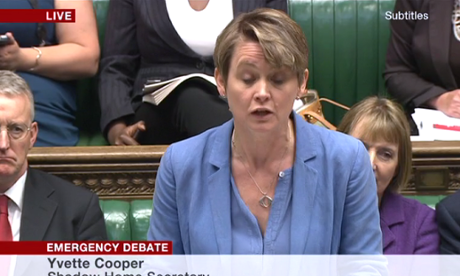
Cooper says May should spend the next month working on a plan to show how many refugees could actually take.
Cooper says Cameron’s 20,000 figures amounts to 4,000 a year. But that compares to the 10,000 Jewish children who came to Britain in the late 1930s under the kindertransport programme.
She says she said Britain could take 10,000 people straight away by considering how many refugees local councils could take. Has Theresa May asked councils how many people they could accept?
She says almost 4,000 people have offered to open their homes to refugees.
Cooper says the government’s programme to take vulnerable Syrians from refugee camps has only taken 200 people. She welcomes the fact that the government says it will take 20,000 people. That shows that the government can be made to change its mind.
Nigel Evans, a Conservative, asks Cooper if she agrees on the need to avoid policy that turns Europe into a “magnet” for those who will put their lives at risk crossing the Mediterranean.
Cooper says she will address that in her speech.
Cooper says there is a difference between immigration and asylum. The issues around immigration should not stop us doing our bit to help the refugee crisis, she says.
She says many of the refugees are fleeing a new totalitarianism.
Labour agrees that Britain should be helping those in refugee camps. She applauds the fact that Britain is doing more than other countries. She agrees that the navy should be contributing to search and rescue, and that action should be taken about people smugglers. And it is right to help orphaned children.
She says Theresa May should clarify whether or not Syrian children will be sent home when they reach the age of 18. That would he inhumane, she says.
Sir Edward Leigh, a Conservative, says we must not be hard-hearted, but we must be hard-headed. Will Labour say how many refugees it would take?
Cooper says helping refugees is a hard-headed response.
Yvette Cooper opens emergency debate on refugee crisis
Yvette Cooper, the shadow home secretary, is opening the emergency debate on the refugee crisis. She says that parliament was united in 1938 when it held an emergency debate on taking Jewish refugees from Germany. But yesterday, when David Cameron made his statement, the Commons was not united.
Europe is facing a refugee crisis, she says.
Lunchtime summary
-
Number 10 has revealed that the legal advice that approved the RAF drone strike that killed two British Islamic State terrorists was drawn up “some months ago”. But the attack only took place on 21 August. The revelation came as David Cameron came under pressure to publish the legal advice he received from the attorney general, Jeremy Wright. Humza Yousaf, the SNP MSP and the Scottish government’s international development minister, said:
If it were truly an act of self-defence it would be helpful for the UK government to share the intelligence behind that, if that is sharing it with party leaders or sharing it with parliament. The democratic will of the parliament was not to have military intervention in Syria when this was brought to the parliament a couple of years ago, and that parliamentary will has been ridden roughshod over so we need the reasons why.
Caroline Lucas, the Green MP, made the same point.
Government must publish legal advice behind recent drone attacks if it's to make case for legitimacy http://t.co/XVX1POcfc3
— Caroline Lucas (@CarolineLucas) September 8, 2015
Labour and the SNP are also calling upon the government to let parliament’s intelligence and security committee (which has not been reformed yet since the election) to carry out an inquiry into the attack.
- Bernard Jenkin, the Conservative Eurosceptic MP, has said that most members of his party will vote to leave the EU in the upcoming referendum. In an interview on Today, he also called for the party’s central office to remain neutral in the campaign.
-
Leaders of some of Britain’s biggest charities have admitted to MPs they failed to spot growing public concern about fund-raising activities carried out on their behalf by agencies. As the Press Association reports, the charities were summoned to parliament by Commons public administration committee following a spate of scandals over donors receiving floods of letters and phone calls demanding money, as well as data from people who have given to charity being passed on to other organisations. Bernard Jenkin, the committee chairman, told the charity chiefs it appeared that “the temptation to raise money made you slipshod in your governance procedures or wilfully blind to what was going on”. NSPCC chief executive Peter Wanless accepted there had been “gross excesses” and told MPs on the committee: “I think that there has been an imbalance between the desire to raise money and the importance of valuing the relationship with donors, whether potential or actual.” Oxfam’s chief executive Mark Goldring said: “I think we got into this situation by placing too much reliance on agencies with too little supervision.”
Updated
Drone strike legal advice given 'some months ago', No 10 says
Number 10 has said that the legal advice approving the drone strike that killed the two British Islamic State recruits was issued “some months ago”.
On drone strikes, No10 confirms decision was taken by "some months ago" by National Security Council. Asked if that means this year:"Yes"
— Paul Waugh (@paulwaugh) September 8, 2015
In a Guardian article yesterday Joshua Rozenberg explained why he thought the drone attack that killed the two British Islamic State recruits in Syria was lawful.
Today, in a Financial Times article, another legal expert, David Allen Green says he has his doubts. Here’s an extract.
When someone is killed by state action “who deserves it” then it is always tempting to convert one’s normative view into a positive statement that the death was lawful. But for me, the legal problem with the killing of Reyaad Khan is that to invoke Article 51 of the Charter is to perhaps push “self defence” beyond the limits of elasticity.
Article 51 is not a general “licence to kill” terrorists on sight wherever in the world they may be found – a “licence” here meaning something which permits an action which would otherwise be unlawful. Some may say that the UK government should have such a licence to kill; but that is not what the law actually says.
For me, this killing prompts various questions. What are the limits of “self defence” when faced with international terrorism? Is the contention that any preemptive attack can be justified if the target is a terrorist? When does “self defence” simply merge with a “shoot to kill” policy?
In 1988 the UK government sanctioned the killing of three IRA terrorists in Gibraltar. It must have seemed a good idea to the UK government at the time; but under scrutiny the UK government’s account of what happened unravelled. Indeed, the UK government (and the security and police forces) do not have a great track record when pleading “terrorism” when killing people. There is a good reason why life and death should not depend on the executive’s fiat.
On the Today programme Bernard Jenkin, the Conservative Eurosceptic MP, said that he thought his party should stay “neutral” in the EU referendum. In an interview about last night’s defeat, he said he was “startled” to learn the Conservative HQ was planning to campaign actively in favour of staying in.
In my view the Conservative party is divided on the European question, and therefore should be neutral. And the Conservative central party office should not be used as a campaigning instrument in the referendum. I hazard a guess, but most Conservative party members will be voting to leave the EU in this referendum. I have little doubt about that.
Jenkin also got involved in a mini row with James Naughtie, the presenter, after he accused the BBC of “unintentional cultural bias” in its EU coverage.
Here is a Guardian video of Michael Fallon saying there could be more British drone strikes against Islamic State terrorists in Syria.
An ORB poll for the Independent suggests that Jeremy Corbyn is seen as the Labour leadership candidate most likely to harm Labour’s chances at the next election. It also suggests that Andy Burnham would do most to improve Labour’s prospects. A spokesman for the Burnham campaign said: “This is the eighth poll of the general public - the people who will decide whether Labour wins in 2020 - that shows Andy Burnham as the candidate to improve our electoral chances.”
Michael Gove, the new justice secretary, clearly still hankers a bit after his old job. He has just announced a review of adult education in prison. There are details in this written statement.
The review will be chaired by Dame Sally Coates, who runs academies for United Learning. It will cover “how we can significantly improve education for all prisoners”, as well as “how the quality and methods of prison teaching can be improved including in classrooms and workshops, how prisoners can be encouraged to positively engage with learning and the potential for employers to advise on the curriculum to ensure that prisons offer the right courses and qualifications to enable prisoners to secure jobs on release”.
Updated
The Bureau of Investigative Journalism says that, following the statement yesterday from David Cameron, it is now known that at least 10 Britons have been killed by American or British drones since 2008. The total could be as high as 20, it says.
The Lib Dem MP Tom Brake says he is trying to get John Bercow to grant an urgent question on the legality of the use of drone strikes against Islamic State targets in Syria.
Seeking Urgent Question to try and get PM back to Parliament to explain legal basis for drone strike and implications for UK military involv
— Tom Brake MP (@thomasbrake) September 8, 2015
DUP warns that it is likely to vote against air strikes against Isis in Syria
Nigel Dodds, the DUP’s leader in Westminster, is using an article in the Telegraph today to urge the government to think twice before asking MPs to vote in favour of military strikes against Islamic State (Isis) in Syria. The DUP voted against military action in Syria in 2013 (when the proposed target was President Assad’s forces, not Isis), and Dodds says the DUP will vote against the government again over Syria unless it provides a much better explanation as to what air strikes might achieve.
Here’s an extract.
Unionist MPs, to put it mildly, are hardly opposed to the use of British military force abroad or at home in pursuit of the national interest. Yet this brings us to the heart of where George Osborne is so mistaken. For what have the wars he has supported so much in the last decade done? Simply this: the imprudent use of British force has put the public off using it at all.
The direct result of having intervened where we shouldn’t is that there is no longer any public support for intervening when we should. There is a lesson here for Blairites in all parties. In Labour, if the mistakes involved in Afghanistan and Iraq had been faced up to, that party might not now be in the sorry state it is. In the Tory Party, MPs like John Baron and Gerald Howarth likewise are right to understand what’s in the UK’s interest, and how best we can then do good in the world.
A vague, promiscuous vote in the House of Commons next week authorising, for example, armed force in Syria would not achieve that end. And unless the government in a very short space of time provides much more detailed proposals, I would expect again to be voting alongside the likes of Mr Baron and Sir Gerald.

Photograph: John Stillwell/PA
Michael Fallon's Today interview - Summary
Here are the key points from Michael Fallon’s Today interview.
-
Michael Fallon, the defence secretary, said that the government “would not hesitate” to order more further drone strikes against British jihadis in Syria.
We wouldn’t hesitate to do it again if we know there’s an armed attack that is likely, if we know who’s involved in it then we have to do something about it.
- He said the government had identified “a number” of Islamic State (Isis) terrorists in Syria who could be future targets. (See 8.58am.)
-
He said the drone strike that killed the two Britons was taken to stop an armed attack being planned for the future, not just as a consequence of the attacks reportedly planned for the VE Day commemorations 10 May and Armed Forces Day on 27 June. Both those events took place before the drone strike on 21 August. Asked about this, Fallon said:
I’m not going to go into details of which specific public event or attack was involved here. These were terrorist who’d been planning a series of attacks on the streets of our country, some involving public events, there were other terrorist making similar plans and we have to do what we can to keep our streets safe. Imagine the outcry if we’d known an attack like this was likely and it then took place and it transpired we had done nothing to prevent it.
- He said the Britons killed in the drone attack were “directly involved” with people in the UK planning attacks.
- He would not say whether anyone had been arrested in the UK in connection with the armed attack planned for the future.
-
He said that the government wanted permission to bomb Isis targets in Syria and that parliament would get the chance to vote on this.
At some point the new parliament will have to rethink the absurdity of us being able to strike against Isil (Isis) in Iraq, but not being able to strike Isil’s command and control centres in north eastern Syria ...
But to get parliamentary approval we have to be absolutely sure that we would win the vote, that we would establish a sufficient majority for it. Last time we asked parliament, parliament actually turned this down.
-
He said that, although parliament did not approve air strikes against Isis targets in Syria when this was last debated, David Cameron reserved the right to order an attack in an emergency.
We don’t have general permission to carry out military operations in Syria but, at the time of the debate last year, the prime minister made it extremely clear that, where there was a vital national interests at stake, we wouldn’t hesitate to take action rather than seek prior permission, to take action and then come and explain to parliament afterwards and that’s exactly what happened yesterday.
- He said unmanned aircraft (drones) still had pilots, and that they had to follow “very clear” rules of engagement. (But MPs have not had much success trying to find out exactly what these say.) He also said the pilots were based in the UK.
-
He said that Cameron effectively did present MPs with a summary of the legal advice he received justifying the attack in his statement yesterday.
I’ve taken some of the quotes from PoliticsHome.

Updated
Fallon says more jihadis in Syria could be attacked by RAF drones
Here is the key passage from Michael Fallon’s Today interview. It’s the one where he confirms that more jihadis - and not just “two or three” - could be targeted by RAF drones in Syria. James Naughtie was interviewing him.
MF: There are other terrorists in involved in other plots that may come to fruition over the next few weeks and months and we would not hesitate to take similar action again.
JN: So there is a list of names that you’ve got of people who are involved, you believe, in planning activity in this country and if you find out where they are you will go for them in the way that you did in this case.
MF: Well, the list is the other way round. There are a group of people who have targets in our country who are planning armed attacks on our streets, or planning to disrupt major public events in this country, and our job, to keep us safe, is with the security agencies to identify who they are, to track them down and, if there is no other way of preventing these attacks, then, yes, we will authorise strikes like we did.
JN: So, just to go back to this point, you know of individuals who are planning attacks, you know that they are in Syria, you know who they are, and if you find out where they are, you will attack them?
MF: If we have no other way of preventing an armed attack that is likely to take place in our streets other than using a military strike to prevent it, then that’s what we will do.
JN: And how many people are in that category, roughly speaking?
MF: Well, I don’t want to go into numbers and details, I’m afraid, in public, but there are a number of terrorists out there in Syria, based in and around Raqqa, Isil’s headquarters, who are actively involved in planning attacks on our streets, who’ve been planning attacks on the streets of Australia and on the streets of the United States. So it is more than just the individuals that have been the subject of this strike.
JN: Would it be right to infer that we are not just talking about two or three, we are talking about more?
MF: Yes.
After drone strike in Syria Defence Secretary Michael Fallon 'would not hesitate to do it again' pic.twitter.com/yddPLDYDH0
— BBC Radio 4 Today (@BBCr4today) September 8, 2015
Michael Fallon, the defence secretary, has been giving interviews this morning and he has just finished one on the Today programme. He did not formally announce that the government has a “kill list” (to use the term developed in America, where President Obama chairs regular meetings to decide which jihadi will be targeted for assassination by US drones), but he made it pretty clear that there is one sitting in Whitehall somewhere.
Here are the key points.
-
Michael Fallon indicated that more jihadis in Syria could be attacked by RAF drones.
Fallon confirms more than a handful of other targets in Syria who would be attacked in the same way if the circumstances arose #r4today
— Jamie Angus (@grvlx001) September 8, 2015
Fallon detailing British kill list of Isil terrorists in Syria - says UK wouldn't hesitate to use drones to kill militants again
— Kate McCann (@KateEMcCann) September 8, 2015
-
He said he would not hesitate to authorise the drone attack that killed the two Britons in Syria again.
Defence secretary Michal Fallon says he "would not hesitate" to launch further drone strikes on suspected IS terrorists @BBCr4today
— norman smith (@BBCNormanS) September 8, 2015
Michael Fallon suggests there is now a shoot to kill doctrine against Islamist terrorists in Syria: 'We wouldn't hesitate to do it again'
— Jason Groves (@JasonGroves1) September 8, 2015
-
He indicated that he favoured Britain taking part in air strikes against Islamic State (Isis) in Syria and that MPs would have the chance to vote on this again.
Fallon says it is an 'absurdity' that Britain can join Coalition air strikes in Iraq but not #Syria
— Steven Swinford (@Steven_Swinford) September 8, 2015
'As a new parliament we have to think much more deeply' about dealing with ISIS - Fallon #r4today
— Jamie Angus (@grvlx001) September 8, 2015
I will post full quotes from Fallon’s interviews shortly. And, as usual, I will also be covering breaking political news as it happens, as well as bringing you the best reaction, comment and analysis from the web. I will post a summary at lunchtime and another in the afternoon.
If you want to follow me or contact me on Twitter, I’m on @AndrewSparrow
Updated