
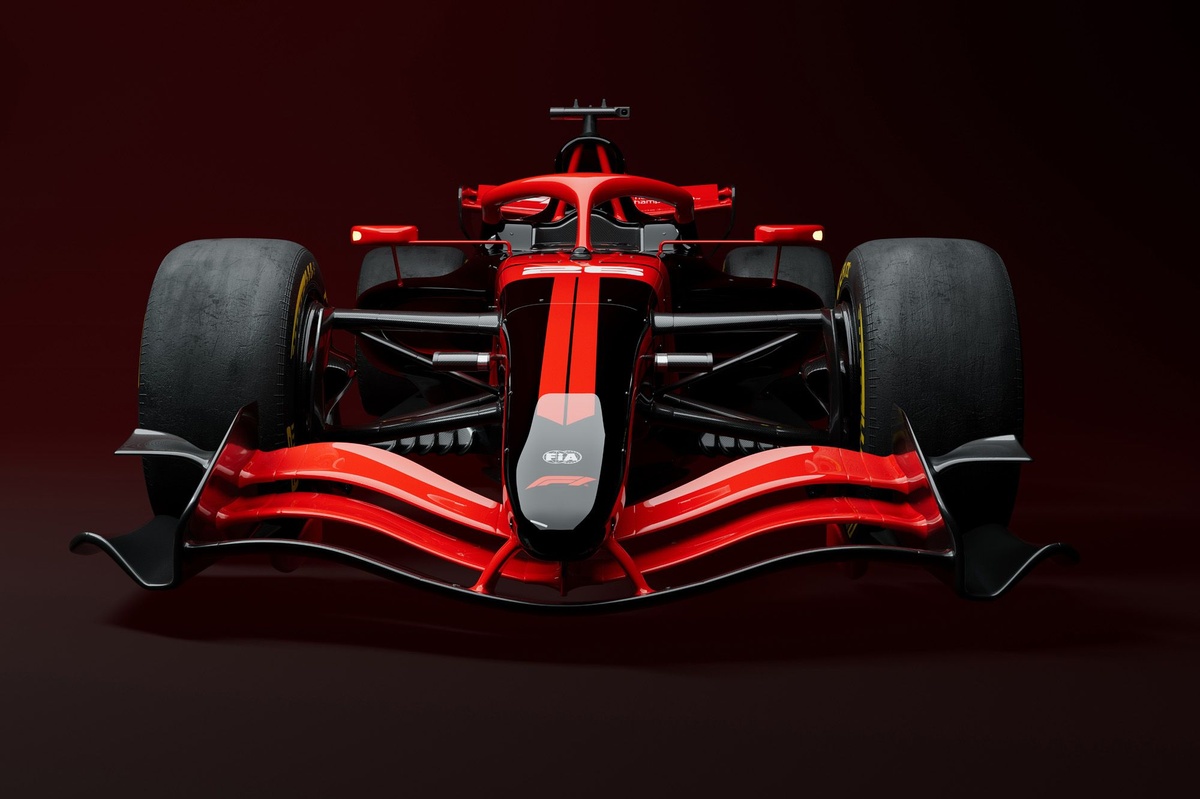
The FIA will not comply with the demands of Formula 1 teams to increase the minimum car weight for 2026 - stressing that the championship needs a “diet”.
F1 will introduce a new set of regulations for the forthcoming campaign and one area of change is the car chassis, with the minimum weight reducing from 800kg to 768kg.
It is a drastic change and thus expected to be an early development battlefield, particularly because there are concerns that many teams will not meet the requirement in early 2026 - per Williams boss James Vowles.
But the FIA is adamant it will stick to its principles to combat years of bloat for F1 cars, as teams would search for increased performance and safety. Since 2010, for example, the minimum weight has increased by 180kg.
So, speaking to Motorsport at the Autosport Business Exchange: London, FIA single-seater director Nikolas Tombazis said: “We would like to put Formula 1 on a diet. It's going from obese to overweight and we need to push a bit more for the future.
“We were quite adamant that we are not going to be tweaking the weight on team demand, we feel there's a bit of - like a diet - it needs a bit of discipline and a bit of pressure to achieve.
“What has happened in previous pre-regulation cycles is that teams design systems on the car that of course improve performance - not essential for the functioning of the car, but are systems that just make the car incrementally better and there's a lot of systems.

“If you look at the Formula 1 car, there's a massive plethora of such devices or designs that make a current car sort of 50 times more complicated than 20 years ago.
“So, a lot of these systems crop up on the car, and then teams then say, ‘well, our car is five kilograms overweight, should we increase the weight?’
“We've in the past been a bit more flexible on that and tried to comply. This year we said, ‘no, this is the limit, that's what you need to work to’ and to the best of our knowledge, there are teams who are slightly underweight, so it is entirely feasible.
“Teams need to be very careful when they design a system, they need to say, ‘that system is going to gain us X amount of lap time’, it's going to weigh an extra kilo and a half, is it worth it? They need to make this decision a bit more consciously.”
The FIA is, in fact, so committed to overcoming the modern bulkiness of F1 cars that the governing body does not plan on stopping at 768kg, regardless of the challenge it presents.
“Weight does contribute to the nimble car concept, we would love it to go down further in the future and I'm confident we will go a lot further,” added Tombazis.
“It's been going up in the last 20 years or so, mainly because of a combination of factors: one is safety, the cars are a lot safer of course, and we certainly would never compromise and go back on that, but many kilos of the car are safe.
“Then, of course all the sustainable power units, batteries and turbos, these also contribute and car dimensions contribute as well - so broadly these three factors.”