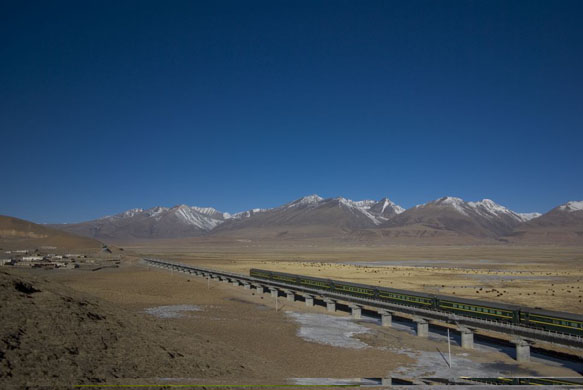
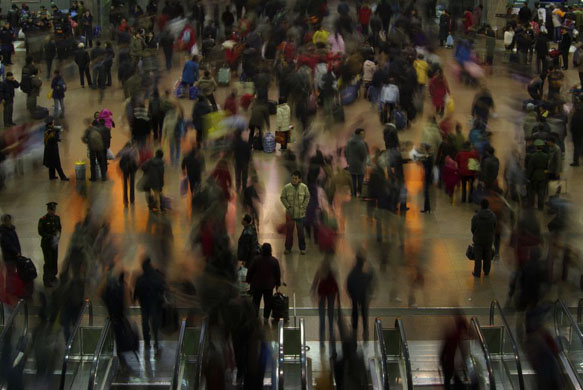
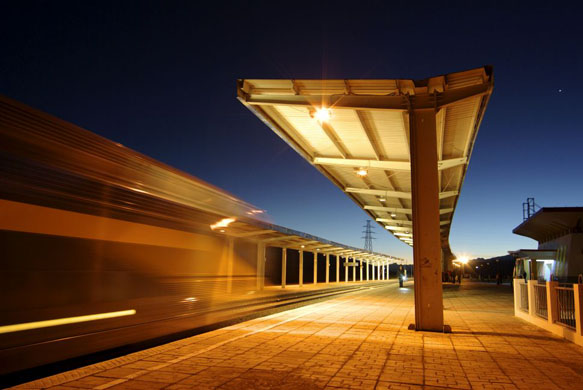
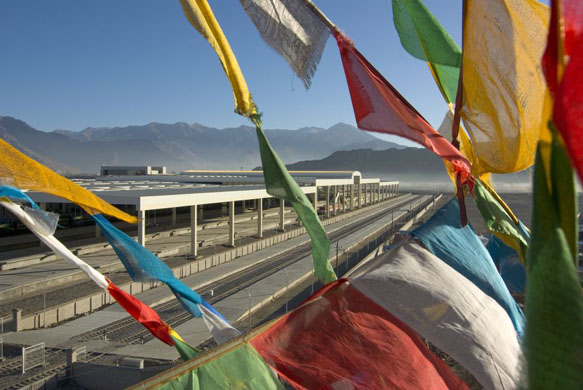
A Canadian-Chinese joint venture was responsible for building specialised carriages that could cope with the extreme conditions. The ‘sky trains’ can be seen from a great distance in the enormity of the Tibetan plains. In the run-up to the opening of the new railway, the trains were widely depicted as space-age shuttles, but their final design was inspired by Belgian models from the 1980sPhotograph: Charles Stewart/freelanceThe most recent extension to China’s vast railway network is the 1,142km stretch that links the province of Qinghai with Tibet. The Golmud-Lhasa railway (Qingzang railway) was officially opened on July 1 2006 and a daily service from Beijing was promptly started. The journey along the 4,064km of track takes 48 hours with the trains travelling at 160kmh on the plains and at 120kmh from Golmud.Photograph: Charles Stewart/freelanceThe station at Dangxiong is a typical example of one of the 45 stations that are dotted along the line between Golmud and Lhasa. The modern structures are distinct amid Tibet’s dramatic landscapes and the majority of them are eerily vacant. 38 of the stations see little more action than the six times a day when the long haul ‘sky trains’ hurtle past, as are unmanned and monitored by a control centre in the city of XiningPhotograph: Charles Stewart/freelance
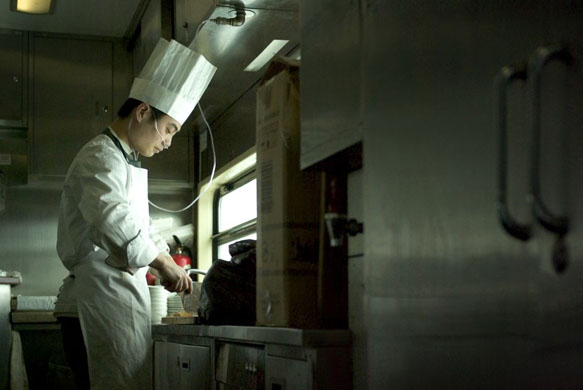
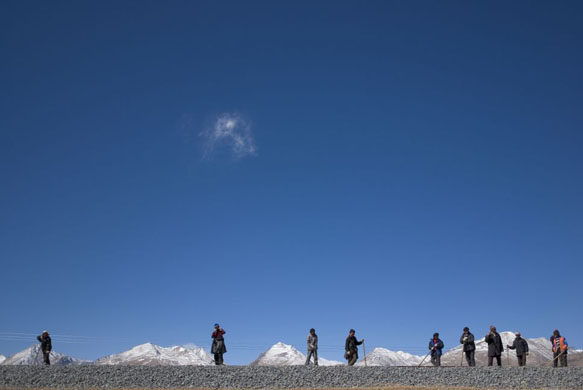
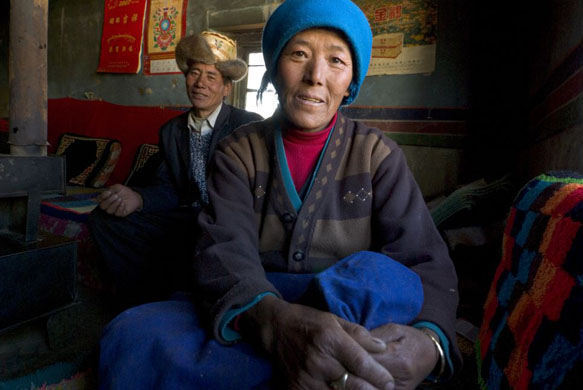
All of the commercial services that climb from Golmud into Tibet end their journey at Lhasa railway station. The size of the construction is another indication that the Chinese government intends to increase the frequency of services and expand the rail network further into TibetPhotograph: Charles Stewart/freelanceLi Yang has worked as a chef on the Golmud-Lhasa Railway since it opened. A tube carries pure oxygen directly into Li Yang’s nose while he cooksPhotograph: Charles Stewart/freelanceA vast portion of the new railway line has been constructed on permafrost. Layers of the permafrost seasonally thaw, which means that the contour of the land regularly changes. This creates challenging construction conditions, specialist engineers solved by refrigerating the ground underneath the track with ammonia-filled ‘thermal bars’Photograph: Charles Stewart/freelanceTashi Angsar village is about approximately 120km north-west of Lhasa. It was once a typical rural village but now imposing concrete structures dominate the landscape. The track was built about 40m from Chemi and Wangchu’s house and it is clear that it has had an impact on their livesPhotograph: Charles Stewart/freelancePreviously Normu's house looked out over a typical Tibetan landscape. A line of concrete viaducts now divides the valley and six trains rumble past every day. Many Tibetans have concerns about the effect on herds and wild animals as the line has been built through ecologically fragile regions. The Chinese government has spent over £100m on environmental protection measures including the construction of 33 underpasses that have been built specifically for migrating animalsPhotograph: Charles Stewart/freelanceJamien is travelling to Tibet with his family to spend five days visiting Lhasa. Even though the tourist season has not started, the train to Lhasa is packed with Chinese sightseersPhotograph: Charles Stewart/freelance
Sign up to read this article
Read news from 100’s of titles, curated specifically for you.