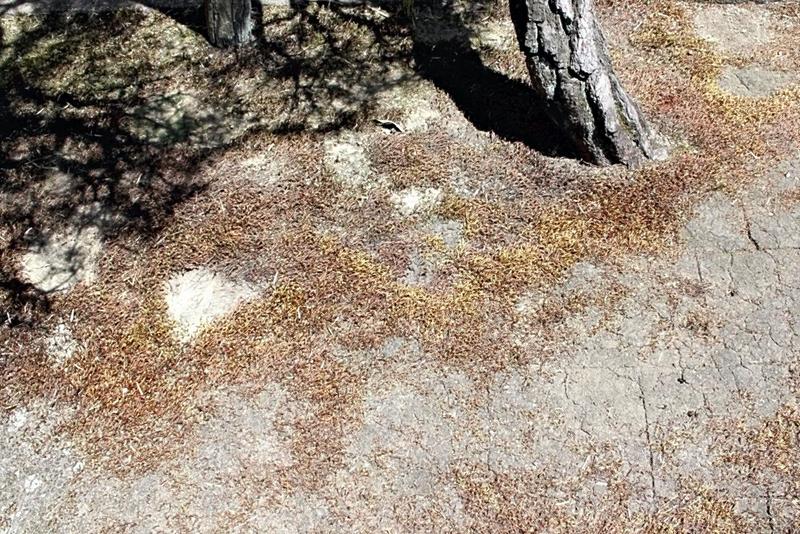
KYOTO -- The urban heat island effect and severe hot weather in recent years have likely had an adverse effect on the so-called moss gardens of temples and other locations in Kyoto that are popular sightseeing spots in the ancient city, according to research conducted by Fukui Prefectural University.
The temperature in Kyoto hit 39.8 C this summer, tying the highest temperature ever recorded in the city.
The higher the temperature of the habitat, the more the moss species typically growing in such moss gardens are believed to deteriorate.
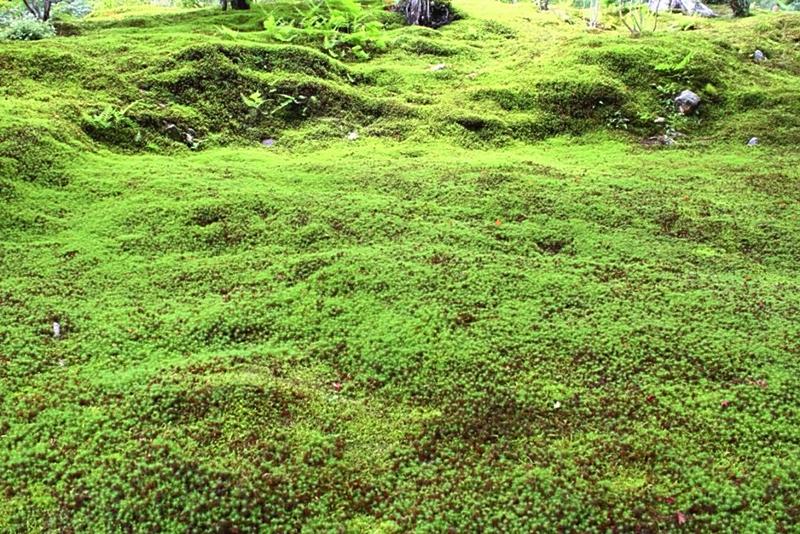
"The number of moss gardens may decrease in Kyoto if urbanization and global warming further progress," an expert warned.
Kyoto, the center of Japan's gardening culture, boasts a number of historical temples with beautiful moss gardens, such as Saihoji temple in Nishikyo Ward, which is also known by the nickname "moss temple." These temples are popular among visitors from home and abroad.
Located in a basin, Kyoto's summers tend to be hot. In addition, the city's yearly average temperature has risen about 1.5 C in the past 40 years, according to the Japan Meteorological Agency.
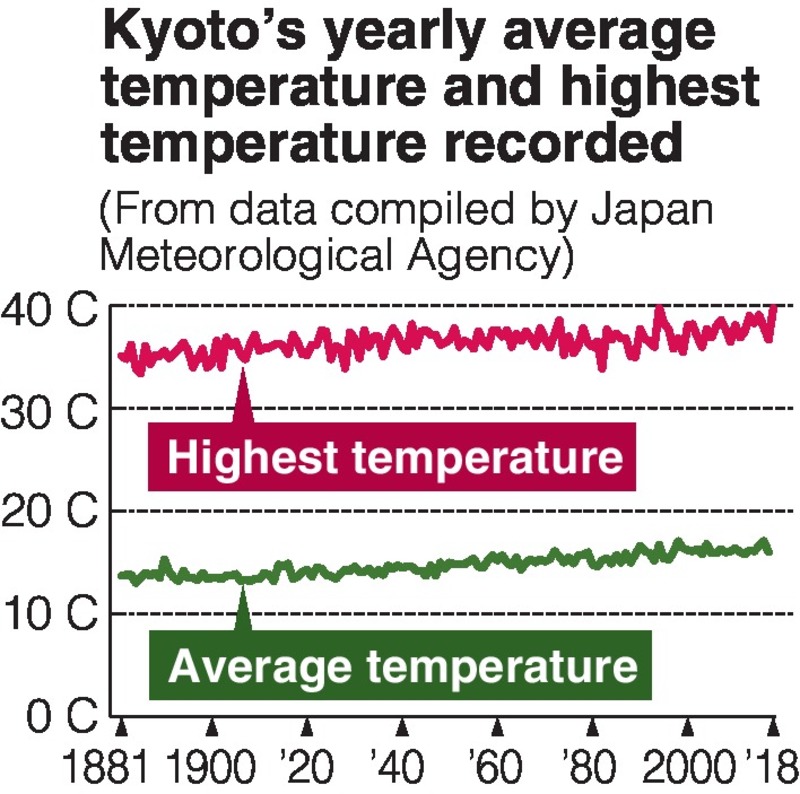
The hotter temperature is believed to have stemmed from the urban heat island effect, in which the proportion of greenery that has the effect of lowering the temperature has decreased while the amount of concrete, asphalt and other artificial materials that tend to hold heat has increased.
In 2012, Yoshitaka Oishi, an associate professor in bryology at Fukui Prefectural University, conducted research to find out how rising temperatures affect mosses. He examined mosses growing at 17 spots in gardens of Saihoji temple, Kiyomizudera temple and Ginkakuji temple, among other locations, checking such as aspects as their species, temperatures and humidity.
Oishi discovered that in the gardens far from urban areas and close to mountains under relatively lower temperatures, vivid green mosses, such as hinokigoke and osugigoke, grow widely in clusters. On the other hand, in the gardens with higher temperatures and low humidity, Oishi found that high temperatures affected mosses, such as the varieties of hair-cap mosses that die out, or varieties resistant to dryness that stay alive.
Extreme heat hit Kyoto this summer, with the mercury reading 35 C or higher on 32 days, marking the fourth-highest figure since 1980 when relevant data were first kept.
"It is difficult to stop global warming, but the research also found that mosses in gardens with greenery located within a one-kilometer radius remain in good condition," Oishi said. "By taking measures such as increasing greenery, there is a possibility that the deterioration of moss gardens can be prevented."
Read more from The Japan News at https://japannews.yomiuri.co.jp/