Firefighters in Southern California said Monday that an industrial chemical tank at an aerospace facility in Garden Grove is no longer at risk of exploding after a structural crack relieved internal pressure, marking a turning point in an emergency that forced large-scale evacuations across Orange County.
The tank, located at the GKN Aerospace facility, had been overheating since Thursday and involved methyl methacrylate, a highly flammable chemical used in aircraft manufacturing. The situation escalated rapidly as temperatures inside the tank rose above safe levels, prompting emergency declarations and evacuation orders affecting tens of thousands of residents, according to Reuters.
Fire officials said the critical change occurred when a crack formed in the tank over the weekend, allowing pressure to escape and reducing the risk of a catastrophic rupture or explosion. Temperatures inside the unit dropped from more than 100°F (38°C) to about 93°F (34°C), officials said.
Despite the improvement, Orange County Fire Authority officials said evacuation orders remain in place while crews continue monitoring chemical stability and air conditions around the facility.
Craig Covey, a division chief with the Orange County Fire Authority, described the development as a significant shift in the response effort, calling it "incredibly positive news,'' while noting that continued caution is required at the site, the news agency reported.
The incident prompted evacuation orders for roughly 40,000 people across Garden Grove and nearby communities, including Anaheim, Stanton, Cypress, Buena Park and Westminster, according to IBT.
California Governor Gavin Newsom declared a state of emergency in Orange County as conditions escalated, deploying state resources to assist local fire and hazardous materials teams, CBS News reported.
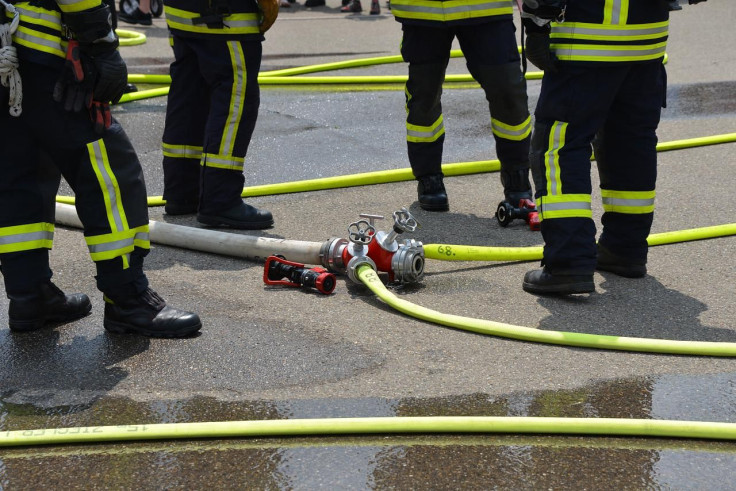
Fire crews used water spray systems and remote monitoring equipment to stabilize the tank, while drones and nighttime inspections were used to track temperature changes and structural conditions.
Officials also raised concerns about potential vapor exposure, though air monitoring systems have not detected hazardous releases so far.
The chemical involved, methyl methacrylate, is used in plastics and aerospace manufacturing and can produce toxic vapors when exposed to heat. Emergency responders said the main risk was either a rupture releasing thousands of gallons of material or a thermal reaction that could have triggered an explosion.
GKN Aerospace, a British company operating the facility, manufactures aircraft windows and canopy systems for commercial and military aircraft. The company issued apologies for disruption caused by the incident, according to statements referenced by Reuters.
Although the explosion risk has now been ruled out, authorities said evacuation orders remain active while assessments continue and cleanup planning is evaluated.