NATO allies will be scouring the policies of Germany's next federal government for one crucial detail: Will Berlin remain part of NATO's nuclear sharing agreement?
Or will it drop out and ask the United States to remove its nuclear bombs from German soil?
While such a move might be popular among some Germans, it would reveal a rift within NATO at a time when the alliance's relations with Russia are at their lowest since the end of the Cold War.
WHAT IS NATO'S NUCLEAR SHARING?
As part of NATO's deterrence, the United States has deployed nuclear weapons in Belgium, Germany, Italy, the Netherlands and Turkey - all NATO allies that do not have their own nuclear weapons. In the case of a conflict, the air forces of these countries are meant to carry the American nuclear bombs.
WHAT EXACTLY IS GERMANY'S ROLE?
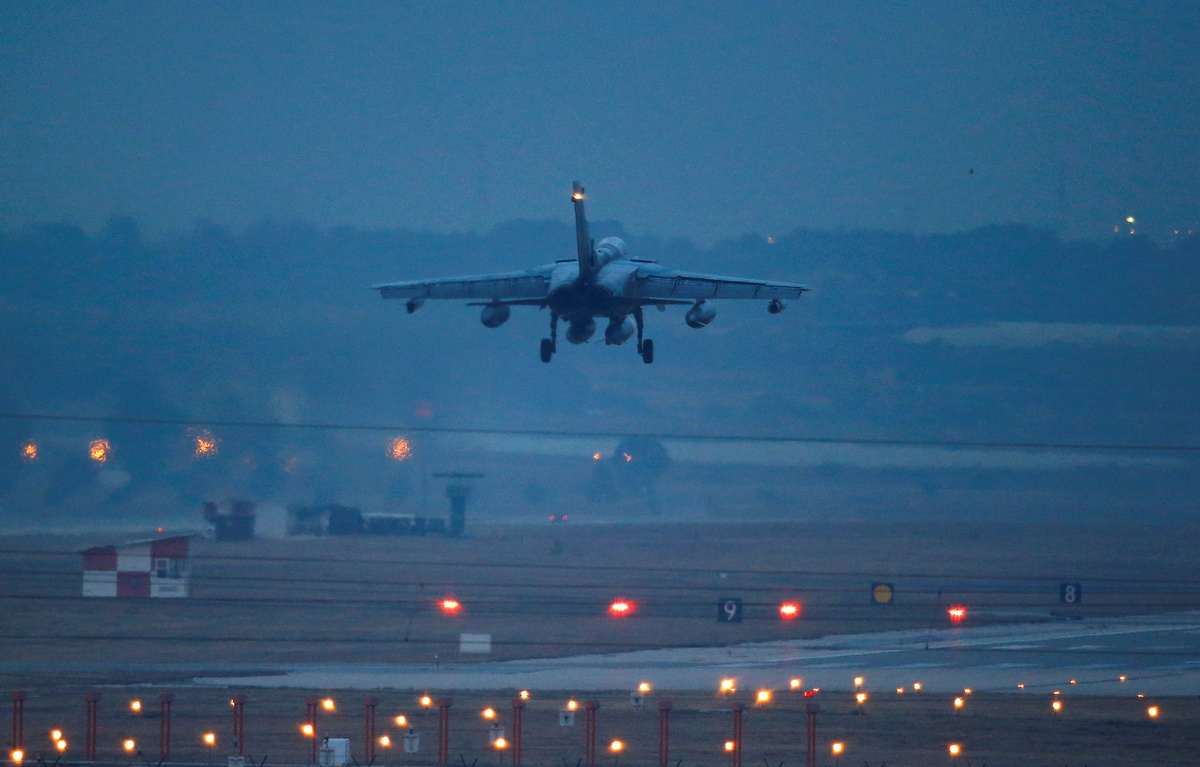
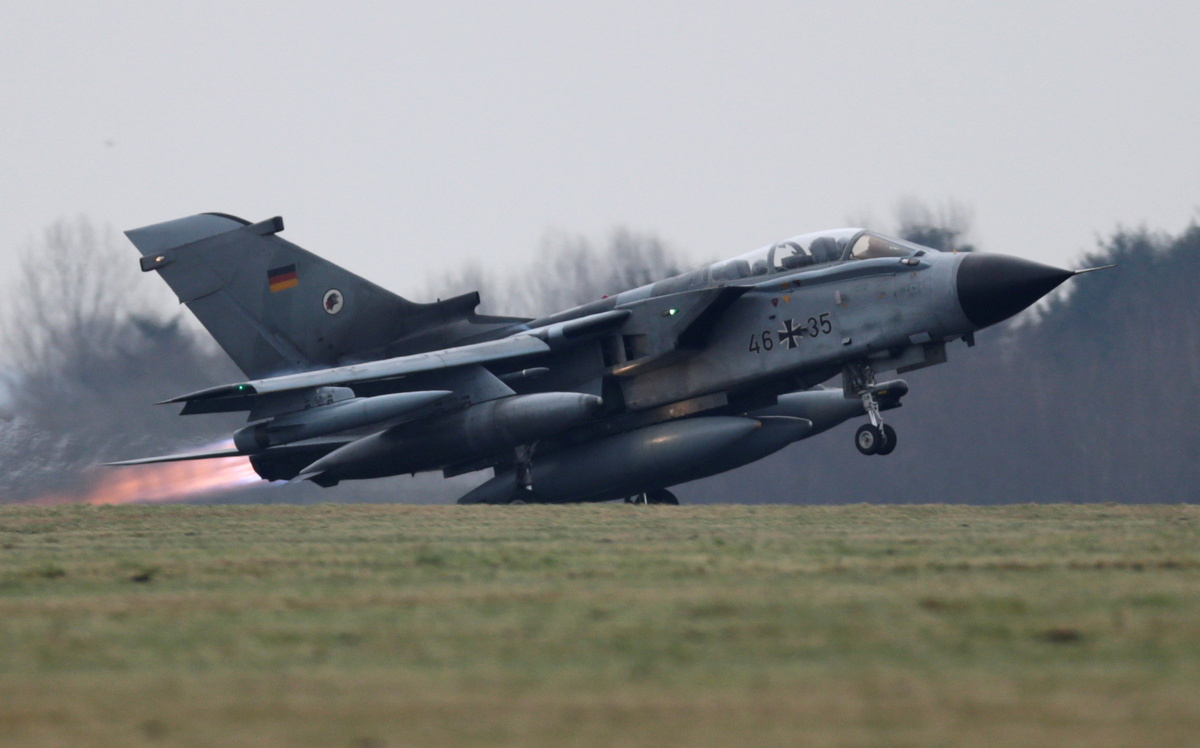
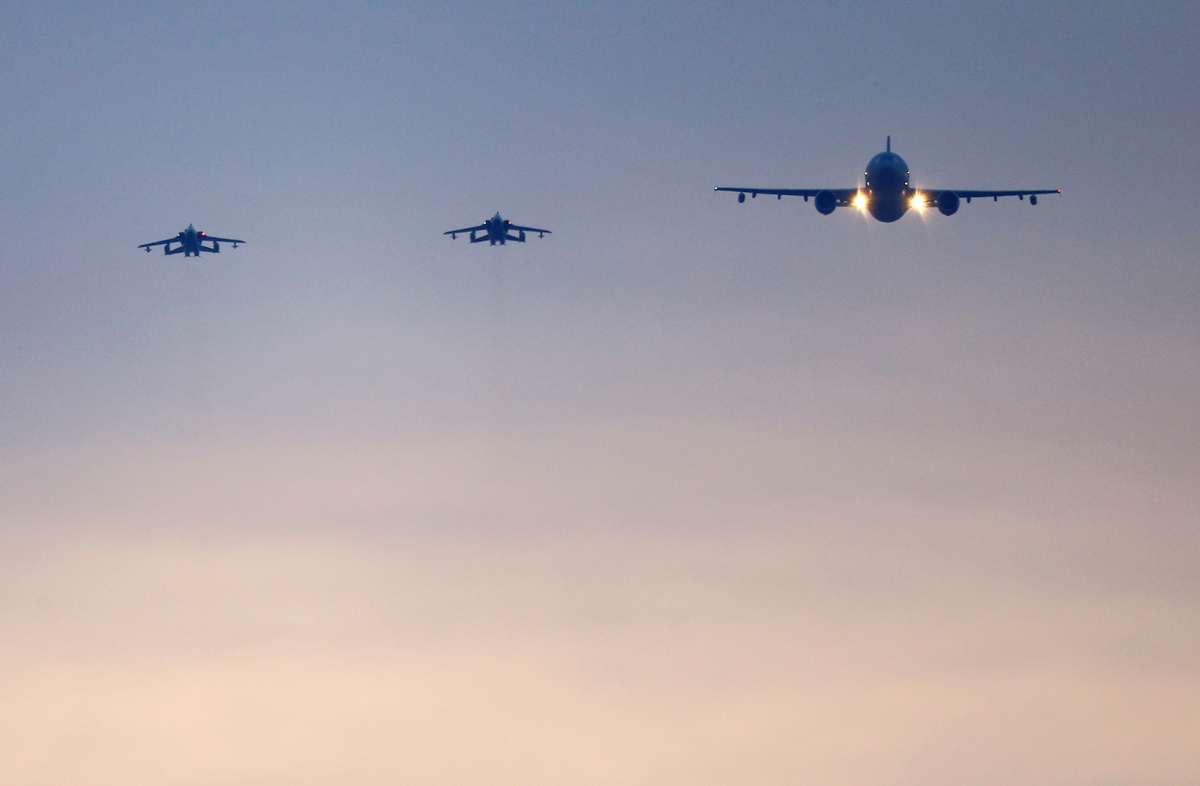
Around 20 U.S. nuclear bombs are estimated to be stored at the German air base of Buechel, in a remote area of the state of Rhineland-Palatinate. The base is also home to a squadron of Tornado fighter jets belonging to the German air force, the only German jets fitted to carry the nuclear bombs.
WHAT IS THE PROBLEM WITH THE TORNADO FIGHTER JETS?
The German air force has been flying the Tornado jets since the 1980s, and it has become increasingly expensive to maintain them and difficult to find spare parts to keep the plane in the air. The German defence ministry plans to phase out the jet between 2025 and 2030. Should Berlin not purchase new jets fitted for the task of carrying U.S. nuclear weapons, Germany would simply drop out of nuclear sharing when the last Tornado retires around 2030.
WHAT CHANGES MAY THE NEW GERMAN GOVERNMENT BRING?
In spring 2020, Defence Minister Annegret Kramp-Karrenbauer, a member of Chancellor Angela Merkel's conservatives, proposed replacing the Tornado jets in Buechel with F-18s made by Boeing, but the decision was later pushed into 2022.
Now, the likely new German government will be led by the Social Democrats, a party that has some lawmakers who would like to get rid of U.S. nuclear weapons on German soil. The Greens, who are expected to be part of the coalition, also have some lawmakers who take that view.
WHAT IF GERMANY DROPS OUT OF NUCLEAR SHARING?
"I count on Germany to remain committed to NATO's nuclear sharing. It is our ultimate security guarantee," NATO Secretary-General Jens Stoltenberg said on a visit to Berlin last week.
Nuclear sharing also gives a country like Germany a seat at the top table, in the form of NATO's Nuclear Planning Group, where relevant issues are discussed in the alliance.
"Germany can, of course, decide whether there will be nuclear weapons in (its) country, but the alternative is that we easily end up with nuclear weapons in other countries in Europe, also to the east of Germany," Stoltenberg said.
Should NATO decide to move U.S. nuclear weapons to Poland, for example, that would likely be seen as a step towards angering Moscow by bringing them closer to the Russian border.
($1 = 0.8871 euros)
(Reporting by Sabine Siebold, Editing by William Maclean)