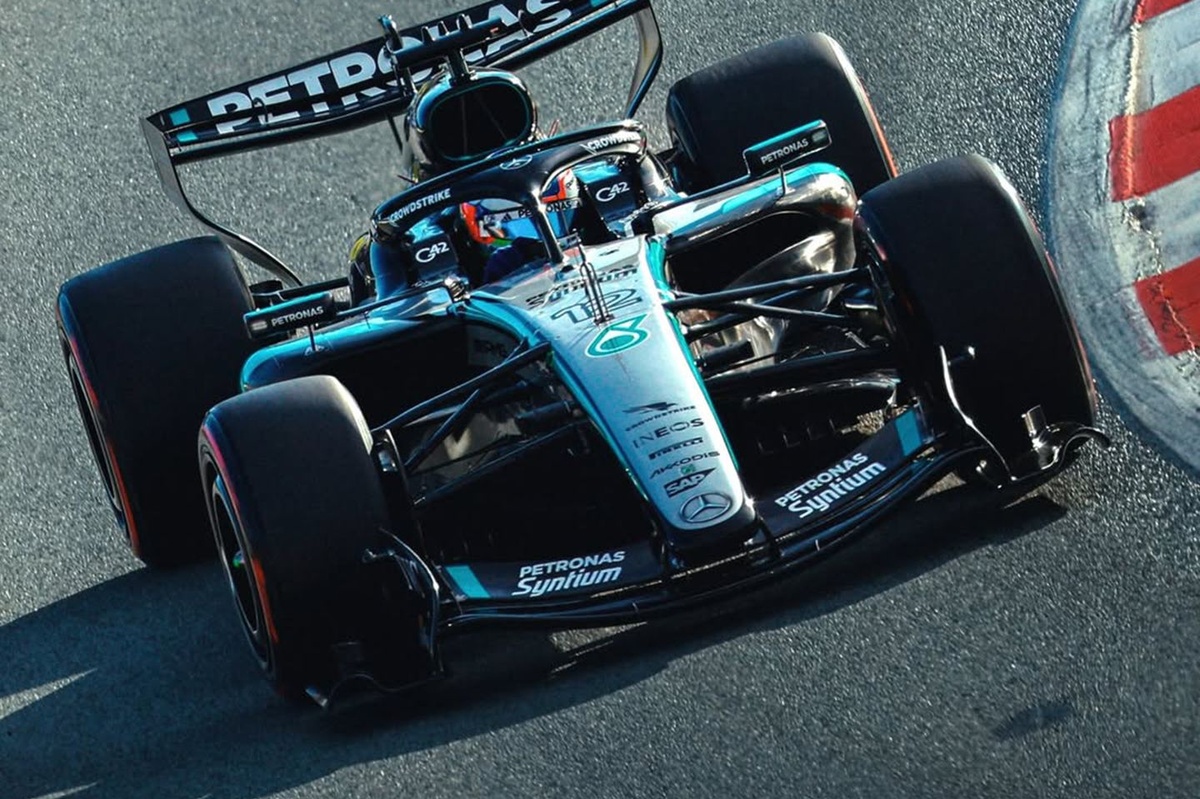
Almost every driver who has run so far during the Formula 1 shakedown in Barcelona came up with the same line after climbing out of the car: “It’s very different from what we’re used to.”
That starts with the fact that the 2026 cars have considerably less downforce, and less downforce usually means more complaints from the person behind the wheel. The FIA, however, hopes that this, combined with reduced dirty air, will benefit the overall racing.
Active aero and partial active aero: How it works
A second factor that plays a role in the drivers’ perception is the extra workload. They have to do more in the cockpit than before, starting with active aerodynamics. On the straights, the rear wing opens up to reduce drag and the second and third elements of the front wing flatten out. All of this is necessary to make the new power unit formula work.
The so-called ‘Activation Zones’ will be defined for each track, as is described in Article B7.1.1 of the 2026 regulations:
“The FIA will provide all competitors with relevant information regarding the defined Activation Zone(s) for a circuit… to be used when full activation of the Driver Adjustable Bodywork is enabled, and specification of the Activation Zones to be used when only partial activation of the Driver Adjustable Bodywork is enabled, no less than four weeks prior to the start of the relevant competition.”
Article B7.1.1f further clarifies that these zones will be indicated in a similar way to how DRS was previously: “The start of each defined Activation Zone shall be marked by a signage on at least one side of the circuit.”
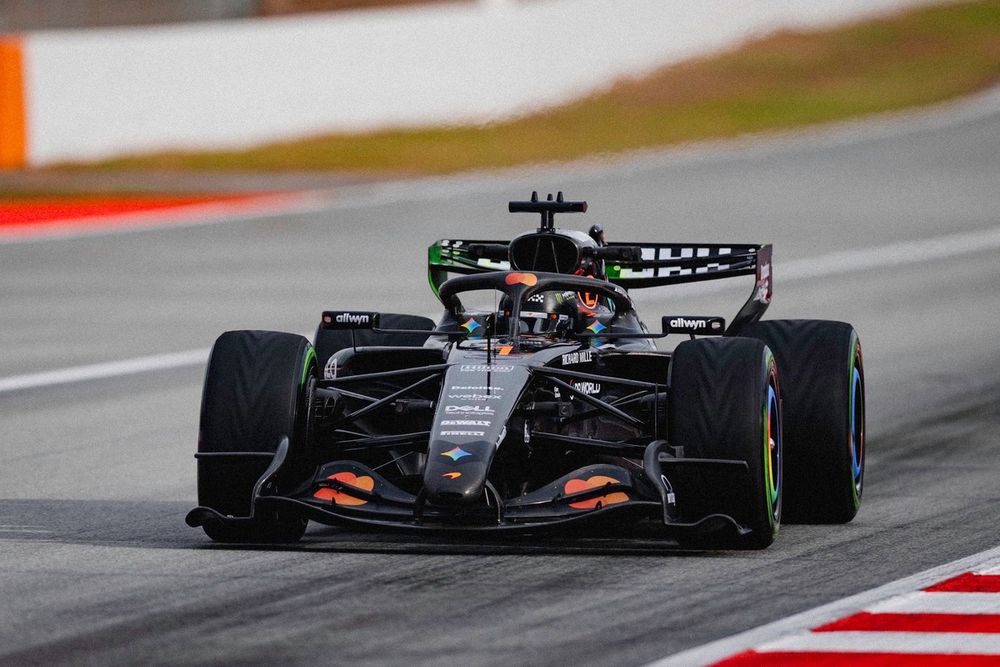
A key difference is that there will be many more of these active aero zones than there were DRS zones, and drivers can use them every lap, not just when they are within one second of a car ahead. The operation will be manual, which is again similar to DRS, but leads to higher workloads given it will be standard practice on many more straights each lap. Drivers can manually close the wings at the end of a zone, although this also happens automatically when they lift off or brake.
When active aerodynamics are fully enabled by race control, both the front and rear wings open. But as mentioned, the FIA also has the option to choose ‘partial active aerodynamics’.
This third option was added to the regulations at the end of last year for use in poor conditions – for example in the rain – and means only the front wing adopts ‘straight line mode’, while the rear wing remains in its closed cornering mode – just like how DRS was disabled in wet conditions.
Tactical thinking with more electrical power
In addition to this, two other aspects come into play for the drivers: Overtake Mode, a kind of push-to-pass system that replaces DRS as an overtaking aid, and above all managing the increased share of electrical power.
With 350 kW coming from the MGU-K, drivers have much more electric power at their disposal and to play with than before. This will become a tactical element to some extent, because where exactly will drivers recharge (harvest) and where will they deploy more energy?
Some F1 team bosses have predicted overtaking in unusual places for precisely that reason, but in practice it seems more likely that all teams will converge towards a similar strategy for a given circuit – so they do not end up a sitting duck at the most vulnerable spots.
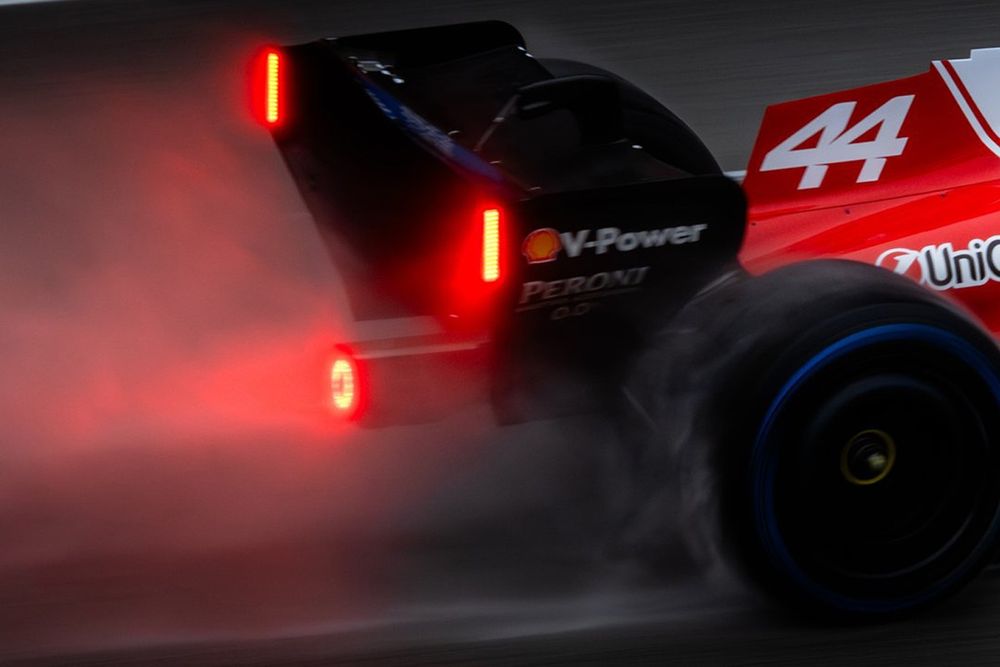
If teams choose a similar approach, the TV viewer might not even notice too much of it, but for the drivers it undeniably becomes a key factor – and as Liam Lawson confirmed much more important than before.
“It feels like there's a lot more we can do as drivers potentially to make a difference, which is good,” the New Zealander explained. “But right now, it’s still very early days.”
Higher workload? “What is okay for one driver is not okay for another”
All driver-controlled elements raise the question to what extent the workload on drivers becomes greater, or perhaps even too great. The FIA believes it has found a middle ground, although it will still evaluate all data and feedback coming from the first week of winter testing.
“I think we are in a reasonable position. Clearly, there is an element of uncertainty first of all, until we actually see all these things in practice. And then there is also an element of subjectivity. What one driver may think is totally okay for him, maybe for another driver, it’s not totally okay,” Nikolas Tombazis, the FIA head of single-seater racing, explained when asked by Motorsport.com, pointing out that different drivers have different mental bandwidths behind the wheel.
The FIA previously explained that there has been a deliberate effort to place drivers more at the centre of the sport. According to Tombazis, the pinnacle of motorsport should “not just be a steering wheel and two pedals”.
“So, there's not a single, objective answer to this. I think we've made good progress in that way, but as I said before, we also have potential actions to take if we see that something is not quite right. We have quite a lot of tools in our pockets that we can discuss.”
For now, however, not too many complaints have surfaced after the first three days of running in Barcelona. Yes, all drivers say it feels completely different and requires them to adapt in many areas – including driving style – but Andrea Kimi Antonelli summed it up as “still doable”.
“It still will take a bit of time to try all the modes – overtake, override, all that kind of stuff,” the young Italian said. “It's a bit different compared to what we had last year, and it requires a bit more management, but it's all doable.”