
GOOGLE has released a new feature allowing users to implant fake scenarios onto real-life satellite imagery using Artificial Intelligence (AI).
The move has been criticised as an "irresponsible act" by Dr Bissie Anderson, assistant professor in digital media and communications at the University of Birmingham.
The company responded to The National on Friday night - around 24-hours after the feature was released - saying the feature has been removed while "stronger guardrails" are put in place.
In an initial statement announcing the release of the new "Nano Banana" update, Google Earth said the new technology will allow users to "virtually reimagine anywhere in the world," showing a user using AI to recreate the colosseum before the fall of the Roman Empire.
It actively called on people to create fake versions of reality, setting challenges to create "pet paradises" and new city designs.
However, Anderson, who previously worked as a lecturer at Stirling and Robert Gordon universities, has warned it could have "catastrophic implications for information integrity and the health of the digital information ecosystem."
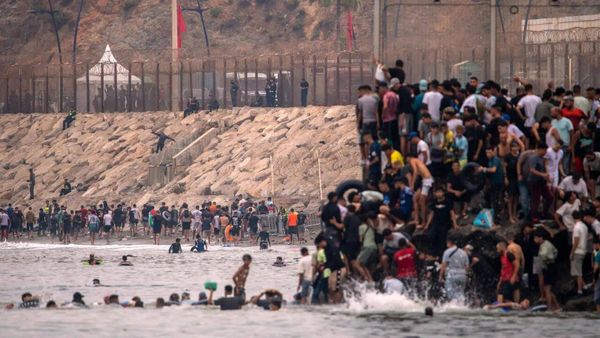
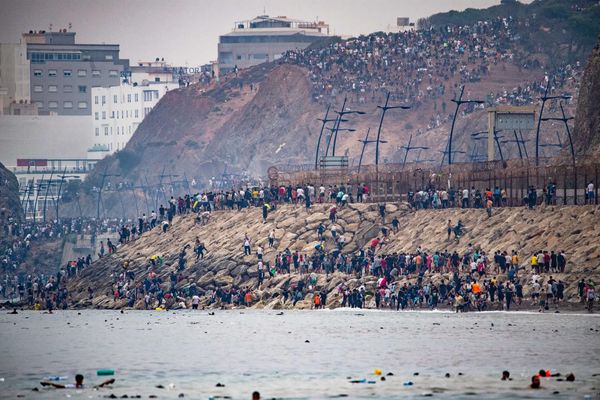
She used the work of investigative open-source data journalist Henk Van Ess to show that "anyone can now plant a fake nuclear plant in Iran or place refugees on the Mexican border at the click of a button."
Van Ess posted a warning about the new feature , saying: "Tonight I typed just one sentence into Google Earth and put refugees near the Mexican border. Then I planted a nuclear plant in Iran. What on earth is Google doing?"
Tonight I typed just one sentence into Google Earth and put refugees near the Mexican border. Then I planted a nuclear plant in Iran. What on earth is Google doing? Check my latest post here: https://t.co/N0h6CVECqS pic.twitter.com/WSjdcEXWJx
— 𝚑𝚎𝚗𝚔 𝚟𝚊𝚗 𝚎𝚜𝚜 (@henkvaness) July 30, 2026
Google reportedly responded to his article, saying: "We take misinformation seriously - every image created with Nano Banana in Google Earth includes the SynthID digital watermark, so if someone is unsure about an image, they can ask the Gemini app or use Lens in Search to see if the image was Al-generated.
"In addition, we prevent image creation on harmful topics." This did not prevent the creation of images showing fake nuclear bases or airstrikes on hospitals.
We also tested the technology – using a basic free version of Google Earth which has fewer capabilities than paid options – and successfully created several images relating to tanks taking over the streets of Glasgow or buildings close to The National's office being attacked by an airstrike, with the AI being asked to change the colour scheme of the satellite imagery to depict a different landscape (shown below).

Anderson explained that with the speed media can be shared on social media, this near-instant ability to create fake imagery could "unleash a wave of disinformation that would be near-impossible to debunk, and the SynthID watermark that synthetically generated Google content carries is small comfort.
"How many non-specialists outwith the OSINT, journalism or media research community, for instance, would be aware that such a tag means fake content?
"We simply cannot expect every single member of the public to possess the necessary level of media literacy or to be vigilant enough to be able to spot that."
In 2019 Anderson co-organised the first "MisinfoConX" event, which saw the public and researchers disuses the "phenomenon of misinformation that plagues our public discourse and is considered one of the biggest threats to democracy and humankind," according to Stirling University's website.
She told The National about this threat to democracy and the distribution of information, saying: "When people are aware that anything can be fabricated - including the very tools used to detect whether something is real and fake – they naturally become more sceptical about any information they see online.
"And that sadly includes bona fide efforts to provide a truthful account of the world around us, such as news or investigative reporting.
"Ultimately, it may become impossible, in this smorgasbord of visual information, to tell apart fake from real."
Today we’re bringing AI image generation with Nano Banana to Google Earth, letting you virtually reimagine anywhere in the real world. 🍌 https://t.co/zsgvAnbYrl For the first time, you can generate custom images using Google Earth’s satellite, aerial, and 3D imagery. 🌎 pic.twitter.com/yed45vLZOo
— Google Earth (@googleearth) July 30, 2026
Dr Anna Kallen Talley, a postdoctoral researcher at the University of Edinburgh in the Institute for Design Information, also spoke out against the new feature, which encourages users to "describe what you want to see".
She questioned this, saying: "But what if what you want to see is something that can be interpreted as causing political or ethical harm to others, is misleading, or is misrepresentative?
"Google’s AI Use Policy prohibits users from carrying out ‘misinformation, misrepresentation, or misleading activities’, but do we trust big tech companies to enforce these policies, and do they have the resources to do so effectively?
"It is also about context: what might seem to be a 'harmless' generated alteration in Google Earth could have a completely different meaning if it was used to illustrate a story with a specific political agenda, for example."
She added that generative AI products such as this, if used inappropriately and without proper guardrails, "continue to pose a threat to our global information ecosystem," affirming that her department colleagues at the University of Edinburgh "are concerned about these threats, and are actively researching GenAI, technical solutions and policy in this area."
The National has previously spoken to AI ethics experts including Dr Mark Wong, a senior lecturer in Glasgow University's social and urban policy department, who warned of the risks of AI reproducing biases in its content generation, something which could lead to harmful creations based on user prompts for images.
A Google spokesperson responded to The National's request for comment - after a deadline set for print - saying: "We know that people uniquely trust Google Earth for a reliable view of the world.
"We’ve seen geospatial professionals using this feature for a range of useful purposes, however we’ve also seen people sharing screenshots of generated imagery that appear to violate our policies.
"So we’re rolling back this feature in Google Earth while we work on implementing stronger guardrails.
"It's important to note that generated images didn’t appear in the main Google Earth experience for others to see and were watermarked as AI generated."