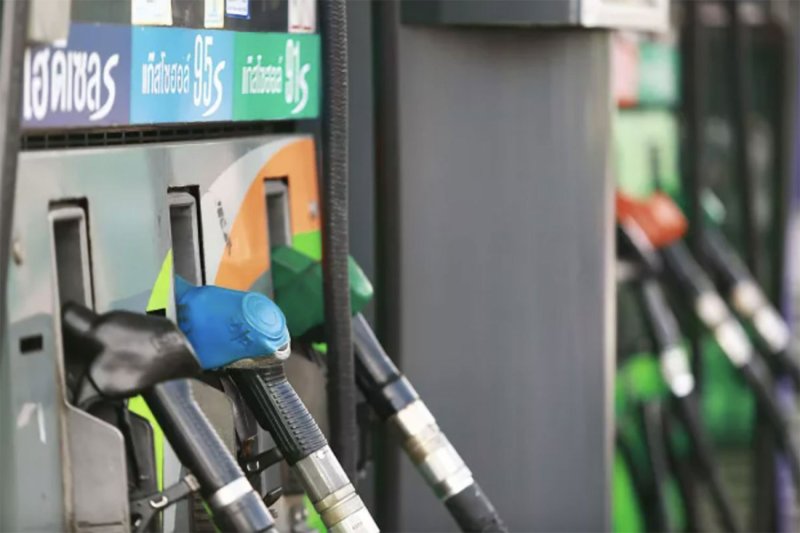
Thai energy authorities have approved a reduction of the diesel ex-refinery price by 2.40 baht a litre to curb rising domestic fuel prices as global oil prices fluctuate.
The Brent crude benchmark settled above $100 per barrel for the first time in two months on Thursday, after Houthi rebels in Yemen attacked two Saudi oil tankers in the Red Sea, as the conflict between the US, Israel and Iran intensifies.
The ex-refinery price reduction, applicable until Aug 15, should not result in an immediate cut in pump prices, but can prevent or slow an increase, said authorities.
The Energy Policy Administration Committee, chaired by Energy Minister Akanat Promphan, approved the use of 3.89 billion baht in profits from six refineries to cut the ex-refinery prices, according to the Fuel Fund Executive Committee.
The aim is to stabilise domestic prices of diesel, which is mainly used by transport and logistics operators.
The ongoing conflict in the Middle East and the blockade of shipping lanes in the Red Sea have caused regional reference prices in Singapore to surge sharply.
Diesel was quoted at $167.62 per barrel and gasoline at $128.33 in Singapore on Thursday.
As a result, retail prices of diesel and gasoline were increased by 0.90 baht a litre on Thursday. Diesel is now 36.69 baht a litre, while gasohol 91, a mix of gasoline and 10% ethanol, is 36.32 baht.
Higher global crude prices put pressure on the Oil Fuel Fund, which is used as a buffer against crude price volatility. The fund is currently 62 billion baht in the red from subsidising pump prices.
The gross refining margin (GRM) for Thai refiners has fluctuated this year, averaging around $6-8 per barrel in the first quarter but rising to around $20 in the second quarter, reflecting the impact of the Mideast conflict.
A reduction of 2.40 baht per litre in the margin is expected to reduce the GRM for Thai refiners by $5-6 per barrel.