The Telstar, Brazuca, and the Jabulani. Adidas footballs are inextricably tied to the biggest football tournament in world football.
For the 2026 edition of the World Cup, 48 teams will have a brand new ball to play with. One that’s been designed not only to pay homage to the hosts, but also to be one that players will enjoy rifling into the back of the net.
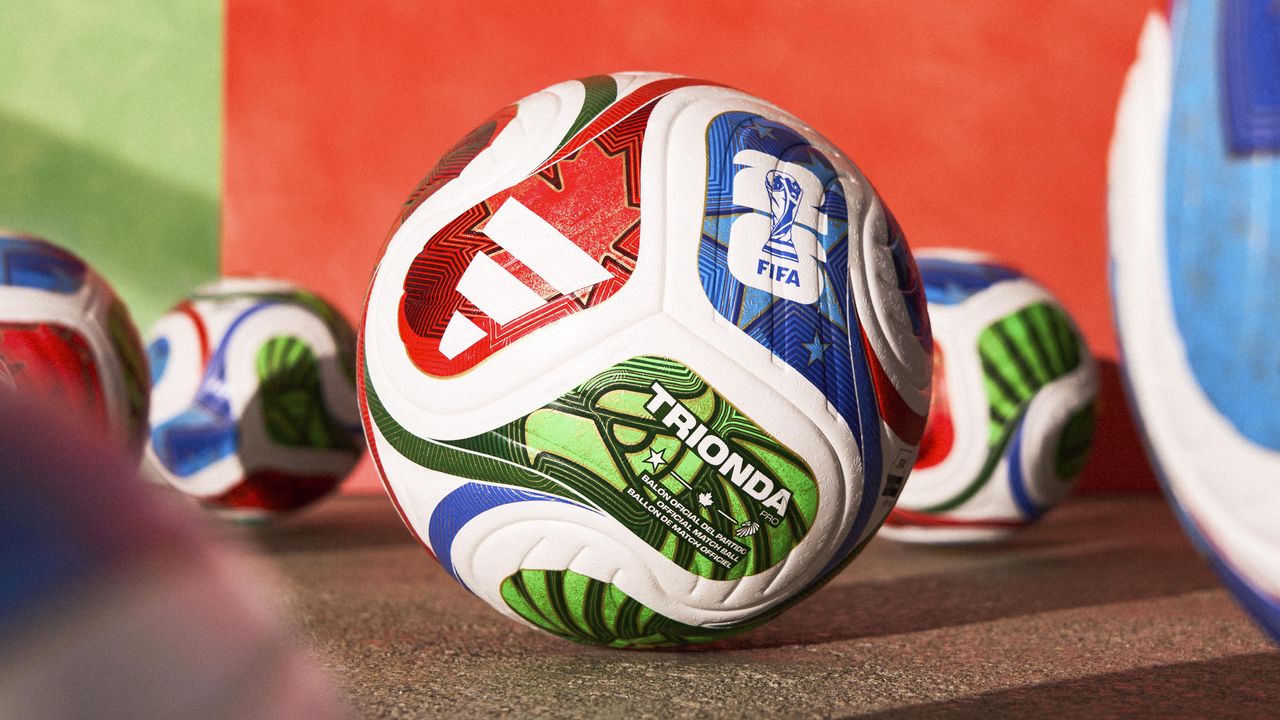
The 2026 World Cup ball is the Adidas Trionda and here’s why this World Cup football might be Adidas’ most special one yet.
The name
Like previous Adidas World Cup footballs, the name carries a meaning. Trionda is a Spanish-influenced name, which translates to three waves. The three waves represent the co-hosts for this year’s tournament, with matches set to be played in Canada, Mexico, and the US.
Those waves meet together in a triangle on the ball to symbolise the three countries uniting as hosts. The Trionda features the colours as well as emblems from each nation's flag. So you’ll spot a white star to represent the US, the eagle from Mexico’s flag, and the Maple Leaf from Canada’s flag.
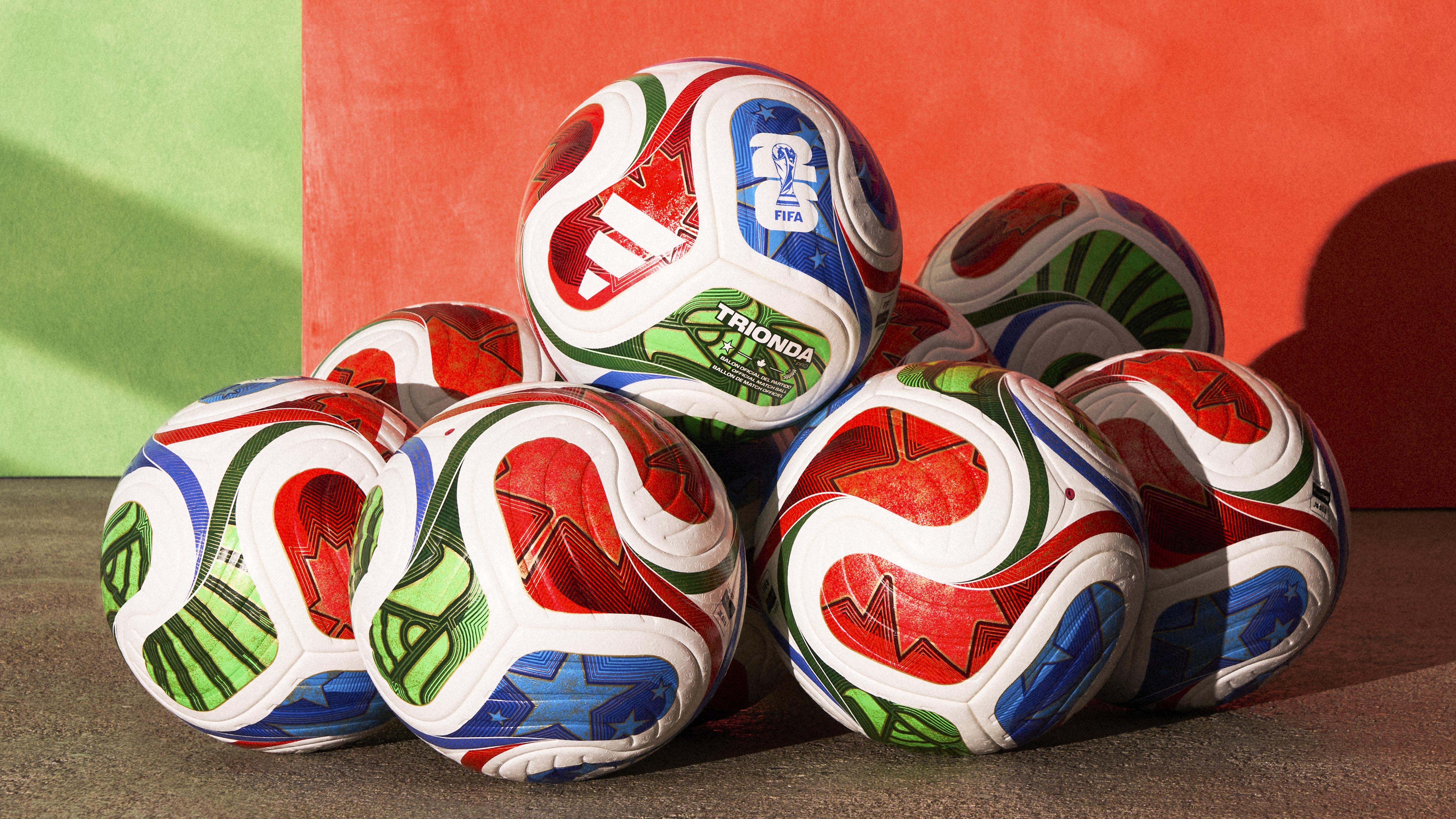
There’s a whole family of Trionda balls
The actual ball that players will be using during matches at the World Cup is the Adidas Trionda Pro. That’s not the only ball available in the Trionda range. There’s the Trionda Competition, which is also suitable to be used in competitive matches. The Trionda Club is the ball you take for a kickabout down the park, and you can even pick up a Trionda mini for a more child-friendly option. Or something that’s easier to chuck into your suitcase.
Pitch perfect
As seen at the Club World Cup last summer, the weather could be a big talking point at the World Cup. Whether that’s players tackling heavy rain or having to handle humid conditions. Adidas kept the weather in mind when designing the Trionda Pro ball. It included embossed icons, with the aim of improving grip when players are dribbling the ball or striking it in hot or rainy weather.
More controlled flight
The Trionda Pro features a four-panel design and is a seamless ball, which should lead to it being more stable in flight when it’s being drilled across the pitch or shot towards goal. Adidas achieved this more controlled flight by adding deep seams as well as debossed lines to create a drag that’s spread more evenly across the ball. That’ll be good news for goalkeepers concerned that a misbehaving ball could end up embarrassing them on the biggest stage.
Better ball smarts
After Adidas first introduced Connected Ball Technology in its Al Rihla ball used at the 2022 World Cup in Qatar, the Trionda Pro now features an enhanced version of that same technology.
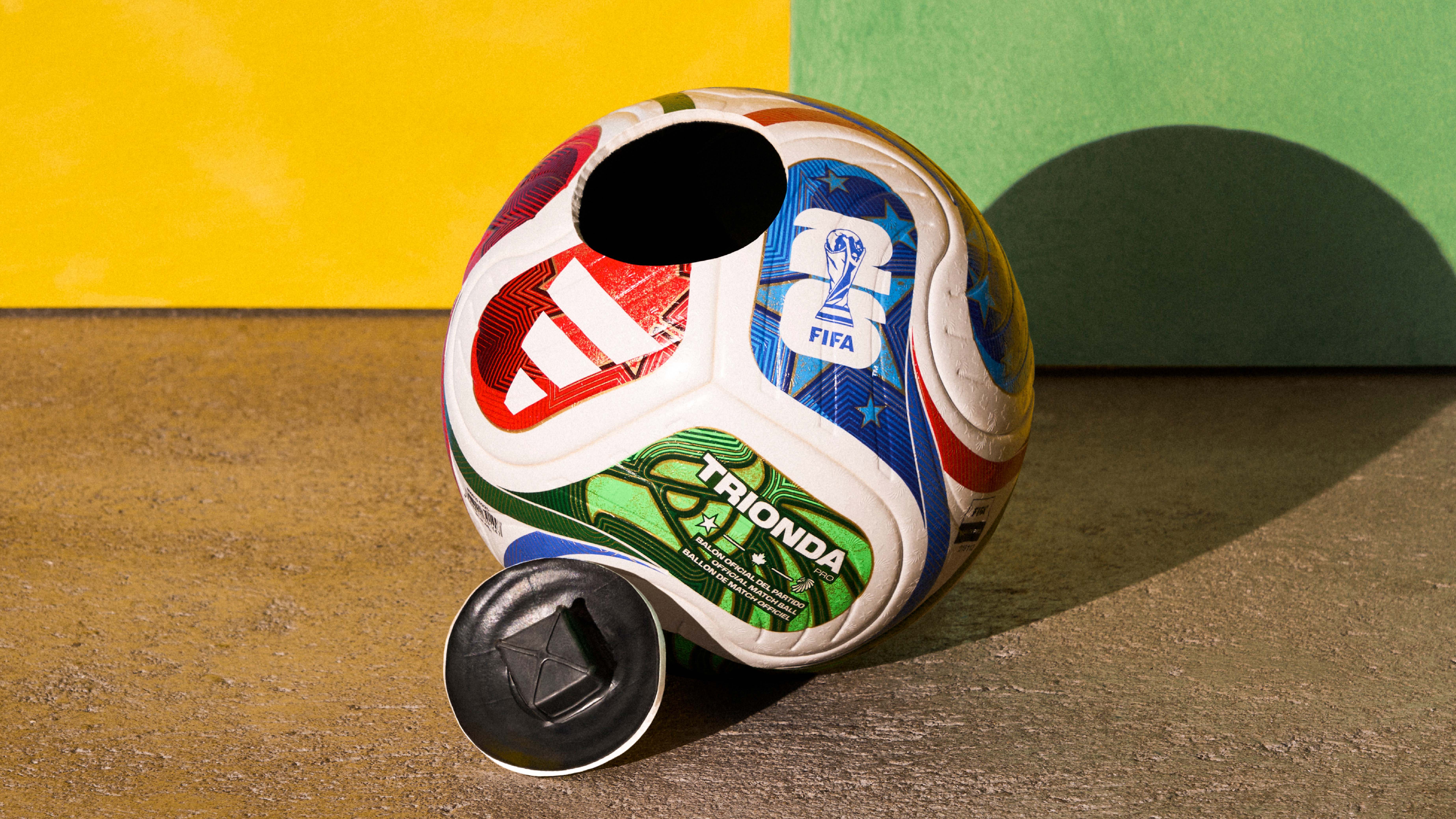
A 500Hz motion sensor chip is now placed inside one of the ball’s panels as opposed to sitting in the centre of the ball as it did on the Al Rihla. That sensor can capture sophisticated ball data, and when combined with player position data and AI, can be used by VAR officials to help speed up offside decisions.
The use of those improved smarts does not end there. It will also be able to help officials correctly identify when an individual touches the ball. That could have a huge impact on match officials, making the correct calls over contentious handball incidents.