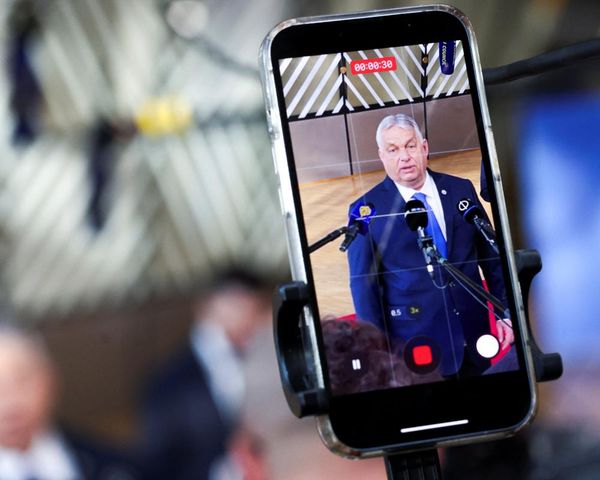
European diplomats in talks to save the landmark Iran nuclear deal said Friday that "some technical progress" had been made but warned they were "rapidly reaching the end of the road".
"There has been some technical progress in the last 24 hours, but this only takes us back nearer to where the talks stood in June," Britain, France and Germany said in a statement after the latest talks ended in Vienna.
"We are rapidly reaching the end of the road for this negotiation," they added, calling the latest pause requested by Tehran as "disappointing".
The talks -- aimed at bringing the US back into the agreement, which it left in 2018, and Tehran to roll back its stepped-up nuclear activities -- started in April this year, but then stopped for several months as Iran elected a new hardline government.
The talks finally resumed in late November.
"We have made good progress this week," Tehran's chief negotiator Ali Bagheri said on Twitter on Friday before the meeting to take stock and adjourn the talks, adding they would continue "after a break of a few days".
EU and US diplomats had been more guarded in their comments with diplomats from Britain, France and Germany -- all party to the deal -- saying on Monday that "precious time" was being lost "dealing with new Iranian positions inconsistent" with the agreement.
Washington -- which under then president Donald Trump pulled out of the deal in 2018 and reinstated sanctions on Iran -- is indirectly participating in the talks.
The negotiations also include China and Russia, both parties to the agreement, which was meant to offer Iran sanctions relief in exchange for curbs on its nuclear program.
Following the US pullout, Iran has taken successive steps to increase its nuclear activities.
Missing camera memory unit
Earlier this year, Tehran also began restricting some inspection activities by the UN nuclear watchdog, the International Atomic Energy Agency (IAEA).
Tehran and the Vienna-based IAEA announced on Wednesday that they had reached agreement on replacing the cameras at the TESA nuclear complex in Karaj, west of Tehran, after they were damaged in a June attack Iran blames on Israel.
IAEA director general Rafael Grossi said Friday he had "doubts" over a missing camera memory unit from the complex, adding no understanding had been reached with Iran over this issue.
Asked whether he thought it could have vanished in the June attack, Grossi replied: "We have doubts about that".
"This is why we are asking them 'Where is it?' I'm hopeful that they are going to come up with an answer because it is very strange that it disappears," Grossi said.
Grossi admitted there was "concern" about losing surveillance data at Karaj but added: "We have ways to try to reconcile the facts on the ground with what Iran is going to be telling us".
"Don´t forget this is a facility we know very well, we know the kind of equipment there is," he said.
The IAEA's experts would use "analysis, projections, modelling" to try "to put the jigsaw puzzle together", he added.





.jpg?w=600)