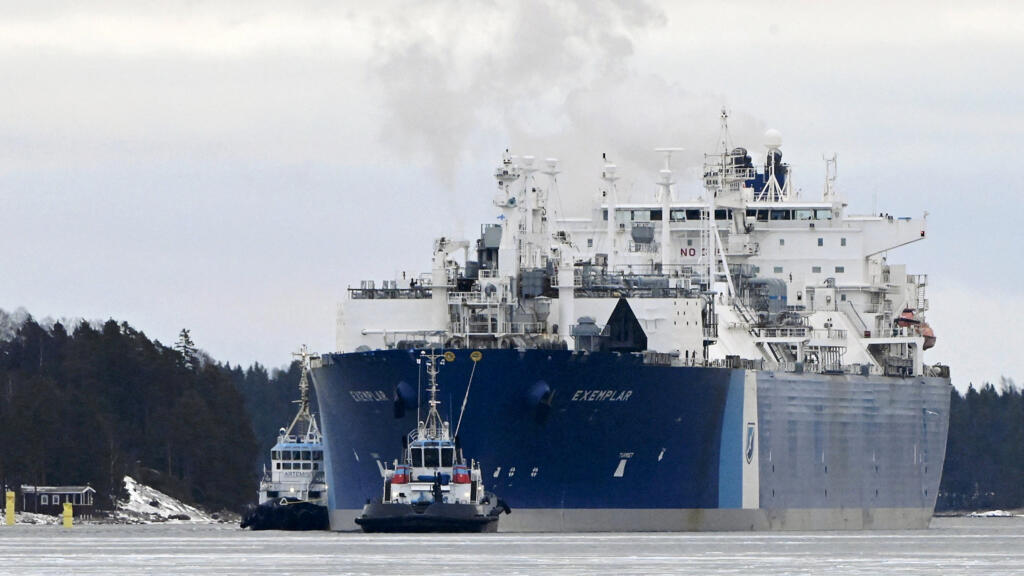
The European Union will stop importing Russian gas by late 2027 after governments and lawmakers reached a deal on Wednesday to phase out liquefied natural gas and pipeline supplies. The move aims to bring an end to an energy reliance that stretched across decades but shifted after Russia’s 2022 invasion of Ukraine.
Under the agreement, LNG imports will end by the close of 2026 and pipeline gas will stop by the end of September 2027. These dates mark one of the final steps in cutting the revenue flows that once made Russia the bloc’s main supplier.
EU Commission President Ursula von der Leyen welcomed the move in a statement.
“Today, we are stopping these imports permanently. By depleting Putin's war chest, we stand in solidarity with Ukraine and set our sights on new energy partnerships and opportunities for the sector,” she said.
Short-term LNG contracts signed before 17 June this year will end from 25 April 2026. Short-term pipeline contracts will stop from 17 June 2026. Longer contracts signed before that date will close in stages, with LNG finishing at the start of 2027 and pipeline supplies ending at the start of October 2027.
Countries that struggle to meet the necessary storage levels may be granted a one-month extension.
Both LNG and pipeline imports will require prior authorisation unless they come from major gas-producing countries that already restrict Russian supplies.
On NATO’s eastern flank, Romania finds itself at the crux of European security
Decades of reliance fading
As of October, Russia still supplied 12 percent of EU gas imports. Hungary, France and Belgium were among the countries still receiving shipments. That share has fallen from around 45 percent before the invasion.
Russian LNG has remained a significant part of EU supply even as pipeline deliveries dropped. Russia accounted for 20 percent of EU LNG imports in 2024. Imports of Russian LNG were still expected to reach €15 billion this year.
EU data showed Europe transferred nearly €10 billion to Russia for natural gas deliveries last year.
Russia once supplied about 40 percent of EU gas demand. That long relationship weakened after 2022 but has not yet ended fully.
EU Energy Commissioner Dan Jorgensen welcomed the shift. “We've made it: Europe is turning off the tap on Russian gas, forever,” he wrote on X.
The Kremlin said on Wednesday that the EU decision to move away from Russian gas will mean Europeans will pay much more for supplies.
Ukraine seeks $43bn in climate compensation from Russia over war
Oil proposal next
Von der Leyen has also pledged to phase out the remaining Russian oil entering the bloc. A proposal for that step will be presented early next year.
The overnight deal calls for plans to end Russian oil imports to Hungary and Slovakia by the end of 2027. The two countries received exemptions when the EU first moved to reduce Russian oil in 2022.
European companies will be able to use force majeure to break existing contracts once the ban takes effect. Entities that breach the rules may face penalties of €40 million, 300 percent of the transaction value or 3.5 percent of annual turnover.
The plan still needs final approval from the European Parliament and member states.
(with newswires)