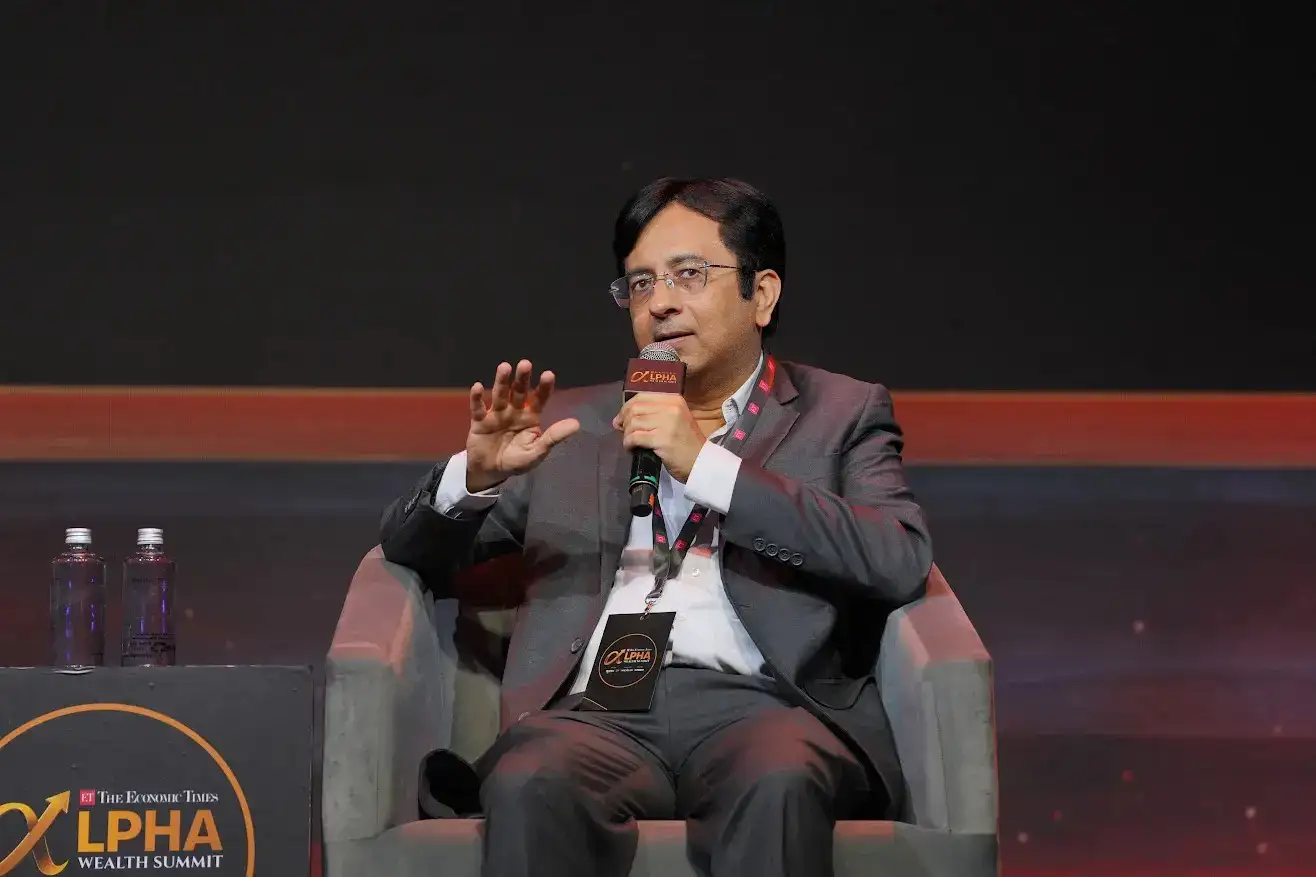
Indian high-net-worth investors looking to protect their wealth need to think far beyond this year's market swings, according to Rajeev Thakkar, Chief Investment Officer and Director at PPFAS Asset Management, who argued that most affluent investors remain significantly underexposed to global equities even after the recent rally in international markets.
Speaking at the ET Alpha Wealth Summit panel discussion on the topic 'Global or Local? The New Allocation Reality' , Thakkar made the case for a strategic, multi-generational approach to wealth preservation rather than a tactical, year-to-year one. He pointed to "Fortune's Children," the book chronicling how the Vanderbilt family, once among the richest in the world, lost their fortune within two generations, as a cautionary tale for families focused on building lasting wealth.
Other than Thakkar, Nilesh Shah, Group President & Managing Director, Kotak Mahindra Asset Management Company (KMAMC) and Rajesh Saluja, Co-Founder, CEO & MD, ASK Private Wealth were also part of the panel discussion.
Inflation, taxes and concentration risk
For India's wealthy, Thakkar identified two core threats to long-term capital. The first is the slow erosion caused by inflation and taxes, which he called especially relevant in the high-net-worth context. The second is concentration risk, putting too much wealth into a single business or sector.
He illustrated this with historical examples: buggy-whip manufacturers wiped out by the arrival of automobiles, and Mumbai's once-dominant textile mill owners who lost their position as the industry shifted elsewhere. The lesson, he said, is that even dominant industries can become obsolete, making diversification essential for anyone trying to protect wealth across generations.
Rather than chasing short-term tactical bets such as performing credit, Thakkar said long-term investors should focus on eliminating major risks ("taking away the snakes from a snake and ladder game") and targeting real, inflation-beating, post-tax returns instead of constantly rotating between asset classes.
The case for going global
On international diversification, Thakkar pointed to two specific routes available to Indian investors: the Liberalised Remittance Scheme (LRS) combined with Overseas Portfolio Investment (OPI) structures available through GIFT City. He described both as excellent vehicles for gaining exposure to global equities as a long-term holding rather than a short-term trade.
His core argument: India's share of global stock market capitalisation is small, meaning that even investors with meaningful allocations to international markets remain structurally underweight. "Whether it is 5%, 10%, 15%, you are still under-allocated to global," he said, urging investors to begin increasing that exposure now rather than waiting for a better entry point.
Why "themes" alone don't create wealth
Asked about thematic investing, including the current enthusiasm around energy security and self-sufficiency, Thakkar offered a sobering historical perspective. He noted that being right about a sector's growth doesn't guarantee investor returns, citing three examples from India's market history.
In the mid-1990s, the opening up of domestic aviation to private carriers was a clear growth theme, yet none of the airlines from that era survive today. Cellular telephony was equally compelling at the time, but only one company from that generation still exists and has created shareholder value; the rest went bankrupt or destroyed capital. Renewable energy told a similar story during the 2003–2007 bull market, when a leading windmill manufacturer was a market darling before running into serious trouble.
The takeaway, Thakkar said, is that a strong theme is not sufficient on its own. Lasting wealth creation requires combining the theme with quality promoters and management, proven execution capability, and a robust balance sheet, while favouring companies with genuine pricing power over those competing in commoditised, intensely competitive segments. Applied to today's power and energy infrastructure boom, he suggested some companies will create lasting value while others, despite strong volume growth, ultimately will not.
The bigger picture
The panel, which also featured Nilesh Shah of Kotak Mahindra Asset Management and Rajesh Saluja of ASK Private Wealth, reflected a broader debate playing out across India's wealth management industry: how investors should balance tactical, near-term opportunities such as REITs and InvITs against the longer-term imperative of global diversification and disciplined stock selection.
For India's growing base of high-net-worth investors, the message from the panel was consistent — preserving wealth across generations requires guarding against concentration risk, building genuine global exposure rather than token allocations, and resisting the temptation to chase narratives without scrutinising the underlying business fundamentals.