I recently had the pleasure of watching the trailer for the Entourage movie with a packed audience. Filled with in jokes, references to the show and a meta trailer within a trailer sequence, it was a fan’s dream. Except that I was watching it in an east London cinema and all I could hear was “huh?”.
A confidently wide release for a film adaptation of a TV show that finished four years ago and was last shown to an audience of less than 30,000 people on Sky Atlantic, is a brash move from Warner Bros and, given the film’s underwhelming reception in its home country, it might be a disastrous one too. So far, Entourage has made just $3m outside of America to add to its lukewarm $26m domestic total.
While this is indicative of many things (the fact that critics weren’t keen, the low profile of the cast, bigger and better alternatives), Entourage’s failure also highlights a key problem facing Hollywood movies: the importance of global appeal. Not just a proudly American show but a proudly LA show, Entourage was a localised comedy referencing just one city. Arguably, the same could be said for Sex and the City but that show was about dating, relationships and fashion, which could be appreciated by almost any country. Entourage’s focus on the film industry and “bro culture” is more limiting.
The first Sex and the City movie was a global smash, making $262m outside of the states, making it the only non-action entry in the top 10 most successful TV-to-film adaptations ever released. Entourage will be lucky if it makes it inside the top 50.
Entourage’s DOA status lands in a summer where global audiences are more important than ever. The summer’s biggest hits have been carefully tailored to appeal to everyone from Leeds to Lagos. From international casts (Bollywood stars Irrfan Khan in Jurassic World and Nargis Fakhri in Spy) to country-hopping press tours (The Avengers cast lived on a private jet for about a month), the season’s box office has kicked off to record numbers. Last week’s dinosaur reboot became the first film to make $500m internationally in one weekend and you can’t help but think the title was manufactured to give it a more worldly feel.
Even the comedy genre, which often struggles to travel around the world, has seen a global hit with Melissa McCarthy’s Spy, which is actually selling better outside of the US. The James Bond-esque plot, complete with a list of exotic locations, gives it a less localised feel than Boston-set The Heat, director Paul Feig’s last collaboration with McCarthy. It remains to be seen how Judd Apatow’s summer comedy Trainwreck, focused around comedian Amy Schumer whose popularity outside of the US is still in need of a boost, will perform overseas.
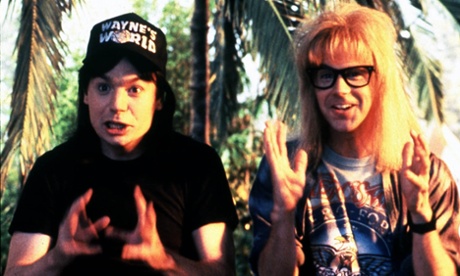
Back in the 90s, when non-US box office was barely even recorded, there was a string of films, mainly comedies, which originated from US shows with no international appeal that arrived on foreign shores, followed by giant question marks. A Night at the Roxbury? Wild Wild West? The Beverly Hillbillies? Leave It to Beaver? Coneheads? Despite the problem of, you know, making no money, they kept on coming, blissfully, or perhaps, wilfully ignorant of their appeal to audiences. Wayne’s World, based on a Saturday Night Live sketch, was a rare success in this decade and did well enough to warrant a sequel, although in today’s terms, a $61m non-US gross would be a disappointment.
The globalised nature of the industry now means that territories outside of the US are actually more influential than the US itself. Pacific Rim might have scrambled together an underwhelming $101m Stateside, but another $309m from the rest of the world led to a greenlit sequel and a shift in the priorities of studios.
The bros of Entourage aren’t alone. Some of the biggest flops of the past few years can be arguably linked to their localised heritage. Tim Burton’s Dark Shadows was based on a US TV curio unknown to other countries, Kevin Costner’s Draft Day was lumbered with an NFL storyline that failed to travel well, Ender’s Game was based on a much-loved book loved only in America, and White House Down’s jingoistic jeopardy didn’t bother the rest of the world.
There’s a reason why studios are continuing to bank on superheroes: their popularity is consistent around the world, thanks to easily translatable stories and action-heavy plots. But even the first Captain America film was lumbered with the suffix The First Avenger just to avoid scaring off Ameri-haters.
Hollywood may still be the centre of the industry, but increasingly their decisions are tied less to what Americans want and more on what the global community is demanding. While this might mean more Marvel films, it will also guarantee that Entourage 2 won’t be happening. That’s what they call globalisation, bro.