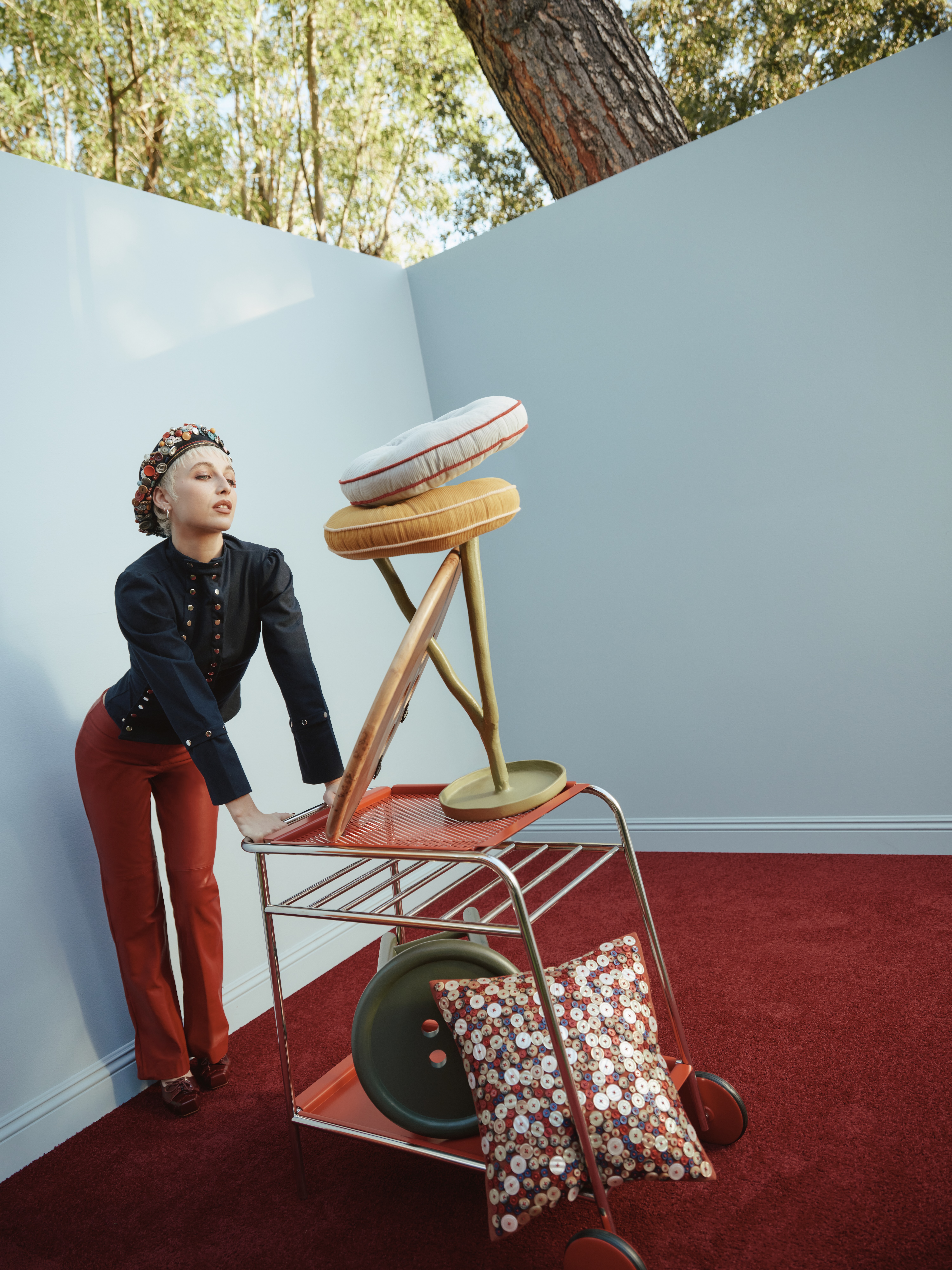
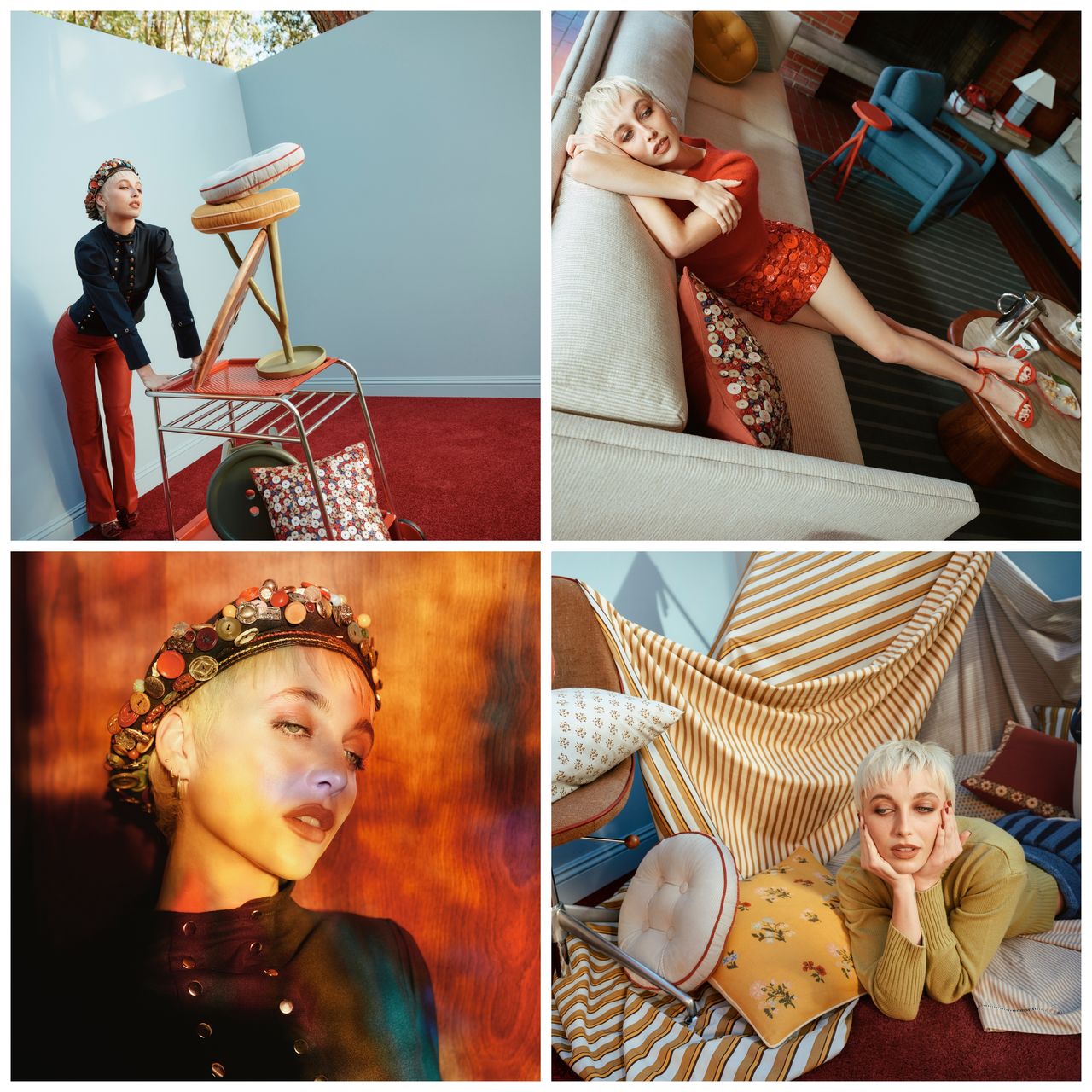
Emma Chamberlain needs no introduction—nor does her particular way of making taste feel easy, personal, and just a little offbeat. With her first West Elm collection, launching March 30, that sensibility moves into the home. The assortment spans furniture, lighting, tabletop, textiles, and decorative accessories, and while there are traces of postmodernism and mid-century design throughout, it feels less like an homage than an extension of Chamberlain’s own visual world. That much will be familiar to anyone who remembers her Architectural Digest home tour.
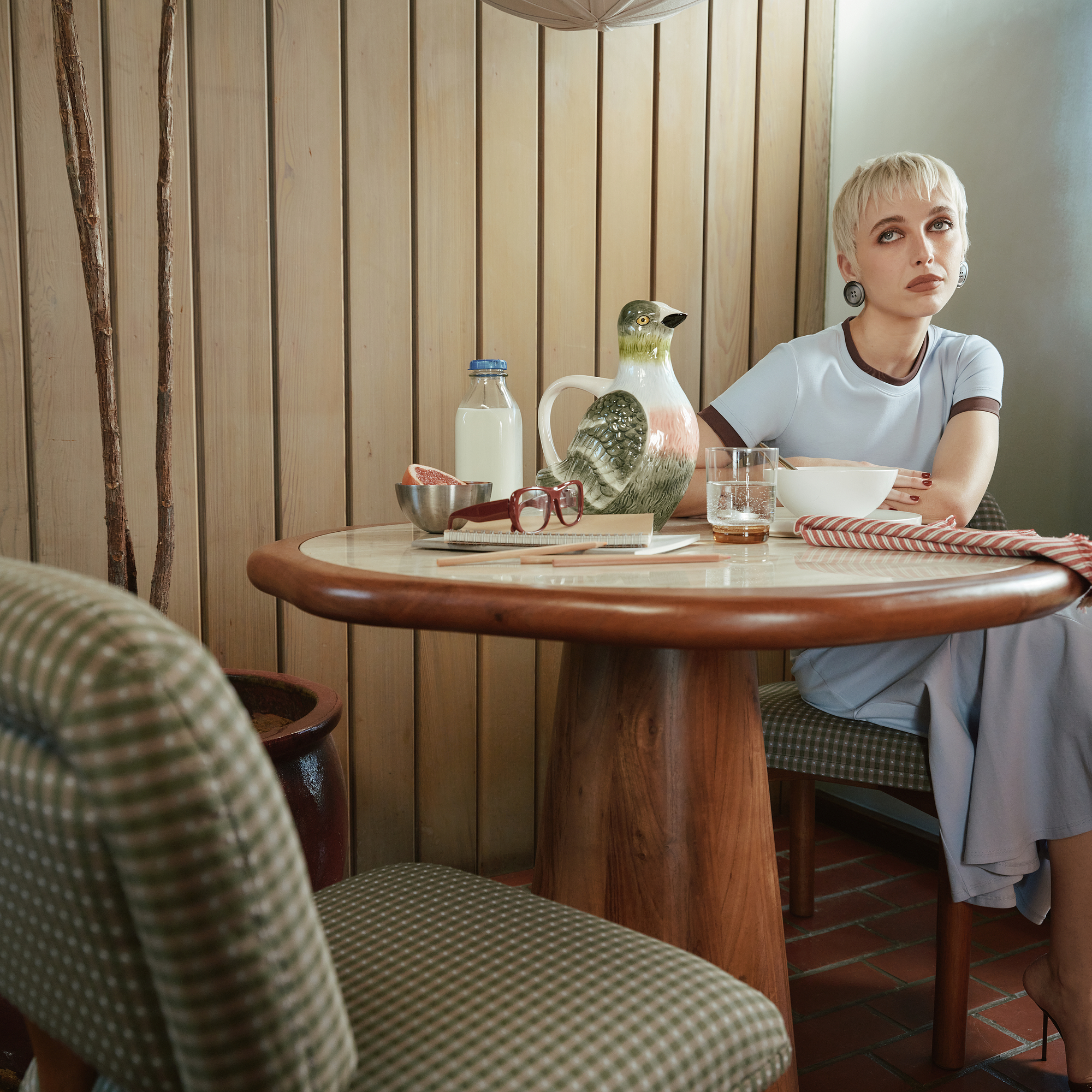
Developed with West Elm’s in-house design team, the collection is warm, rounded, and slightly eccentric in a way that feels true to her. “When it came to designing this collection, it was honestly just energy and intuition,” says Chamberlain over email. “It’s just an inner knowing. I don’t know how or why, I just know what makes sense together. Cohesion, for me, comes from that instinct. I just feel when something belongs.”
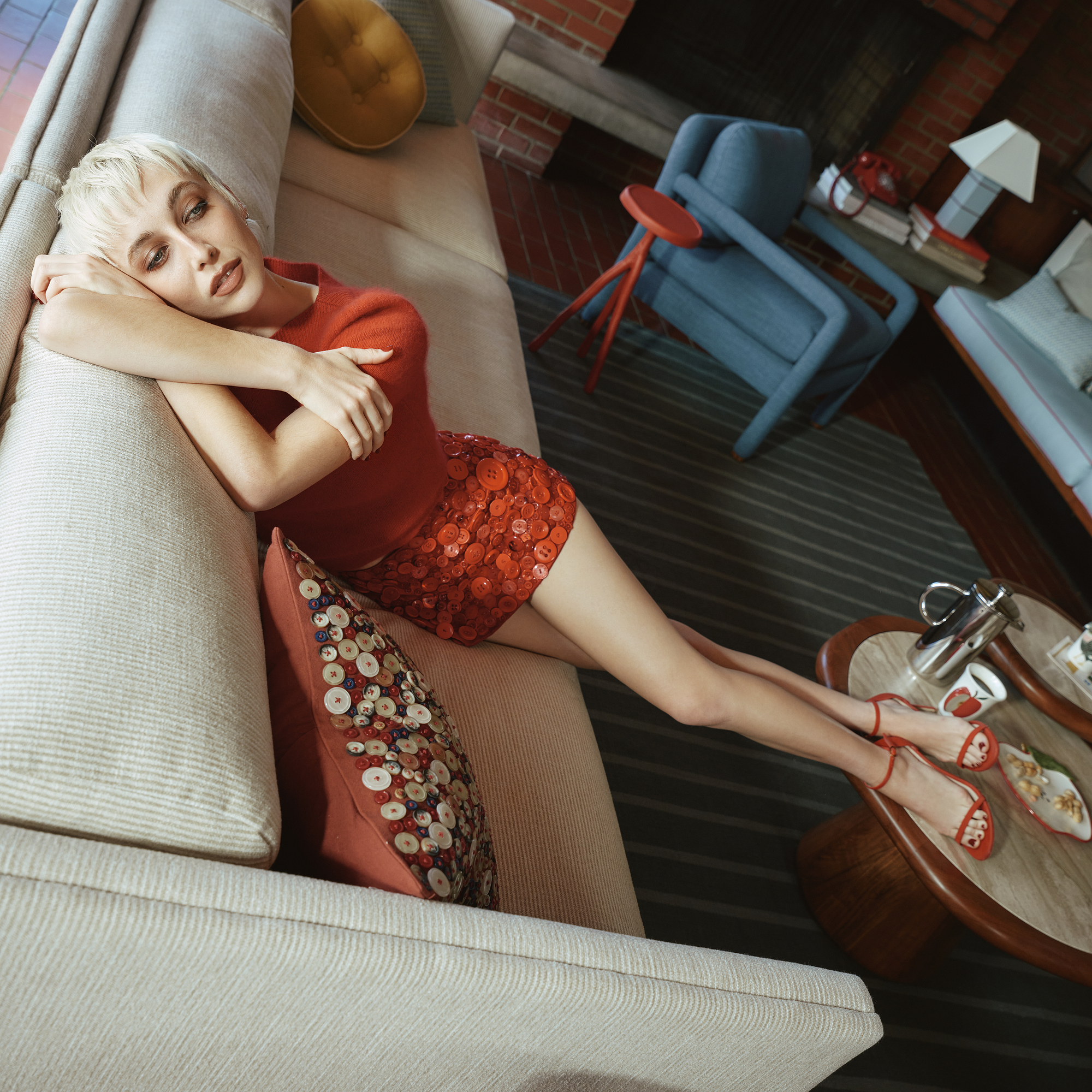
That instinct is what makes the collection work. Pedestal bases, curved drawer details, and rounded silhouettes give the furniture a softness that keeps it from feeling too serious. Even the more directional pieces—a lacquered nightstand, a vanity—still feel inviting rather than untouchable.
The best details are the ones that feel most specific to her. Clovers, apples, and lighthouses—drawn from Chamberlain’s own iconography and tattoo references—appear across textiles and accessories with a light hand. They add personality without turning the collection into an exercise in branding.
More importantly, the collection understands that nobody wants a home that feels too precious to use. “When people walk into my house, I want them to feel invited,” Chamberlain says. “I want them to sit anywhere. I don’t want it to feel like a spectacle. Sometimes a house can be so gorgeous you’re scared to touch anything. I don’t want that. I want the art on the walls and the furniture on the ground. Sit in it. Spill something. Live in it.”
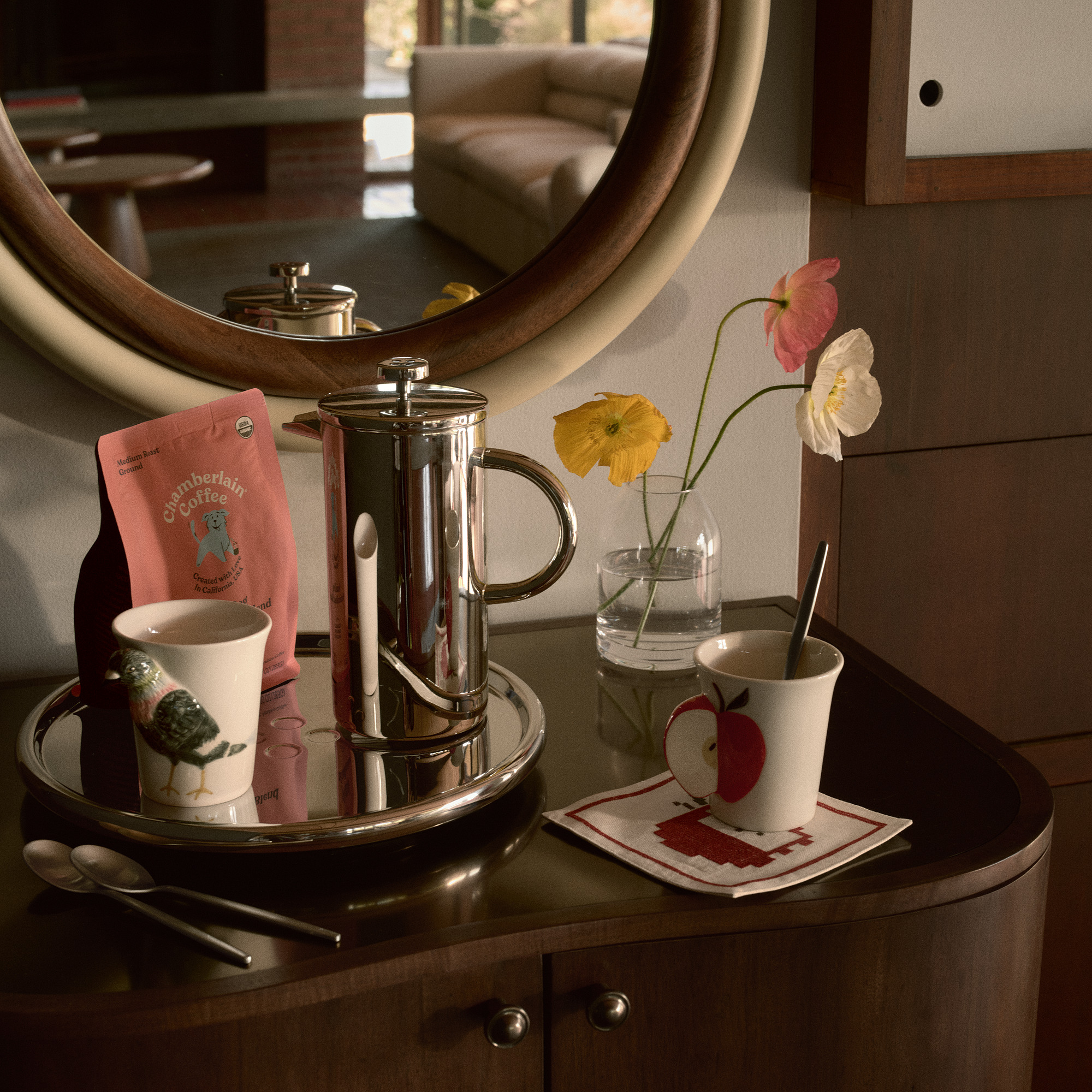
That sentiment runs through the entire line. “My home decor philosophy is pretty simple,” she says. “I believe the home should invite you to live in it. The colors should draw you in, the objects should feel approachable and lighthearted, every seat should ask you to stay awhile, and every piece should be as functional as it is charming, creating a home that not only looks beautiful, but feels beautiful.”
That is ultimately the appeal of Chamberlain’s move into interiors. She has always had a knack for making taste feel less intimidating. Now she's applying that same point of view to the spaces people return to at the end of the day.