An umbrella maker gearing up for the rainy season and a bride-to-be planning her postponed wedding ceremony were left anxious and confused when news broke of the government's plans for another extension to the state of emergency through June 20.
Meanwhile, some dining establishments that have been struggling with the unpredictability of the situation have started ignoring requests from the Tokyo metropolitan government and resumed operations.
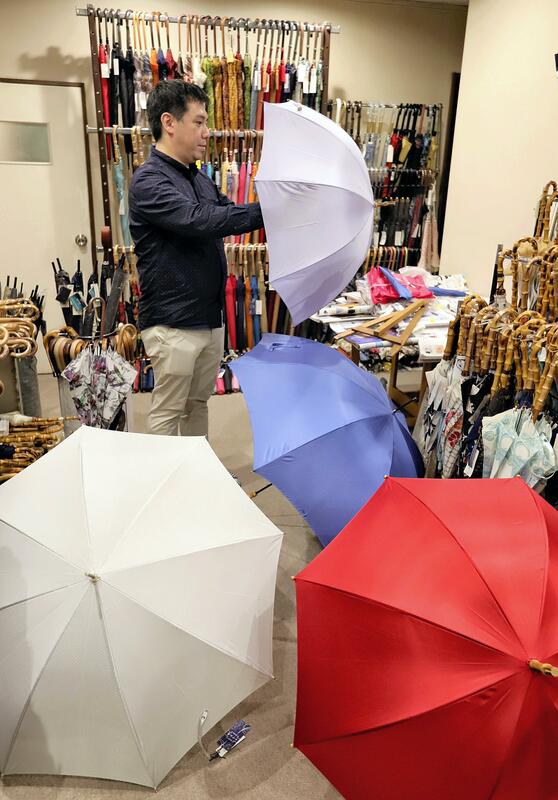
"The rainy season is the time for our products to sell well," said Toshiyuki Wakao, 49, the owner of umbrella manufacturer Wakao in Taito Ward, Tokyo. He had a grim expression on his face when he learned of the news that the government was planning to extend the state of emergency in Tokyo again.
Founded in 1938, the manufacturer offers hundreds of types of umbrellas made by skilled craftspeople.
Customer numbers at the stores that stock the company's goods have plummeted during the pandemic, and as a result, Wakao's sales from last year were down by 30% compared to 2019.
The company's sales in June, during the rainy season, usually account for 30% of the yearly total.
"I never thought the state of emergency would be extended through to June," said Wakao. "If people continue to refrain from going out, the situation will inevitably affect our business."
A 28-year-old hospital employee in Taito Ward, Tokyo, is scheduled to hold her wedding ceremony in the capital on June 27.
In January, when the state of emergency was declared, she decided to postpone the ceremony initially slated for March. She apologized to friends and other guests when she told them about the schedule change and now hopes that the state of emergency will be over before the date of the postponed ceremony.
"I can't postpone the ceremony again because I don't want to cause any more trouble to the guests," she said.
She has trimmed the guest list to about 50, half the original number, and has shelved plans to provide entertainment and serve drinks to guests at tables during the wedding reception as part of virus measures.
"I've been feeling down a lot lately, but I want to be well-prepared so that the guests can enjoy themselves," she said.
The metropolitan government has asked eateries where alcohol is served to close temporarily or refrain from serving alcohol during the state of emergency.
However, some establishments struggling amid the prolonged emergency period have started ignoring such requests.
On Thursday, people were drinking alcohol at a standing bar that reopened on May 13 in the Ameyoko shopping district in Ueno, Taito Ward. It had been closed since April 26, the day after the state of emergency was declared.
The bar limits the number of customers and does not allow them to stay for longer than 30 minutes.
"Although part of me wants to comply with the business closure request, I have no choice but to protect the jobs of our employees and part-timers," said the 39-year-old owner of the bar.
Meanwhile, izakaya Maguroya Yomogi in Kabukicho, Shinjuku Ward, plans to remain closed. The eatery's fixed costs of about 400,000 yen per month, including rent and utilities, are covered by a metropolitan government handout available to businesses that comply with requests and sales from food deliveries, but total sales are only about 30% of the usual level.
"It's not that I don't understand the owners who have decided to reopen," said the 52-year-old proprietor of Maguroya Yomogi. "But I want the pandemic to be brought under control as soon as possible, so I won't open my place."
Read more from The Japan News at https://japannews.yomiuri.co.jp/