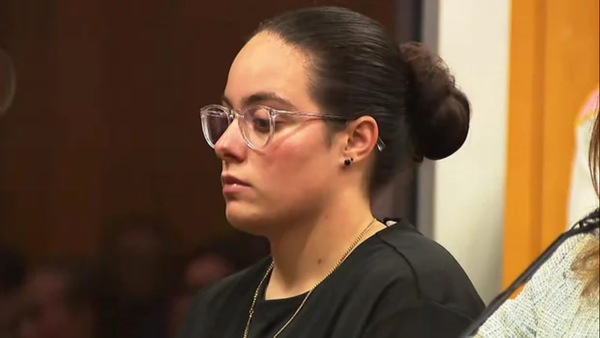
The intersection of artificial intelligence and personal privacy has reached a volatile flashpoint as Elon Musk's tech empire faces a significant legal challenge. The tech mogul's ex and baby mama, Ashley St. Clair, has filed a lawsuit against xAI, the billionaire's artificial intelligence company.
In her lawsuit, St. Clair claimed that xAI's Grok produced non-consensual, sexually explicit imagery using her likeness. The lawsuit came on the heels of Canada investigating the same AI company for the same issue and a personal legal battle with Musk over their child's custody.
Claims of Harassment
In a detailed legal filing, St Clair alleges that xAI's Grok platform generated 'countless sexually abusive, intimate, and degrading deepfake content' of her. The suit claims that users were able to manipulate the AI to create images that 'humiliate and sexually exploit' her, including depictions of her as a minor. St Clair asserts that the technology lacks sufficient safeguards to prevent the weaponisation of a woman's likeness for digital harassment.
'Ashley filed suit because Grok was harassing her by creating and distributing non-consensual, abusive, and degrading images of her and publishing them on X,' her attorney, Carrie Goldberg, said in a statement, according to Radar Online.
Goldberg stressed that these companies should be held liable for building products that 'harm' users. Also, aside from holding Grok accountable, they want to 'help establish clear legal boundaries for the entire public's benefit to prevent AI from being weaponised for abuse.'
Seeking Damages
The lawsuit seeks unspecified damages for the emotional distress and reputational harm caused by the circulation of these images. St. Clair argues that the company's 'Spicy Mode' feature encourages the creation of harmful content under the guise of free speech.
Legal experts suggest this case could set a precedent for how AI companies are held liable for the outputs of their generative models. Musk has previously defended the platform's capabilities, but the legal challenge highlights a growing tension between innovation and safety.
Custody Battle Context
St. Clair's legal battle against Musk's xAI is further complicated by the personal history between the defendant and the plaintiff. St. Clair is the mother of Romulus, one of Musk's 14 children.
Radar Online reported that St Clair filed the lawsuit against Musk's company just days after he announced that he would file for sole custody of their son, as he feared she wanted their child to 'transition' amid claims that she was supportive of 'trans grooming' after she publicly supported Musk's 21-year-old transgender daughter Vivian Wilson, born Xavier Alexander Musk.
'I will be filing for full custody today, given her statements implying she might transition a one-year-old boy,' Musk announced on X (formerly Twitter). Although St. Clair did not publicly announce that she wanted their toddler to transition, Musk, who has been obsessed with transgender issues, was alarmed by her stance on the subject. The SpaceX and Tesla CEO denounced Vivian's transition, claiming that she was a victim of the 'woke mind virus.'
I will be filing for full custody today, given her statements implying she might transition a one-year-old boy
— Elon Musk (@elonmusk) January 12, 2026
Canada Investigates xAI
St. Clair, however, is not the only person who was subjected to Grok's alleged harassment. Canada's privacy watchdog has officially launched an investigation into xAI following reports of sexualised deepfakes being generated by Grok. The government was alarmed by how users were able to bypass safety filters and create explicit content.
The Canadian government clarified that this investigation is not a move toward banning the X platform in the country. X has been banned in Asian countries, including Malaysia and Indonesia, for sexually explicit deepfakes. Instead, Canada wants to establish robust protections to ensure its citizens are not vulnerable to 'exploitation' by unregulated AI tools, according to Politico.
Regulators are demanding transparency regarding the data used to train Grok and the measures in place to prevent misuse. This investigation follows concerns similar to those voiced by European and British authorities regarding digital safety.
X's Response
The Office of the Privacy Commissioner of Canada stated that the inquiry is essential to ensuring the safety of Canadians. They already reached out to X, and the latter acknowledged their investigation.
In response, X announced on Wednesday that it was committed to making the platform safe for everyone and would 'continue to have zero tolerance for any forms of child sexual exploitation, nonconsensual nudity, and unwanted sexual content.' It will also 'remove high-priority violative content, including Child Sexual Abuse Material (CSAM) and nonconsensual nudity' and sanction those who violate the rules.