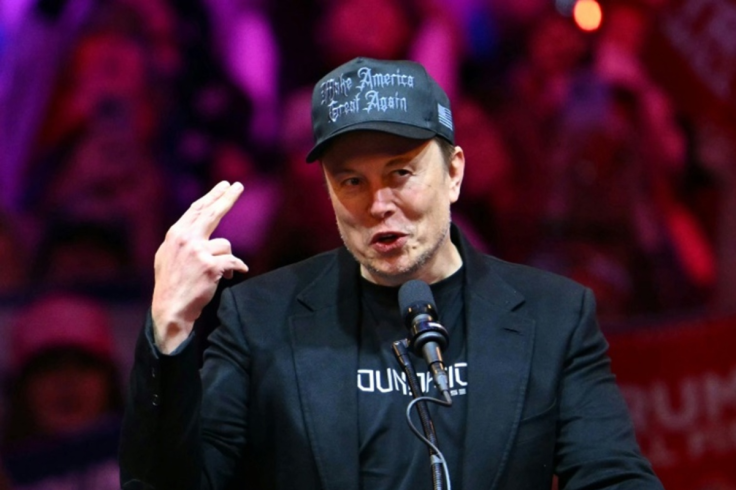
Elon Musk moved to quash fevered market speculation on Monday, denying that SpaceX had struck a $52 billion (£38.6 billion) deal with Foxconn for Nvidia-powered AI servers, as shares in existing suppliers Dell Technologies and Super Micro Computer edged higher in premarket US trading.
SpaceX was preparing to buy more than 13,000 AI server racks from Foxconn, each allegedly powered by Nvidia's next-generation GB300 chips and priced at about $4 million (£2,97 million) per rack. The paper said the supposed order would be worth roughly $52 billion and implied that Dell and Super Micro long-standing providers of AI servers to Musk's space venture had been sidelined in favour of the Taiwanese manufacturing giant.
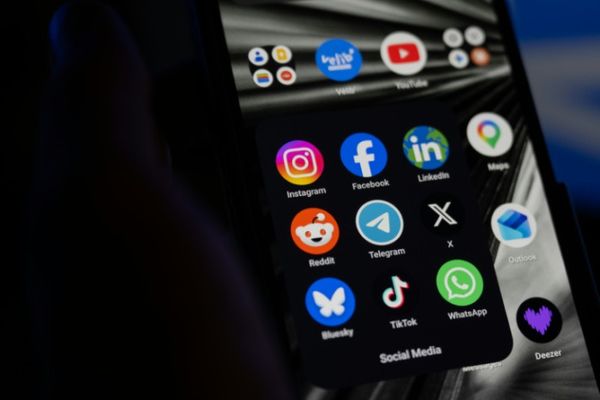
The story was promptly amplified on X, the social media platform Musk owns. One widely shared post summarised the claim and suggested Foxconn had effectively displaced Dell and Super Micro in the SpaceX supply chain, with deliveries pencilled in from late 2026 through the first quarter of 2027.
Musk replied directly on Sunday with a terse rebuttal: 'This is fake news.' The original post has since been deleted, but his response remains visible.
Elon Musk Denial Takes Edge Off Dell And SMCI Fears
The denial changed the tone in early trading. Dell shares, which had sunk in overnight action as traders digested the Foxconn report, recovered to trade about 0.4% higher premarket. Super Micro Computer, another key Musk-linked AI hardware supplier, gained roughly 0.8%.
Those are small moves in percentage terms, but they mattered to investors already jittery after a sharp pullback in AI-related names.
Dell is down about 8% so far in July, while Super Micro has fallen around 18%, as money has rotated out of the most aggressively priced AI and semiconductor stocks and back into larger technology and software names. The suggestion that SpaceX might have handed a flagship AI infrastructure order to Foxconn risked compounding that pressure.
Had the Taiwanese report proved accurate, it would have been a double hit. Dell and Super Micro would have faced the prospect of losing a marquee AI customer just as the broader trade was wobbling, while Foxconn would have gained a huge launchpad into the North American cloud and AI infrastructure market. Instead, the public pushback from Musk left the market where it started: with SpaceX's server strategy largely opaque, and Dell and Super Micro still assumed to be in the mix.
None of the companies involved has issued a detailed statement beyond Musk's post on X. There has been no formal filing or press release laying out current or future server procurement plans for SpaceX. In the absence of that, all talk of specific contract values, chip models or delivery schedules remains speculative and should be treated cautiously.
AI Server Trade Around Elon Musk Stays Crowded
The broader story is that Dell and Super Micro remain central players in the AI infrastructure build-out that has powered much of the US stock market's excitement over the past year.
Dell has been leaning on its established enterprise relationships to sell more AI-ready servers and storage, layering new partnerships onto a wide distribution network. Super Micro has focused on aggressively scaling its AI server portfolio and manufacturing capacity.
Super Micro's breakneck growth has brought more scrutiny, with increased attention on its governance and legal exposure in recent months. That background may help explain why traders were so quick to assume the worst when the Foxconn rumour surfaced: a business under a microscope tends to have less benefit of the doubt.
On Stocktwits, a platform popular with retail traders, sentiment on Monday was described as 'neutral' for Dell and 'bearish' for Super Micro, even after Musk's denial. Notably, many users continued to discuss the purported SpaceX–Foxconn agreement as if it were still likely, effectively discounting the single-line 'fake news' comment.
One user wrote: '$DELL is one of the names I'm watching closely in the AI infrastructure trade... $DELL has been holding up better than many names in the group, showing buyers are still defending the trend.' Another warned that, in their view, 'The AI trade will have winners and losers. The leaders are usually the ones that refuse to break when the market gets shaky.'
A different trader took a more combative stance on Super Micro's prospects: '$SMCI I'm sure the bears are having panic attacks right now! They expected down 5% premarket lol.' These are individual opinions, not research notes, but they capture the split mood around AI stocks in mid-2024 enthusiasm for the long-term theme, coupled with anxiety over stretched valuations and fragile momentum.
The episode underlines how a single anonymously sourced overseas report, amplified through social media and then slapped down by Musk in a short post, can swing the narrative around multi-billion-dollar companies before the opening bell has even rung.
Nothing about a SpaceX–Foxconn server deal has been confirmed by the parties involved, beyond Musk's denial, so all claims about precise order sizes, pricing or chip configurations should be treated with a grain of salt.