Evening summary
There’s less than two weeks to go to the election, and party leaders have been out there trying to persuade their core support, as well as undecided participants, to go out and vote for them on May 7. Over the past couple of days, two polls had the Conservatives ahead by four points and another two had Labour leading by two and three points respectively. That means the parties have been scheduling more speeches, more interviews and more photo ops. It’s all or nothing now.
The big picture
Ed Miliband gave his first speech on foreign policy in five years today, to the think-tank Chatham House. The Labour leader criticised the coalition’s policy on Libya and linked the chaos in the country to the current wave of migrants drowning in the Mediterranean. He said after Iraq, we should have learnt about the need for post-conflict planning:
The tragedy is that this could have been anticipated. It should have been avoided. And Britain could have played its part in ensuring the international community stood by the people of Libya in practice rather than standing behind the unfounded hopes of potential progress only in principle.

This sparked a row that carried on for most of the day. Liz Truss, the Conservatives’ environment secretary, called Miliband’s comments “outrageous and disgraceful”. David Cameron said they were “ill-judged”, and William Hague said Miliband was being “opportunistic” because Labour had never proposed an alternative Libya policy.
Labour responded by calling the Conservatives’ complaints “a manufactured row”. Douglas Alexander, the shadow foreign secretary, said Miliband was not directly blaming Cameron but was making the point that the crisis in the Mediterranean was down to a wider failure of the international community to stop Libya slipping into chaos after the end of Muammar Gaddafi’s rule.
Either way, it was interesting to hear about foreign policy in an election campaign that’s been so dominated by domestic pledges.
What happened today
-
In his speech, Ed Miliband also claimed that Labour is now the party best placed to maintain the security of the UK, because of Tory plans for cuts which would “undermine” the armed forces. He accused David Cameron of pursuing a foreign policy of “small-minded isolationism” that has put party interest first and led to the “biggest loss of influence for our country in a generation” (see 9:31am).
-
HSBC announced that it is considering moving its HQ out of the UK, partly because it is worried about the possibility of Britain leaving the EU. David Cameron shrugged off the remarks, stating that London is the world’s leading banking centre and this is a reminder of how important it is to have pro-business policies. Chuka Umunna, the shadow business secretary, said the statment shows how “irresponsible” Conservative policy on Europe has been.
-
David Cameron said a Conservative government would introduce English votes for English laws (Evel) within 100 days of the election. “Soon the Scottish parliament will be voting to set its own levels of income tax – and rightly so – but that has clear implications. English MPs will be unable to vote on the income tax paid by people in Aberdeen and Edinburgh while Scottish MPs are able to vote on the tax you pay in Birmingham or Canterbury or Leeds. It is simply unfair,” he said. Both Nicola Sturgeon and Jim Murphy said the plans were a breach of the Smith commission.
-
Nigel Farage pulled away from his rivals to be the favourite to win Thanet South, according to a new poll by Survation that gave the Ukip leader 39% support in the constituency. Farage also said David Cameron becoming prime minister is the best option for his party, a remark Labour claimed was a clear sign that the Tories and Ukip are preparing to work together.
-
Nick Clegg ruled out any deal with Labour that relies on “life support” from the SNP and said that any coalition with the party that finished second in the election would lack “legitimacy” with voters.
Quote of the day
The deficit halved, jobs up, growth up ...we won’t let you or the Tories screw it up.
– Lib Dem Danny Alexander’s reply to Liam Byrne’s infamous note five years ago claiming that there was no money left in the Treasury.
Laugh of the day
Chef at Bikash tells me economy in a country is like Thorka in a curry, if you don't get it right nothing else works pic.twitter.com/hkZibH1NsT
— George Osborne (@George_Osborne) April 24, 2015
Hero of the day
The girl in charge of the Milifandom account, who, in her own ways, continues to be an example of younger engagement with politics.
#Milifandom - Young people are not apathetic to politics, we want a voice - Right wing media have controlled opinions about Ed for too long
— abby (@twcuddleston) April 24, 2015
Villain of the day
Ukip candidate Kim Rose, who said Europe was “turning into exactly what Hitler wanted in 1942” under the EU.
That’s it from me today. Join me again tomorrow morning, as I’ll attempt to bring you the latest news, reaction and analysis from the campaign trail. There’s not long left to go now, make sure you buckle in for the bumpy ride.
Updated
Former Tory treasurer and pollster Lord Ashcroft has said the Conservative attacks on Ed Miliband are failing to turn wavering voters against him. Writing in the Independent, Ashcroft said that, rather than “crumbling” under fire, Miliband has won support by showing “a good deal of resilience in the face of some rather unseemly attacks”.
If the blue army is being outgunned that is not a matter of logistics, but because it lacks recruits. And that would not be surprising for a party that has been unable to reach very far beyond its core support for more than 20 years.
There has been too much emphasis from the Tories on the opposing leader’s weaknesses (or, in this case, the deals he may or may not do to get himself into office), which suggests to voters a party that can’t have much to say for itself.
Ashcroft said he was not blaming Conservative election guru Lynton Crosby, who could only work with the materials he was given and who had brought “discipline, organisation and consistency” to the Conservative operation.
But if after five years in government the Conservative Party’s policy advantage is confined to the economy and the public finances - crucial areas, but not, as far as voters are concerned, everything - that is hardly the fault of an Australian consultant.
Updated
Clegg dismisses any Labour deal involving SNP
Nick Clegg has ruled out any deal with Labour that relies on “life support” from the SNP, the Financial Times is reporting. The Lib Dem leader said that any coalition with the party that finished second in the election would lack “legitimacy” with voters, who would question the government’s “birthright”. He added that Labour has been consumed by “frothing bile” towards his party for the past five years.
Updated
From Sturgeon masks to meta-photography of party leaders, here’s our Friday night photo round-up from today’s various election campaigns:


Updated
The Press Association is reporting that Anas Sarwar, the Labour Glasgow Central candidate, has received a death threat. The message threatening to shoot the former Scottish Labour deputy leader was left on the machine of his Glasgow office between April 8 and 10. Scottish Labour said the matter has been reported to police. Scottish Labour Deputy Leader Kezia Dugdale said:
These types of threats have no place in our society. No-one, politician or otherwise, should have to face threats of violence. What has it come to when people seeking to be part of the democratic process face threats of this nature?
Anas Sarwar has a family who will rightly be concerned and staff who should, at all times, be able to go to work without fear of violence. In the face of threats we have to stand together and unite in our condemnation of this vile and disgusting behaviour. Anas Sarwar is a popular local figure and this sort of threat will not deter him.
Updated
Shadow education secretary Tristram Hunt has released a statement about Labour’s policy on free schools, calling the Conservatives’ claim that his party will close existing free schools “complete nonsense”. He said:
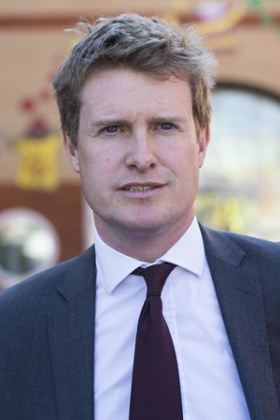
Labour will not close existing free schools. What this represents is another desperate attempt from the Tories to distract from their record of failure. Their Free Schools programme is damaging standards and wasting money which would be better spent capping infant class sizes at thirty.
Labour has a better plan. We will end the Tories’ flawed Free Schools programme, make sure all teachers are qualified and cap class sizes for five, six and seven-years-olds at thirty.
Updated
There appears to be a lot of Ed Miliband interviews out there today. Politics Home’s House magazine are running an interview with the Labour leader, which you can read here. The key thing that stands out is Miliband saying he will lead the UK climate negotiations in Paris.
I’m going to do whatever it takes to make sure that we get a successful outcome in those talks, attending if necessary, participating with other leaders. It’s absolutely a key priority for me. It’s a key foreign policy priority because there’s nothing more dangerous for the long term future of the planet than climate change and we are the only people actually talking about climate change in this election, even the Greens don’t seem to be talking about it.
Updated
Network Rail has ordered the removal of posters effectively urging voters not to back the Liberal Democrats. The posters show two clenched fists with the words “liar” spelled out above the knuckles of each and the Liberal Democrat logo above the “i” on the first.
The Guardian’s Helen Pidd is currently tweeting from Tatton, where George Osborne is taking part in a husting.
George Osborne says balancing job as constituency MP, chancellor of the exchequer and father "not always easy". pic.twitter.com/troVq1wwlc
— Helen Pidd (@helenpidd) April 24, 2015
But Osborne says his favourite moments are when all three coincide - eg his children in Knutsford's May Day parade.
— Helen Pidd (@helenpidd) April 24, 2015
Osborne makes a "yeah right" face when his Lib Dem opponent claims the LDs have "taught the Tories a thing or two about economics".
— Helen Pidd (@helenpidd) April 24, 2015
I rather like that our parliamentary system means the chancellor of the exchequer has to pretend to care about the A556 improvement works.
— Helen Pidd (@helenpidd) April 24, 2015
George Osborne: "I always put this constituency first." Nevermind the day job, eh
— Helen Pidd (@helenpidd) April 24, 2015
Sixth former asks Osborne about @northernrailorg's rubbish trains - rejected by the Iranians as unsafe - will he support re-nationalisation?
— Helen Pidd (@helenpidd) April 24, 2015
Osborne does not, unsurprisingly, support railway renationalisation. But he did get more trains to stop at Knutsford.
— Helen Pidd (@helenpidd) April 24, 2015
Listening to the chancellor talk about the importance of renovating Knutsford Scout Hut really reminds me of this https://t.co/Ny1pT2xX6I
— Helen Pidd (@helenpidd) April 24, 2015
Ed bounced on to the stage with a wide grin and kept his tried-and-trusted hustings tics of “friends” and “let me just say this” to the barest of minimums. International relations usually scores less than zero on the campaign trail, but Ed was on Mission Statesman. He was here to show that he wouldn’t look like an out of place plasticine Wallace standing next to Barack Obama and Angela Merkel at a G7 meeting. And, by and large, it was job done. He did look the part. At times he also almost sounded it.
More from the Ian Mckellen NHS rally:
#BringBackTheNHS host Sir Ian McKellen- the NHS defines our Nation more than monarchy pic.twitter.com/WQCzeJuh26
— elaine maxwell (@maxwele2) April 24, 2015
Updated
Jon Trickett, Labour’s Shadow Minister without Portfolio, has responded to Nigel Farage’s comments on Ukip MPs supporting a Conservative government, saying it is clear that the Tories and Ukip are preparing to work together. This is what Farage said on Sky News earlier:
From a Ukip perspective, we would rather see David Cameron as the biggest party, though we don’t trust him at all to hold the referendum on free and fair terms, but David Cameron as the biggest party with enough Ukip MPs to hold his feet to the fire is for us the best option.
Trickett said:
Once again it is clear that the Tories and Ukip are preparing to work together.
Their shared agenda of increased NHS privatisation, more tax cuts for millionaires and extreme spending plans is a recipe for disaster for working people.
The Tories refuse to rule out doing a deal with Ukip and the terms of a deal are now clear. It’s what a growing proportion of Tory backbenchers and activists want and so David Cameron should come clean and tell us about his plans to work with Nigel Farage.
Updated
Sir Ian McKellen is tonight hosting a #BringBackTheNHS event celebrating the everyday stories of the NHS. People have been tweeting from the event:
Nearly ready 4 #BringBackTheNHS with @IanMcKellen. Still time to make it, ticket on door. Central Hall Westminster pic.twitter.com/V7IS1JV5oJ
— SaveLewishamA&E (@SaveLewishamAE) April 24, 2015
Special guest! Danny Boyle: "What is it that makes our nation unique? It's the NHS." #BringBackTheNHS #olympics
— Bring Back the NHS (@BringBackTheNHS) April 24, 2015
Ed Miliband on BBC Live Lounge – Summary
Ed Miliband received challenging questions from an energetic BBC Radio One Ask the Leaders audience, covering issues on the highly topical Libyan migrant crisis, to tuition fees, from the economy to LGBTQ rights in Northern Ireland. Chris Smith, the Newsbeat host, didn’t hold back and went full-on Paxo with the Labour Leader. Here’s a summary of the debate:
Tune in now to hear these young voters on @BBCNewsbeat interview @Ed_Miliband on Radio 1 & 1Xtra. #LiveLoungeMiliband pic.twitter.com/DoKwrBlamm
— Daniel Rosney (@DanielRosney) April 24, 2015
Scotland:
- Listeners were reminded that Miliband was adept at solving a Rubik’s cube in a minute and a half, before delving straight into a question on Scotland.
- Tomiwa, a 19 year old from Edinburgh, asked the Labour leader how he planed to regain Scotland as a Labour stronghold and stop the SNP “destroying Labour in the polls”?
- Miliband told the audience the SNP’s priority was separation who have yet to rule out another referendum, while his party can “stand up for people across the United Kingdom.”
- When Miliband was pressed on Labour’s poor poll performance in Scotland, he said: “I don’t think anybody knows what the result will be in Scotland” and that every one less Labour MP makes it more likely for a Conservative government.
- Tomiwa pressed the Labour leader again and said: “you’ve clearly not doing enough.” Miliband said he was proud of the policies put forward and would keep fighting the fight. He added that he had been to Scotland “a few times” and plans on going back. Miliband was reminded of when he was heckled walking around a shopping centre, which he described as an “interesting time” but said the he will “absolutely” spend some more time campaigning in Scotland, adding: “We will be going out and making our case. And it’s a case across the United Kingdom.”
Trust from voters
Miliband was then asked how he can be loyal to the country when he can’t even been loyal to his own brother. The Labour leader replied that he thought he was the right person and won the narrow Labour leadership election adding: both of us have moved on. In a spiky retort, the audience member said: “my friends don’t trust you”.
Economy:
- Miliband said some will think it’s gone great in the last five years and others won’t, adding that the Tory-led government had not cleared the deficit and the NHS has gone backwards.
- The host pressed Miliband on this and said Labour run health service in Wales was facing challenges and that patients were “piling over the border” to get treatment in England. Miliband said no one in Wales was calling for a Tory government.
Tuition Fees
Asked why Labour are proposing to slash tuition fees when it will only be the richest that benefit, Miliband replied that the psychology and reality of sending people into the world with a huge level of debt is wrong.
Foreign Policy:
- Miliband was asked when he last raised the issue of Libya. The host informed the Labour leader “the last time you asked was four years ago” adding he had the chance to ask every week. Miliband said that the country had to engage with the problems and learn the lessons from previous interventions.
- Miliband was asked how many Libyan refugees will Labour let in? How many Syrians will Labour let in? Miliband replied that he would not be not plucking figures from the air.
- There was an interjection from an audience member who said there was no point in asking this.

Votes at 16
Miliband committed to votes at 16 and better citizenship lessons in schools, especially learning that 7million people were not registered to vote in this election.
LGBT rights:
Miliband was pressed on LGBTQ rights in Northern Ireland. He answered and said “I know it’s frustrating, I will keep making the case for LGBT across the country” and added that Northern Ireland is devolved.
Updated
Tonight I’m in the leafy Cheshire constituency of Tatton, held by George Osborne in 2010 with a majority of 14,487. First elected in 2001 when he was just 29, Osborne has steadily increased his majority over three elections.
Though now considered solidly Tory, in Tony Blair’s first term Tatton was memorably represented by an Independent MP, former BBC correspondent Martin Bell. He stood on an anti-sleaze platform after the long-serving Tory incumbent, Neil Hamilton, became embroiled in the cash for questions scandal. Labour and the Lib Dems withdrew from the 1997 race in order to ensure Bell’s victory.

No one would ever say they came from Tatton. It’s the name of a deer park in Knutsford, one of many well-heeled Cheshire towns in Osborne’s chi-chi empire. Home to a Rolls Royce showroom, another selling McLaren supercars, an “olde sweet shoppe”, numerous pet grooming parlours and a monster branch of Booths – the north’s superior answer to Waitrose – Knutsford is also hosting tonight’s hustings. Held at the Knutsford Academy, it’s the first such event attended by Osborne this time around.
Around 250 people are expected. According to the Knutsford Guardian, which has organised the event, the candidates have not seen any of the questions in advance. It’s likely to be a lively affair. The Green’s candidate, Tina Louise Rothery, is quite a character – last year she was part of a group of grandmas who occupied a field outside Blackpool in a protest against fracking. Labour’s contender, David Jonathan Pinto-Duschinsky, is the son of a right-wing academic; the Lib Dem is a cheerful local councillor called Gareth Wilson. Completing the line-up is Ukip’s Stuart Hutton, who the other candidates claim is essentially a paper candidate concentrating his efforts retaining his council seat elsewhere.
George Osborne: "I always put this constituency first." Nevermind the day job, eh
— Helen Pidd (@helenpidd) April 24, 2015
Updated
More from the Miliband LBC interview:
-
On businesses: Miliband said the government’s priority is to cut tax for the largest businesses, he wants to cut tax for smaller businesses.
-
On the cuts he’d make in first budget as PM: “We’ll protect key departments like health and education. We could save from police budget and local government budget, but detailed plans we’ll have to set out in government.”
-
On failures in the NHS under Labour: When confronted by a caller who said her mother died in the NHS, Miliband apologised and said when anything goes wrong in the NHS it needs to be properly investigated. “I think theNHS is a fantastic institution, overall we made progress but that can’t excuse any one case that went wrong. We have a plan for NHS but that won’t satisfy you. Was there a system in place to find out why it went wrong? If anything goes wrong in NHS best thing I can say is there has to be systems to prevent it from happening again in the future.”
Some on Twitter are calling these answers evasive. Others are calling them honest. You decide.
Ed Miliband on LBC – Summary
It wasn’t the most revealing interview, Miliband didn’t say anything that he hasn’t said before, but he came across quite well. There were some light-hearted moments and chances for him to express his conviction. He also stood by his assertion that the British government hadn’t engaged enough with Libya, and said people shouldn’t be worried about his lack of foreign policy experience. Here are the key points he made:
- On not looking prime ministerial: Miliband said it’s about what you’re looking for in a PM: ideas that can change the country, the strength to stand up for those values, and having decency, which are all traits he has. “Something like the bedroom tax offends by basic sense of decency,” he said.
-
On David Miliband tweeting that he’d voted for Labour: “He has been sending me very encouraging messages throughout this campaign and I am very grateful to him for that,” Miliband said. He added that his brother would not be coming back to the UK to campaign for him in person, saying that when David quit frontline politics he declared he no longer wanted to be “part of the soap opera... he’s got his own job in America.”
- On the crisis in the Mediterranean: Miliband said there’s two distinct issues - rescuing people from drowning by restarting search and rescue, and working with the UN and EU to take our share of refugees. There’s no trade off between showing humanitarian aid to refugees and being strict on immigration, he said. He refused to “pluck a number from the air” about how many north African refugees the UK should take, stating: “At the moment the key issue is to rescue drowning people.”
- On his speech criticising Cameron’s stance on Libya: “When I supported action in Libya one of points I made was that we have to learn the lessons of Iraq, one of them being about post conflict planning. I do think the Conservative party want to whip up a big row about it, but I think I was making the absolutely correct point that the British government hadn’t engaged.” He added that three things haven’t happened as part of the post conflict planning: a political tract (working with Friends of Libya), a security tract (enforcing an arms embargo), and a diplomatic tract (engaging other countries in region). He said he raised the Libya issue as recently as February, when David Cameron himself said post conflict planning hadn’t been good enough. “I want Britain engaged in the world, but I will only doing it knowing we have a plan for peace as well as for military action.”
- On his lack of foreign policy experience: Miliband said people shouldn’t be worried about his lack of foreign policy experience. “I’ve got more experience than Cameron had, I was climate change secretary which meant going around the world, people have to make a judgement both about experience and about judgment.” He said it was him that stood up to Obama in 2013 over Syria.
- On HSBC threatening to leave the UK: Miliband said staying in EU is best thing for the UK. “I don’t want to leave the EU, and I don’t want to plunge this country into that sort of uncertainty.” He said he doesn’t believe HSBC will leave the country because of a bank levy. One thing we learned from the financial crisis is that when banks say they’d leave it’s not necessarily correct, he said.
- On Lord Janner: Miliband said it’s not for politicians to second guess legal judgements that are made, but added: “My heart goes out to victims of these alleged crimes, and since it doesn’t seem like justice will be gained for them it’s important for them to tell the stories, and the overarching inquiry set up by the government must take evidence from them. As somebody who wants to be PM you can’t expect to second guess these decisions. But it’s regrettable if there’s evidence and he hasn’t be prosecuted.”
- On whether he will give preferential treatment to Scotland: Miliband said he’ll stand up for whole of the UK. “What unites us is greater than what divides us. We are stronger together. There will be some people in this election who want to set up England against Scotland. That will break up this country.” He said the rise of SNP was in part due to the independence referendum, but this election is not the independence referendum, “you either have a Labour government or a Conservative government.”
- On Milifandom: “You’re as surprised by it as I am,” he said, before adding that if Milifandom allows him to be the champion of young people he’s all for it. Iain Dale mentioned that commentators have been saying you know the tory campaign is tanking when Ed Miliband becomes a sex symbol. “That’s very rude isn’t it,” Miliband responded.
Celebrities including Sir David Attenborough, Joanna Lumley, Lily Cole and Thom Yorke have signed a statement of support for Caroline Lucas – but not the Green Party. The statement, signed by 40 people, reads:
Most of us are not members of the Green party, and many are not much involved in party politics. But we all feel it’s crucial that Caroline Lucas, the Green party’s sole MP at this time, should be re-elected in her Brighton constituency on 7 May.
Over the last five years, Caroline has eloquently addressed many of today’s most pressing issues – from accelerating climate change to sustainable farming, from human rights to a just and sustainable economy. This leadership matters all the more at a time when the mainstream parties are finding it so hard to address these challenges properly.
A clear sign that Lucas is more popular than her party.
Ed Miliband will be on BBC Radio 1’s Live Lounge at 5.30pm. He will also be answering questions live on @LBC at 5.30pm. Perhaps that consultancy firm taught him how to be in two places at one time as well. Either way, you can can listen to the Radio 1 interview when it happens here and watch the LBC interview below.
I’ll post a summary of both interviews afterwards.
David Cameron is currently in Frinton, Clacton, where Tories are hoping to unseat Ukip’s Douglas Carswell. PA’s James Tapsfield is there.
Cameron delivering dire warnings about prospects for the Ipswich Wet Dock crossing under Labour/SNP here. Or maybe it was wet duck crossing
— James Tapsfield (@JamesTapsfield) April 24, 2015
PM says last time he was in Frinton his girlfriend dumped him (33 years ago) pic.twitter.com/iWIbPazkCT
— James Tapsfield (@JamesTapsfield) April 24, 2015
Guardian political correspondent Rowena Mason has written about “Boozy Farage’s” impromptu victory party after his Thanet poll boost. I’ve included a segment of it below. It sounds like a pretty good night, to be fair.
A little before midnight, the well-wined Ukip leader stood on a chair in a small Italian eatery in the Kent town to bellow out a rendition of New York, New York to the delight of his dining companions.
That performance came after several renditions of Hi, Ho Silver Lining, with Farage hollering down the phone to whoever happened to be calling.

A little unsteady on his feet, the Ukip leader then rounded off the night with The Wild Rover outside on the pavement, as aides persuaded him that moving on to a nightclub, or revisiting his teenage days of skinny-dipping were not sensible for a party leader two weeks before the most important election of his life.
Updated
My colleague Jessica Elgot has just drawn my attention to a Conservative supporting Hindi-language song that has just been released.
In a bid to give the Conservative election campaign that final push to victory, the party’s Friends of India have commissioned an undeniably catchy Hindi-language song about David Cameron.
The tune is sung by Navin Kundra, a British-Indian singing sensation who has six Asian Chart number one singles to his name.
Entitled ‘Neela hai Aasma’ (Blue Sky), the song is an upbeat number played over images of David Cameron meeting British Indians and visiting the country, dressed in traditional attire.
The lyrics, which perhaps sound less weirdly hypnotic in the original Hindi, translate as:
”The sky is blue and glorious, this is the colour of Britain’s pride, let’s join together with this blue colour, let’s join hands with David Cameron, who will take us forward together.
“Your dreams will be fulfilled, he’ll keep his commitments, the job which David has started, he’s determined to finish, stay with him, trust him.”
Non-Hindi speaking Brits can join in the chorus, which is simply: “David Cameron, David Cameron”.
The Conservative Friends of India describe it as a call to action for 1.6 million British Indians and “a first in British election history”.
“David Cameron has done more than any other British Prime Minister since World War II to help build a strong and positive relationship with India and engage actively with the British Indian Community,” the group said.
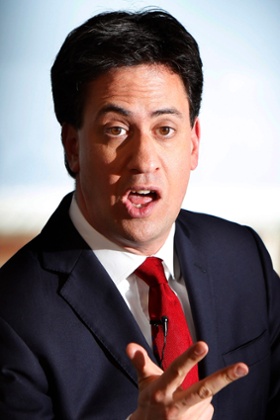
“I want to overhaul [the] Prevent programme,” Ed Miliband said in reference to the government’s current counter-terror strategy, in a wide-ranging interview with The Muslim News – covering issues ranging from the Trojan Horse scandal in Birmingham schools, to foreign policy and housing.
“The reality is that the people I talk to in the Muslim community are absolutely full square with the idea that we’ve got to make sure that we work with our young people to stop them being dragged into this perverted (terrorist) ideology,” he said, adding: “The way to do it is the Prevent programme working with communities.”
Miliband added that anti-Muslim hate crime would be outlawed and said: “It will be the first time that the police will record Islamophobic attacks right across the country.”
It has emerged that Ed Miliband has been taking “leadership lessons” from a private consultancy called Extended Mind. The company offers to “build leadership skills” using business psychology and neuroscience. Miliband told Sky News he takes advice from a “range of people”, adding that he’d leave it to others to judge his performance.
The Conservatives have cited this news as an example of Miliband’s authenticity. The party’s Michael Ellis said: “There’s nothing authentic about Ed Miliband. He’s had to hire someone to tell him how to act like a leader. Even after all his extensive coaching, could you imagine him standing up to Putin on the world stage? He should ask for his money back.”
You can watch the Guardian video of Ed Miliband saying the Conservatives’ Libya policy is partly to blame for Mediterranean migrant crisis below.
This piece, by the New Statesman’s May2015.com, is a handy explainer about why Ed Miliband is more likely to become prime minister, even if polls have not moved in any significant way.
The brutal maths of this election mean that, while Labour and the Tories are headed for roughly the same number of seats, only Labour has a clear path to 323 seats; their potential partner, the SNP, are set to win nearly twice as many seats as the Tories’ best option, the Lib Dems, and the minor MPs on either side largely cancel each other out.
So for Cameron to win, he needs to win more seats than Labour – considerably more. We think he needs to win around 20-25 seats more.
No hard feelings here.
Proud to have voted #Labour. #Ed4PM. pic.twitter.com/rXkURu88a7
— David Miliband (@DMiliband) April 24, 2015
Nigel Farage: David Cameron as PM is best option for UKIP
Nigel Farage has said David Cameron becoming prime minister is the best option for his party during an interview with Sky News, which will be aired in full at 5pm. As Sky News’ political editor Faisal Islam reports:
From my @skynews interview: @nigel_farage no longer indifferent as to who he wants PM (as he told me 6 months ago): pic.twitter.com/jIRZEBEtI9
— Faisal Islam (@faisalislam) April 24, 2015
Farage also says the public is bored to death with the negativity of this campaign - “I’m upbeat about the positive message of the UKIP campaign” - and that he’s given up on Scotland.
ask farage: given up onScotland? scrapping Barnett £5bn in severe cuts: "yes they wanted devolution. why should people cafe in Margate pay?"
— Faisal Islam (@faisalislam) April 24, 2015
And @Nigel_Farage tells me private data he's "pretty bullish". National vote "rock solid" Going down in Lab-Con battles, up in UKIP targets
— Faisal Islam (@faisalislam) April 24, 2015
Me: Some say you weren't at your best during the TV debates. Farage: I think that's true #GE2015
— Faisal Islam (@faisalislam) April 24, 2015
Me: manifesto includes possibility of needing visas to go to EU: NF: Getting visas online now v quick, takes a matter of seconds, no queuing
— Faisal Islam (@faisalislam) April 24, 2015
Updated
In-between interviews on British foreign policy, William Hague also found time to discuss the prime minister’s suggestion that he could be the next James Bond today.
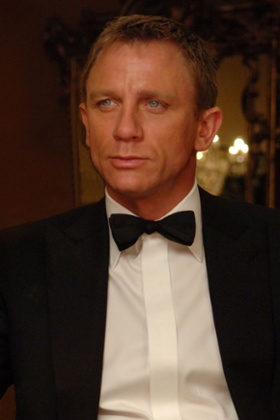
Cameron had said in a radio interview that his judo-loving colleague would make a great successor to Daniel Craig and could probably “crack a man’s skull between his knee caps”.
Hague told BBC Radio 4’s The World At One that he did not think that he was up to taking on the role. “The Prime Minister told me about this himself this morning and I was a little horrified he’d made the suggestion. I don’t think I’d make a very good James Bond. My judo has taught me a lot of relevant skills but I don’t think I’d have all the relevant skills.” Does he bring this kind of modesty to the Cabinet?
Updated
Here’s a video of William Hague talking about Libya on the Daily Politics show earlier today, where he calls Ed Miliband opportunistic and says Labour have not put forward a better plan for Libya than what the Conservatives have been proposing. He says you need boots on the ground in Libya, but there would not be approval for that in Parliament.
Business Secretary Vince Cable has commented on HSBC’s threat to leave the UK:

We have to take this threat of HSBC leaving the UK seriously even if it’s not in itself surprising as they are a predominantly Asian bank, making 80% of their profits there. They also routinely review the location of their headquarters every few years.
Cable said the bank had “responded to the ring-fence in a positive way”, but added that HSBC may be alarmed by “the possibility of a Conservative-dominated government distancing the UK from the European Union and therefore losing any influence over the key decisions affecting the financial services industry”.
Updated
They didn’t call it the social media election* for nothing.
*lame tweet election
EdM needs SNP to be PM & Salmond says he'd write the budget. This conversation would cost you #VoteConservative pic.twitter.com/MUXNXhTbzd
— CCHQ Press Office (@CCHQPress) April 24, 2015
Seven people want @CCHQPress to just stop. are you one of them https://t.co/y6TUZxTKst
— Alex Hern (@alexhern) April 24, 2015
Meanwhile, in Plymouth...
Shout out to the people who live above the office of Plymouth's Tory MP pic.twitter.com/LCJuqyzBxl
— Jake May (@basementfever) April 24, 2015
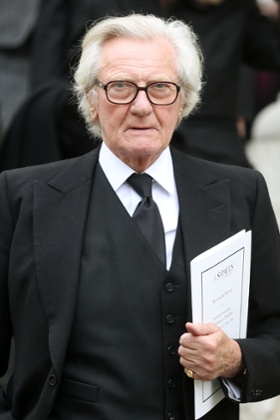
“There is no denying it, a lot of people in the Labour movement are quite inspired by what he’s done in rejuvenating cities and regions,” Umunna says of Heseltine in an interview with the Guardian.
“Just because he is a Tory should not stand in the way of us working with him in the future and I very much hope to do that.”
Updated
Scottish Labour Leader Jim Murphy has responded to the Conservatives’ English Manifesto and their plans for English-only income tax, calling it a breach of the agreement made in the Smith Commission. He said:
The Tory party manifesto revealed their commitment to breaking up UK income tax. This is an absolute breach of the agreement they made in the Smith Commission. It is the Tory’s own plan for full fiscal autonomy for England.
Scotland is now in danger of being caught in a classic pincer movement between a Tory party that wants to cut Scotland out of the UK budget and the SNP that wants to cut Scotland out of UK taxes.
We now have a Tory party committed to an England only tax system and the SNP hell bent on Scotland only taxes. Both outcomes would be bad for Scotland.
Updated
Hello, I’m taking over from Andrew now for the rest of the day. I’m on Twitter @nadiakhomami and I’ll be reading your comments below the line as well, so share those wonderful thoughts and don’t be afraid to direct me towards anything you think I’ve missed out.
Ed Miliband’s analysis of the link between Libya and the deaths of migrants in the Mediterranean has been backed by Paul Jackson, professor of politics at the University of Birmingham. In an article for The Conversation, he says that “the rapid escalation this year in the numbers of people drowned as they flee in leaky boats across the Mediterranean is a direct consequence of the conflict in Iraq, Syria and north Africa, specifically Libya – where the implications of the Western intervention are playing out in the deaths of thousands, whether from the violence itself or as they try desperately to escape to safety.”
That’s all from me, Andrew Sparrow, for today. My colleague Nadia Khomami is taking over now for the rest of the afternoon.
Northern Ireland’s health minister has today apologised for remarks he made on the general election hustings linking gay people to the neglect and abuse of children.
During a debate in his native South Down on Thursday night the Democratic Unionist Jim Wells appeared to suggest that homosexual couples were more likely to be in unstable relationships and children were vulnerable as a result.
But Wells on Friday rowed back from his remarks and pointed out that he has been under severe personal strain with his wife ill in hospital over the last few months.
Apologising for the comments made in Downpatrick, Wells said:

The last few weeks have been extremely difficult for me personally. I had just come from a hospital visit and my focus was not on the debate. Indeed, during the event I received several messages from the hospital.
I have listened to a recording of the relevant part of the debate. I accept that one line of what I said caused offence and deep concern amongst members of the audience and beyond.
Although the regional health minister has been coping with his wife’s illness, DUP representatives have a long history of causing offence to the local gay community. Ian Paisley Junior said he was repulsed by the marriage of an Ulster Unionist researcher to his male partner in England several years. And Northern Ireland’s former First Lady Iris Robinson, then an MP, hit out at gay lifestyles in the local media. Her anti-gay remarks came shortly before her affair with a teenager was exposed leading to her withdrawing from public life.
The DUP’s hard-line, evangelical Christian-based opposition to gay equality in areas such as marriage raises some problems for those in larger national parties at Westminster who might seek to deal with the party after the general election. However, the DUP high command has insisted any of their ‘red lines’ or core demans in propping up a minority Labour or Tory administration will not be based religious or moral issues. Instead the party’s key concerns will be on more economic aid for Northern Ireland, the protection of defence spending and supporting a government in London that will defend the union.
Updated
Here is the latest report from the Britain Thinks Battleground Britain project (pdf). As well as conducting focus groups, Britain Thinks has been asking its panel of floating voters to keep election diaries. This diary summary says there is some evidence that the criticisms of the SNP’s financial plans are having an impact on voters in Scotland.
In the wake of the IFS’ warnings about the SNP’s finances, confidence in the SNP shows some signs of wavering, even amongst our panelists who had strong convictions in the party in recent days:
“More revelations about the SNP 10 billion pounds black hole in their finances are coming out in the papers today ... It worries me. Britain has bad finances already. Voting for SNP could make it worse” (Sean, Glasgow East)
Here’s a Guardian video with a clip of Ed Miliband talking about HSBC and the dangers of the Conservatives’ approach to the EU.
My colleague Libby Brooks has written a review of what happened in the election campaign in Scotland this week. I thought we had covered most things here by Libby has, among other things, Nicola Sturgeon’s heels, a dog driving a tractor and a Solero.
Ed Miliband more likely to get keys to No 10, say pollsters
Earlier this month we asked Britain’s leading pollsters who they thought was winning the election. Back then, with a month to go, although most said Miliband had a slight advantage, not all agreed.
However, now with less than two weeks to the election, when it comes to who will have the numbers to become prime minister, they all now believe that the Labour leader is best positioned in the polls – but in an election this close, uncertainty remains.
We asked this question of eight leading pollsters:
Based on today’s figures, who, between Ed Miliband and David Cameron, do you think is in a better position with just over a month to election day?
You can read their full answers here.
Our BritainThinks focus group’s verdict on the campaign
What do the real voters think? We have 60 in five key seats giving their view throughout the campaign as part of our polling project with BritainThinks. They each have an app and are telling us what they think of stories as they crop up.
Here are some of their thoughts on the recent campaigning – on Ukip, the migrant boat issue, and how the media are covering the parties.
But Siobhan Kennedy at Channel 4 News says the HSBC announcement is “a severe blow to the Tories”.
Lunchtime summary
- Ed Miliband has said that HSBC’s announcement that it is considering moving its HQ from London partly because of the possibility of Britain voting to leave the EU shows the “grave risk” posed by Conservative policy on Europe. (See 12.55pm.)
- David Cameron has criticised Milband after Labour suggested the prime minister is responsible for the deaths of migrants in the Mediterranean owing to failures in formulating post-conflict plans for Libya. As Nicholas Watt reports, as Labour accused the Conservatives of manufacturing the row, on the grounds that Miliband had not made such an allegation in a Chatham House speech, Cameron described the claims as rash. Speaking at a Tory rally in Lincoln, he said: “Let me be clear about what Ed Miliband has said. I have learned as prime minister that it is so important in a dangerous and uncertain world that you show clarity, consistency and strength on these foreign policy issues. People will look at these ill-judged remarks and they will reach their own conclusions.” Speaking to journalists after delivering a speech in London, Miliband rejected claims he was saying Cameron had “blood on his hands”.
Anyone who reads my speech would see that that is very, very wide of the mark. The only people trying to whip up a big storm about this are the Conservative Party.
I am making a very important point, I believe, about post-conflict planning in Libya. The international community as a whole, including our government, bears some responsibility for the crisis we see in Libya. I think that is undeniable.
As far as what is happening in terms of the tragic scenes of people drowning in the Mediterranean, that is a result of the people traffickers who are engaged in those issue.
-
Miliband has said that Labour would spend more on defence than the Conservatives. (See 9.31am.) He made the comment in a wide-ranging foreign policy speech in which he accused Cameron of presiding over “the biggest loss of influence for our country in a generation”. He said:
David Cameron has presided over the biggest loss of influence for our country in a generation. And that has happened because the government he leads has stepped away from the world, rather than confidently towards it. It is an approach that has shrunk our influence and weakened Britain. And the evidence for that is all around us.
Take the situation of Russia and Ukraine. Was there ever a more apt symbol of Britain’s isolation and waning influence than when David Cameron was absent as the leaders of Germany and France tried to negotiate peace with President Putin?
- Cameron has said that a Conservative government would introduce English votes for English laws (Evel) within 100 days of taking office. In a speech in Lincoln, he said this would make the UK “stronger”. It was those who opposed these policies who were putting the integrity of the UK at risk, he said. (See 11.02am and 12.45pm)
-
Nicola Sturgeon, the SNP leader, has said that the SNP would oppose Cameron’s Evel plans. They were in breach of the Smith commission on devolution, she said. All main parties supported the Smith commission report which said: “MPs representing constituencies across the whole of the UK will continue to decide the UK’s Budget, including income tax.” Sturgeon said:
What he is announcing today is firstly a direct breach of the Smith Commission proposals ... I’ve made clear on a number of occasions that if there are matters that are genuinely English only, that have no impact in Scotland, I think there’s a strong case for Scottish MPs not voting on them. The problem is there’s a lot of issues characterised as English-only issues that are anything but - matters relating to the English health service for example. Decisions taken on that have a direct impact on Scotland’s budget. I would vote against anything that prevented Scottish MPs standing up for Scotland’s interests.
-
The Institute for Fiscal Studies has raised concerns about the Conservative proposals to encourage tenants in housing associations to buy their own homes. In a briefing it said:
There are considerable uncertainties surrounding the revenues that can be raised from sales of expensive properties, the costs of right to buy discounts and the cost of replacing sold properties. These reflect both genuine difficulties in predicting the effect of the policies and a lack of detail in the Conservative Party’s announcement.
Given this uncertainty, and the coalition’s less-than-impressive record in delivering replacement social housing under the existing right to buy, there is a risk that these policies will lead to a further depletion of the social housing stock – something the proposal explicitly seeks to avoid.
Updated
Leanne Wood, the Plaid Cymru leader, has called for the creation of a Youth Parliament for Wales and votes at 16 for the Welsh Assembly.
I witnessed at first hand the democratic revolution that occurred in Scotland last year when people there of all ages, of all backgrounds, seized back the democratic process for themselves from the establishment. I know that young people here in Wales have the same yearning to shake up the system as they had there. To young people in Wales I implore you, make your voices heard.
One way of giving these voices a platform would be the creation of a Youth Parliament for Wales - something which Plaid Cymru wholeheartedly supports.
Plaid Cymru will also make sure that next year’s National Assembly elections are the last where 16 and 17-year-olds are excluded.

Populus poll gives Labour 3-pt lead
Populus has released a new poll giving Labour a 3-point lead.
Latest Populus VI: Lab 35 (+1), Con 32 (-), LD 8 (-1), UKIP 14 (-1), Greens 5 (+1), Others 6 (-). Tables here: http://t.co/bouoHTHpey
— Populus (@PopulusPolls) April 24, 2015
If the polls don’t change, Ed Miliband will be PM – video
Our data editor Alberto Nardelli has summarised this week’s opinion polls and how they translate into seats in the Guardian’s projection. With two weeks to go there is very little fluctuation in the headline number. The concerted efforts of the Conservatives to warn of chaos if a minority Labour government is propped up by the SNP has not affected the polls ... yet
Updated
Robert Oxley from Business for Britain, the Eurosceptic business group, is sceptical about the claim from HSBC that it might leave the UK because of the threat of Britain leaving the EU.
Convinient for HSBC to say considering leaving for supposed 'brexit' fears when the real reason is tax (at at time when deeply unpopular)
— Robert Oxley (@roxley) April 24, 2015
Miliband says HSBC announcement shows 'grave risk' Tory EU policy poses

In his speech Ed Miliband said the HSBC announcement showed how Conservative European policy was posing “a grave risk” to Britain’s position in the world.
By far the most important cause of our loss of influence is the position of this government, I believe, in regard to the European Union.
The threat of an in-out referendum on an arbitrary timetable with no clear goals for their proposed European renegotiation, no strategy for achieving it and a governing party riven with internal divisions over our future in the EU - including a foreign secretary who has openly advocated leaving the European Union.
I’ve got to be candid, and we have seen it confirmed again with HSBC today, I think all of this poses a grave risk to Britain’s position in the world. Of course the European Union needs to change, there are demands for it to change in almost every other member state.
Updated
Here is the full exchange when David Cameron was questioned about HSBC during the Q&A after his speech.
Q: HSBC says they’re actively considering moving headquarters out of UK. Are you concerned about this? What does this mean about London’s future as a financial centre?
Cameron: London is the world’s leading financial centre, has improved as a financial centre not least by changing the way we regulate banks so that we wouldn’t have to bail them out with taxpayers’ money in future as the last Labour government had to do. But it is an important reminder of how vital it is that we keep a pro-enterprise, pro-business, pro-employment policy in our country. We need to keep taxes low, make this an attractive place to invest. All the time I have been prime minister that is what we have been doing, record levels of invard investment coming here.
Cameron's speech Q&A - Summary

Here are the key points from David Cameron and William Hague’s speeches and Q&A.
- Cameron avoided commenting on HSBC saying it might leave the UK partly because of the threat of Britain leaving the EU. Asked about this, he just said it was important to have pro-business policies.
-
Cameron and Hague said a Conservative government would introduce English votes for English laws (Evel) within 100 days of the election. They underlined their commitment to Evel by publishing details of how they plan to change Commons rules to give English MPs a veto over English-only legislation. Under the plans only English MPs would participate in a bill’s committee stage, chosen in proportion to party strength in England. An English-only bill would have to be approved by an English grand committee. And the rate of income tax in England would be decided by English MP. Hague said these changes could be introduced quickly, without primary legislation.
Today we are making clear that our commitment to fairness for the voters of England will have very rapid effect.
We can do that because such fairness will not require legislation. It will need changes to the standing orders of the House of Commons, and today we are publishing the changes to the parliamentary procedures that would make English Votes for English Laws a reality.
This is not a vague promise to make this change some time in the future, this is a plan ready to be implemented.
We will table our proposals within the first hundred days after the general election.
And after consultation with the procedure committee of the House of Commons and running a pilot test of the new rules, we will fully implement our plan within the first year of the new Parliament and apply it to the budget of 2016.
He also published the proposed amendments to Commons standing orders. They run to nine pages. I can’t find them on the web anywhere. I’ve got them, but I won’t post them here because they are too technical.
-
Cameron rejected claims that his plans for English votes for English laws threatened the future of the United Kingdom. The real threat came from those who did not address this issue, he said.
The real threat to our constitution, the real threat to the UK, comes from those who will not engage with this agenda, because it is vital that English voters feel that they are getting a fair deal.
He said that, if Scotland chose to abolish air passenger duty, it would not be fair for Scottish MPs, potentially holding the balance of power, to then impose higher APD on English airports. He also said that, while Labour and the Lib Dems were happy to discuss devolution to Scotland, Wales and Northern Ireland, they were not prepared to discuss devolution to England.
-
Cameron said that Miliband’s comments about Cameron’s role in Libya, and his link to the Mediterranean migrant deaths, were “ill-judged”.
Let me be clear about what Ed Miliband has said this morning. I’ve learnt as prime minister that it is so important in a dangerous and uncertain world that you show clarity, consistency and strength on these foreign policy issues. And I think frankly people will look at these ill-judged remarks and they will reach their own conclusions ...
The people responsible for tragedy in the Mediterranean are the criminal gangs and the traffickers who are plying this evil trade.
-
Hague said that Miliband was being “opportunistic” because Labour had never proposed an alternative Libya policy.
I have never known in that time the Labour party set out a different policy towards Libya, or to the Arab world in general. And so I would say [to Miliband] that he cannot lecture anybody about Britain’s influence in the world when the last Labour government closed more than 30 of our embassies, never had a foreign secretary visit Australia in 13 years, withdrew from Latin America, closed the language school of the Foreign Office, all things we have had to put right under this govenrment. And he cannot come to foreign policy with some ill-judged and opportunistics remarks after five years of saying very little at all.
Updated

Nick Clegg appears to have sided with the Tories over Ed Miliband and his comments about Libya. He told Radio 5 Live:
[It is] pretty distasteful to reduce this total human tragedy, hundreds of people dying in the Mediterranean, to a political point-scoring blame game. Particularly as we are now bringing politics into this, from the party that of course brought us into an illegal invasion of Iraq for which there was no planning at all for the aftermath Labour supported the invasion. It is very easy to be wise with hindsight.
Updated
Q: How could post-war planning have been better?
Miliband says he would reconvene the Friends of Libya group.
Has this issue been high up on the government’s agenda? No, it has not, he says.
Miliband is wrapping up. He says he hopes Labour’s dialogue with Chatham House, and the foreign policy community, will continue.
Q: Would you have a different policy on arms sales?
Miliband says international obligations on restrictions on arms sales are very important.
Q: Do you hold Cameron personally responsible for the migrant deaths?
Miliband says the people traffickers are to blame for the deaths in the Mediterranean.
But he is making a point about the failure of the international community, including David Cameron, to do proper post-conflict planning.
He says that Cameron said himself in the House of Commons that he was not happy with the post-conflict planning.
Q: The Tories say you are trying to politicise a tragedy.
That is nonsense, says Miliband.
Updated

Ed Miliband, at his Q&A, is now taking questions from the press. The previous questions came from Chatham House members.
Q: To what extend do you blame David Cameron personally for what happened in Libya?
Miliband says the international community as a whole bears some responsibility for what happened in Libya. After Iraq, we should have learnt about the need for post-conflict planning. But that did not happen.
But of course the people traffickers are to blame for the migrant deaths.
Q: What else would you have done in Libya?
Miliband says the key thing is focus. The British government disengaged. It should not have done that.
Updated
Ed Balls, the shadow chancellor, has also commented on the HSBC announcement. He said it showed a Tory government was “a risk we cannot afford to take”.
HSBC is just the latest in a long line of companies warning of the dangers of a re-elected Tory government taking Britain out of the European Union.
The big risk to our economy over the next few years is EU exit if the Tories win the election. It would have a disastrous impact on jobs, trade and investment in Britain. It’s a risk we cannot afford to take.
Lib Dems say HSBC announcement shows business fear ‘swing to the right’

Danny Alexander, the Lib Dem chief secretary to the Treasury, has also put out a statement about the HSBC announcement.
Today’s HSBC announcement confirms fears that businesses have over a swing to the right and the prospect of a ‘Blukip’ coalition pulling us out Europe.
David Cameron, held hostage by UKIP partners and the right wing of his party, would drive the country further towards a ‘Brexit’ – which would hit both jobs and business.
Updated
Back to Ed Miliband.
Q: What would you do to bring about a two-state solution in Palestine?
Miliband says time is running out for the two-state solution. That is deeply worrying.
He says John Kerry has played an important role.
First, the international community must engage.
Second, he is not in favour of boycotts. And we must reject attempts to delegitimise Israel.
Third, Miliband says he supports the principle of recognising the Palestinian state. But the timing should be a matter of when this might best help the peace process.
Miliband says he regularly meets Peter Robinson and Martin McGuinness in Northern Ireland. In the 1980s the idea that they could have been first minister and deputy first minister together would be been implausible. That shows you how much things can change.
Labour says HSBC announcement shows Tory policies already damaging investment

Douglas Alexander, the shadow foreign secretary, has put out a statement saying the HSBC announcement about possibly moving its HQ from London says that Conservative proposals are already having a damaging impact.
David Cameron’s arbitrary timescale for a referendum on EU membership has sent a wave of uncertainty across boardrooms in Britain.
As the comments from HSBC’s chairman this morning confirm, business leaders are speaking up about the risk of uncertainty that UK exit from Europe brings. David Cameron can no longer claim that this isn’t already having an impact on companies’ decisions around jobs and investment in this country.
The risk of David Cameron’s gamble on EU membership could not be greater for British business, and would be a disaster for Britain’s financial services sector in particular.
Updated

Q: What is the difference between Libya and Syria? You supported the Libyan intervention, but opposed intervention in Syria.
Miliband says in Libya there was an immediate humanitarian crisis. There was international support for intervention too.
Syria was different. He was asked to support military intervention in direct response to the use of chemical weapons. He asked if that was the best approach, what the consequences would be, and whether the intervention had international legitimacy.
The situation in Libya is tragic.
But ‘something must be done’ is not a sufficient guide to foreign policy.
Updated
Q: Would you do a confidence and supply arrangement with the SNP?
Miliband says he will put forward a Labour Queen’s Speech. It will be for other parties to decide how they vote on it.
But he says the union is a fragile thing. Labour would speak up for working people in all parts of the UK. But David Cameron is seeking to divide the country, he says. Labour would not take that approach.
Ed Miliband says centre of gravity in Tory party is 'moving towards EU exit'
Ed Miliband has just finished his speech on foreign policy. He is now taking questions.
Q: You have said the Tory plans for an EU referendum could cause instablity. But Labour is also committed to a referendum in the event of a transfer of power to Brussels. Doesn’t that stop integration?
Miliband says he does not believe that is the direction Europe is going in.
He does not want to see Europe go in that direction. The British people do not want that either. So the Labour policy amounts to a “lock”.
That means EU leaders can focus on reforming Europe.
The intervention from HSBC is “very significant”, he says.
The last thing our country needs is two years of internal debate about whether we should leave the European Union or not ... What is worrying is that the centre of gravity of the Conservative party is moving towards exit.
Labour favoured EU exit in 1983, he says. It did not have a great election. In some ways the positions are now being reversed, he says.
Miliband told his audience at Chatham House that under David Cameron’s leadership Britain had “stepped away from the world rather than confidently towards it”.
He says in two weeks the country faces a choice between different ideas. Labour believes UK is stronger when it looks outward – a policy he calls “hard-headed multilateralism”.
His speech is over and he is now taking questions.
UK has "stepped away from the world rather than confidently towards it" - Ed Miliband http://t.co/RlDOG1cdtX #GE2015 pic.twitter.com/9cke74Tl9N
— BBC Politics (@BBCPolitics) April 24, 2015
Q: Isn’t there a danger that you will deepen division? Nicola Sturgeon said this morning you were doing everything you could to reduce the power of Scotland in the UK?
Cameron says the greatest danger to the UK is having an unbalanced constitutional settlement.
What would weaken Scotland’s influence most in the UK would be Sturgeon’s policy of taking it out of the UK, he says.
He says Scotland “punches above its weight” in the UK. Look at the influence of Scottish entrepreneurs, or the Scottish role in the armed forces.
As he tells his challenge, the great challenge in the world is how different groups can live together peacefully. This has been solved in the UK. You can be Scottish and British, and Hindu and Scottish and British etc.
He is proposing a balance in the constitution, he says. Only the Conservatives are offering that.
And that’s the end of the Q&A.
Miliband makes foreign policy speech
Meanwhile in an unusual broadcasting clash of leaders’ events, Ed Miliband is making his foreign policy speech at Chatham House.
He says the UK needs a strong voice on the world stage, as problems in countries across north Africa and the Middle East cannot be tackled by one state alone.
He also touches on this morning’s announcement from HSBC that it considering leaving the UK.
Miliband says risks of leaving EU on Britain's position in the world "we've seen confirmed by HSBC today" #GE2015 pic.twitter.com/xfDtGVYkyk
— Sophy Ridge (@SophyRidgeSky) April 24, 2015
Updated
Q: Are you worried about the HSBC announcement?
Cameron says London is the world’s leading banking centre.
This is a reminder of how important it is to have pro-business policies. He has adopted that approach.
Asked again about Libya, Cameron says the people traffickers are responsible for the deaths in the Mediterranean. Miliband’s comments are ill-judged, he says.
Cameron says Miliband’s Libya comments are “ill-judged”
Q: What is you response to the briefing note issued by Labour about your failure on Libya.
Cameron says the loss of life has been appalling. It was right for the EU to act. At the EU summit yesterday he pledged a Royal Navy ship. Britain always plays a role.
He says, as prime minister, he has learnt you need to show clarity and strength on foreign policy decision.
People will look at these ill-judged remarks and draw their own conclusions.
-
Cameron says Miliband’s Libya comments are “ill-judged”.
William Hague says foreign policy is not something you can discover 13 days before polling day. This is the first speech on foreign policy Miliband has given in five years.
He has not known Labour set out a different policy on Libya.
The last Labour government closed more than 30 embassies, withdrew from Latin America and closed the Foreign Office language school.
Miliband cannot come to foreign policy after five years of saying very little indeed.
Q: You you worried that Alistair Darling and Gordon Brown, who helped save the union, are saying you are putting the union at risk?
Cameron says he is not to blame for the rise of the SNP. That was caused by the failure of Labour.
But he is entitled to point out the threat posed by a minority government dependent on the SNP.
In Lincoln there is a need for a new bypass. What chance is there of getting that if Labour is dependent on the SNP?
'We are solving one of the great conundrums of our time' says @David_Cameron of English votes, English laws #ge2015 pic.twitter.com/zNMun822Qe
— Jonny Dymond (@JonnyDymond) April 24, 2015
Updated
Cameron's Q&A
David Cameron is now taking questions.
Q: You say this is not about English nationalism. But aren’t you playing a dangerous game with the unity of the UK?
Cameron says the Tories have been proposing English votes for English laws since 2001. The real threat to the UK comes from those who will not engage with this agenda. If Scotland chooses to abolish air passenger duty, how can it be fair for Scottish MP, potentially holding the balance of power, to then impose higher APD on English airports.
Labour and the Lib Dems are happy to discuss devolution to Scotland, Wales and Northern Ireland. But they are not prepared to discuss this.
Turning back to the HSBC story for a moment, Chuka Umunna, the shadow business secretary, has described the HSBC threat to leave the UK as “a big snub” to David Cameron.
"It is a big snub to the Prime Minister and his European policy," says @ChukaUmunna on HSBC's #Brexit warning.
— Graham Hiscott (@Grahamhiscott) April 24, 2015
Cameron says English votes for English laws will 'make our UK stronger'
David Cameron has finished his speech on English votes for English laws (Evel). In terms of what he had to announce, he did not go any further than what is set out in Patrick Wintour’s story, but it was interesting to see how he stressed that his plans would strengthen the union, not weaken it.
Here is the key passage.
Let me end on this very important point.
English votes for English laws is not about fragmenting the UK.
It’s not about division and difference and pulling apart …
… it is about making our United Kingdom stronger.
Because if you have basic constitutional unfairness like we’ve had…
… if you have the people in one part of the UK feeling like they are getting a raw deal …
… then resentment festers…
… and that undermines the bonds and the fellow-feeling that are the basis of the United Kingdom.
William Hague, the former Commons leader who drafted the Tory Evel plans, is speaking at the event now.
David Cameron has just started his speech at the launch of his English manifesto.
He is in Lincoln, and he was introduced by Karl McCartney, who is standing for re-election.
In his introduction, McCartney said that Lincoln was the Conservatives’ 21st most marginal seat. An Ashcroft poll last August said Labour were on course to win.
Updated
Cameron launches English manifesto - live stream
I won’t be covering the PM’s speech minute by minute, but I will cover the Q&A and post a summary and analysis afterwards.
If you want to follow Cameron’s speech, you can watch our Reuters live stream below, or click here for the URL.
Updated
The BBC’s Andrew Neil is sceptical about the HSBC announcement.
HSBC says it's worried that UK might leave EU. So threatens to move HQ to Asia. Can anyone explain logic of that?
— Andrew Neil (@afneil) April 24, 2015
Labour says HSBC statement shows Tory Europe policy is 'irresponsible'
Chuka Umunna, the shadow business secretary, says HSBC statement shows how “irresponsible” Conservative policy on Europe has been.
HSBC's statement today serves to illustrate how irresponsible it is to play fast and loose with the UK's membership of the EU
— Chuka Umunna (@ChukaUmunna) April 24, 2015
It would be a disaster for our financial services sector and business in general if the UK left the EU. Better to stay in and lead reform
— Chuka Umunna (@ChukaUmunna) April 24, 2015
According to @PoliticalPics, a political photographer who posts anonymously, those coming out of Tory HQ this morning looked a bit grim.
Tory HQ this morning it's just like the grim reaper had visited never seen so many miserable people ! 13 days to go pic.twitter.com/KcYNJ41lMY
— Political Pictures (@PoliticalPics) April 24, 2015
The Guardian’s City editor Jill Treanor has filed this first take on Douglas Flint’s speech this morning. Here’s the top line:
HSBC, Britain’s biggest bank, has issued a stark warning about the economic risk of the UK pulling out of the European Union as it revealed it was considering moving its headquarters out of London.
The surprise announcement of a “strategic review” into where the bank should base its operations will stun politicians on the general election campaign trail.
HSBC listed the economic uncertainty created by the risk of the UK going alone - a blow to the Conservatives which have pledged to hold an in out referendum on the EU.
Its shares jumped almost 4% after the statement, which was released ahead of the bank’s annual shareholder meeting in London. The rise added more than £4bn to the value of HSBC - already one of the most valuable companies on the London stock market.
The board - under fire following leaks of the tax avoidance strategies used in its Swiss arm - took the decision on Thursday night after returning from an informal meeting of investors in Hong Kong, its base until 1992. Shareholder after shareholder had asked whether London was the correct home for the bank.
Douglas Flint, the chairman said: “I said at our informal meeting in Hong Kong on Monday, we are beginning to see the final shape of regulation and of structural reform, including the requirement to ring fence in the UK. As part of the broader strategic review taking place, the Board has therefore now asked management to commence work to look at where the best place is for HSBC to be headquartered in this new environment.”
“The question is a complex one and it is too soon to say how long this will take or what the conclusion will be; but the work is underway,” said Flint.
You can read Jill’s full story here.
Updated
The HSBC story is not the first bit of bad news from business for the Conservatives today. The Financial Times (subscrition) is splashing on a story saying pro-Tory business leaders are unhappy with the party’s campaign.
Business leaders have become frustrated at the tactics and tone of the Conservative election campaign, amid concern in British boardrooms that Ed Miliband is mounting a stiffer challenge for Number 10 than expected.
Twenty FTSE 100 and other business leaders have told the Financial Times they are anxious that — despite presiding over an economic recovery — David Cameron has not opened a lead over Labour.
In particular, they criticise the strident personal attacks on the opposition and the flurry of big-spending promises that jar with the party’s prudent fiscal record. “The negative campaign has been disastrous,” said one company chairman.
FINANCIAL TIMES LEAD: Business jitters #tomorrowspaperstoday pic.twitter.com/J1W6tuqBsE
— Neil Henderson (@hendopolis) April 23, 2015
The HSBC announcement will, privately at least, be warmly welcomed by Labour. It reinforces what is easily their strongest argument for being said to be a pro-business argument.
Yesterday, in an interview and a media briefing operation, George Osborne claimed that international investors were worried about the prospect of a Labour government, particularly a minority Labour government dependent on the SNP. He was right to say to say the markets have their concerns, as these quotes show.
But he completely ignored the fact that investors are also deeply concerned about the prospect of the UK leaving the EU. For many of them, this is a much more serious threat than the prospect of corporation tax going up under Labour, or Ed Balls adopting a more relaxed approach to government borrowing. The HSBC statement has illustrated this vividly.
HSBC considering moving HQ out of London - partly from fear of UK voting to leave EU

HSBC has announced that it is considering moving its HQ out of the UK - and at the same time it is worried about the possibility of Britain leaving the EU.
Here is an extract from a speech that Douglas Flint, the HSBC chairman, is giving today.
The board has therefore now asked management to commence work to look at where the best place is for HSBC to be headquartered in this new environment ...
As we look forward, it is impossible not to reflect on the very broad range of uncertainties and challenges to be addressed in 2015 and beyond. Many of these are outside our control, particularly against a backdrop of patchy economic recovery and limited monetary and fiscal policy ammunition. They include:
• unexpected outcomes arising from current geopolitical tensions;
• eurozone membership uncertainties;
• political changes, currency and commodity price realignments;
• and interest rate moves and the effectiveness of central banks’ unconventional policies.
to name but a few.
All could materially affect economic conditions and confidence around investment and consumption decisions.
One economic uncertainty stands out, that of continuing UK membership of the EU. In February we published a major research study which concluded that working to complete the Single Market in services and reforming the EU to make it more competitive were far less risky than going it alone, given the importance of EU markets to British trade.
Updated
Miliband says Labour will protect defence more than the Tories

And here is the story CCHQ seems to be trying to knock off the bulletins (see 9.20am) - Ed Miliband saying Labour would protect defence more than the Tories.
Here is the extract from his speech released by Labour.
I want to be absolutely clear that amongst the reasons we reject the extreme spending cuts that the Conservative party propose is that they would be truly catastrophic for the future of our armed forces.
The IFS set out yesterday that they would mean at least 18% budget reductions for departments like the Ministry of Defence - significantly more than the cuts it has had over the course of the last parliament. Conservative assurances to protect specific parts of the defence budget are meaningless in that world; they simply will not be delivered, they will be broken promises.
Labour simply will not take the extreme approach our opponents propose. I am not going to sacrifice the defence and security of our country on an ideological commitment to a significantly smaller state.
Indeed, we are now in an unprecedented situation going into this election. It is now the Labour party which is much better positioned to find the resources in the next parliament that our armed forces need to maintain the security of the United Kingdom and play our part in maintaining the security of the world.
Updated
Sturgeon says Tory English-only income tax would be 'direct breach of Smith commission'
My colleague Libby Brooks is with Nicola Sturgeon in Glagow, from where she has filed this report:

At a visit to a ceramics cafe in Glasgow’s southside, Nicola Sturgeon donned an apron and painted an SNP logo on a plate so expertly that one was left pondering whether she actually does all those badges herself.
The first minister and SNP leader described the plans for an English-only income tax as a “direct breach of the Smith commission”. (In fairness to Scottish Labour leader Jim Murphy, he spotted this line in the Tory manifesto last week and immediately denounced it as a “brutal betrayal” of Scotland).
Sturgeon said: “I’ve made it clear that where issues are genuinely English-only and have no impact on Scotland then I don’t think that Scottish MPs should vote. But the problem is that many issues are characterised as English-only when they are anything but; votes on the English health service for example, which have a direct knock-on effect in Scotland. In those cases it is not only legitimate for Scottish MPs to vote but essential.
“People across Scotland will be listening to what the prime minister is saying now and contrasting it with what he said in the referendum campaign, when he said that Scotland should not leave but lead the UK. Now according to David Cameron it is only acceptable for Scotland’s voice to be heard if we are saying what he wants us to say and voting how he wants us to vote.”
The campaign event was to confirm that SNP MPs will argue for extra support for carers across the UK, reiterating the manifesto pledge that carers’ allowance should be increased to the same level as jobseeker’s allowance.
Updated
Miliband/Cameron migrant death row - Analysis
Is the Miliband/Cameron migrant death row real or confected? Let’s have a look at the facts.
Yesterday Labour sent out their note about Ed Miliband’s speech. You can decide for yourself whether the three-paragraph passage about Libya, buried in the middle, amounted to a tasteless personal attack on the prime minister. (See 9.01am.) But, interestingly, most of the papers did not take this view. The Sun, the Daily Mail and the Daily Telegraph have a large number of journalists who are rather brilliant at identifying stories that can be construed in a way that reflects badly on Miliband. But, in the morning editions I’ve seen, they did not write up the “tasteless attack” story.
The Times has got a story on page two under the headline: “Miliband links migrant deaths to Cameron ‘failures’ in Libya.” Interesting, it was written by the Brussels correspondent and the defence editor, not lobby journalists.
When a politician make a big speech, the spin doctors like to ensure it generates more than one news story and, having released one overnight, Labour had another up its sleeve for 6am this morning. The Press Association put it out at 6am. Here is the top line.
In a bold bid to claim traditional Conservative territory in the general election battle, Ed Miliband will claim that Labour is now the party best placed to maintain the security of the UK, because of Tory plans for cuts which would “undermine” the armed forces.
In a speech to foreign policy think-tank Chatham House, the Labour leader will accuse David Cameron of pursuing a foreign policy of “small-minded isolationism” that has put party interest first and led to the “biggest loss of influence for our country in a generation”.
Citing figures from the independent Institute for Fiscal Studies suggesting that government departments including the Ministry of Defence would face deep cuts as part of Conservative deficit-reduction plans, Miliband will say Tories are set on “an ideological project to cut the size of the state” which would harm the security of the country.
I vaguely remember hearing something about this on the Today programme in the early 6/7am slot.
But then the Tory spin machine got to work. You can see the results in the tweets that Peter posted at 7.13am. And, for the next two hours or more, you did not hear much more about Labour promising to outspend the Tories on defence.
I’ll leave it up to you to decide whether or not you think there is a connection.
But we do know that the Tories have form for this. Remember how, within 24 hours of Labour announcing a popular policy to scrap non-dom status, Michael Fallon, the defence secretary, had generated a row by saying Miliband was unfit to be prime minister because he had stabbed his brother in the back? As Isabel Hardman pointed out at the time in a blog for Coffee House, this looked suspiciously like Lynton Crosby’s “dead cat” strategy?
It looks like soon CCHQ will be running out of dead cats. Larry is probably getting a bit nervous.

Updated
The Guardian's poll projection: Labour and Tories virtually tied
Over the past 24 hours four polls have been published. Two had the Conservatives ahead by four points. While the other two had Labour leading by two and three points respectively.
Although these figures may give the impression of a confusing picture, the differences and movements are minor and within a margin of error.
The Tories are slightly ahead in our average of polls (by 34% to 33%). However, in the race that matters most – seats, and who will have the numbers to form a government – the bigger picture remains fundamentally unchanged.
Our latest projection has the two main parties still virtually tied - the Conservatives are projected to win 273 seats, Labour 268. Behind them, the SNP is projected to win 55 of Scotland’s 59 seats and the Lib Dems 28.
If we look at these numbers as blocs of parties, as things stand, the arithmetic still favours Ed Miliband - and there is one less day to go.
What Labour actually said about Cameron and the migrant deaths
Last night Labour sent out a briefing note about Ed Miliband’s foreign policy speech, embargoed until midnight. This is quite routine. Sometimes these advance notes contain only a brief taster of what is going to be said, two or three paragraphs, but sometimes they contain considerable detail. This one was about as extensive as they get. It ran to four pages (in small type).
The headline was: “Miliband: It’s time to reject the Tories’ small-minded isolationism that has led to the biggest loss of British influence in a generation.”
Somewhere about half way through, it includes this passage.
[Miliband] will say the refugee crisis and tragic scenes this week in the Mediterranean are in part a direct result of the failure of post conflict planning for Libya.
“In Libya, Labour supported military action to avoid the slaughter Qaddafi threatened in Benghazi. But since the action, the failure of post conflict planning has become obvious. David Cameron was wrong to assume that Libya’s political culture and institutions could be left to evolve and transform on their own.
“What we have seen in Libya is that when tensions over power and resource began to emerge, they simply reinforced deep seated ideological and ethnic fault lines in the country, meaning the hopes of the revolutionary uprisings quickly began to unravel. The tragedy is that this could have been anticipated. It should have been avoided. And Britain could have played its part in ensuring the international community stood by the people of Libya in practice rather than standing behind the unfounded hopes of potential progress only in principle.”
You can decide for yourself whether this amounts to saying Cameron was to blame for the migrant deaths in the Mediterranean.
Latest polls
Here are today’s YouGov GB polling figures. They give Labour a 2-point lead.
Update: Lab lead at 2 - Latest YouGov / The Sun results 23rd Apr - Con 33%, Lab 35%, LD 8%, UKIP 13%, GRN 6%; APP -13 http://t.co/yArwadr8Xp
— YouGov (@YouGov) April 24, 2015
Last night a ComRes poll gave the Tories a 4-point lead.
New poll for @itvnews & @DailyMailUK has 4pt Con lead -continuing trend Con: 36% Lab: 32% LD: 8% UKIP: 10% Green: 5% pic.twitter.com/ueRgsNtwJv
— ComRes (@ComResPolls) April 23, 2015
But a Survation poll gave Labour a 4-point lead.
NEW: Survation/@DailyMirror (chg vs 17/04) CON 33% (-1); LAB 29% (-4); UKIP 18% (+1); LD 10% (+3); SNP 4% (NC); GRE 4% (+1); AP 1% (-1)
— Survation. (@Survation) April 23, 2015
Voting Intention for @DailyMirror since November, including the most recent poll where fieldwork finished today: pic.twitter.com/ZRthrrwHq0
— Survation. (@Survation) April 23, 2015
And here is more from what Douglas Alexander, the shadow foreign secretary, said on the Today programme earlier (see 7.52am) about how the Conservative complaints about Ed Miliband’s speech amounted to a “manufactured row”.
Let me tell you what the speech actually says. The speech rightly highlights the loss of British influence that David Cameron has overseen and also highlights the very widely accepted failures on Libya where the international community, rightly I believe, took action to prevent Benghazi being turned into a slaughter house but then has abjectly failed to engage in effective post conflict planning. I think that is widely understood and widely recognised.
I do think David Cameron waded in and then walked away. What we have seen since 2011 is five different Libyan governments. I think there was an opportunity with the establishment of the National Transitional Council for the international community to get around the National Transitional Council and provide better support. We are now in a situation where we have got two rival governments, one in Tripoli, one in Tobruk, and in the first democratic elections, remember back in July 2012, the Islamists only actually won in 19 out of 80 seats. This was not inevitable ...
It is a failure of post-conflict planning for which the international community bears responsibility. That’s not a matter of dispute, it’s a matter of fact.
Good morning. I’m taking over now from Peter.

As Peter reported earlier, Liz Truss, the Conservative environment secretary, said that Ed Miliband’s comments about David Cameron bearing some responsibility for the death of migrants in the Mediterranean were “outrageous and disgraceful”. (See 7.25am.) Here are more quotes from what she told the Today programme.
It is absolutely offensive that Ed Miliband should be suggesting that David Cameron is directly responsible for those deaths which is what he appears to be suggesting in his speech.
When it was put to her that Miliband was only saying that Cameron was indirectly responsible for the situation in the Mediterranean, she replied:
I understand that what he is saying in the speech is more direct than that. I think that’s offensive in the course of an election campaign to use that type of terminology ... To bring this into an election campaign is outrageous and disgraceful. Actually accusing the prime minister of causing those deaths, whether directly or indirectly, I think is wrong of Ed Miliband to bring that in. I absolutely think he should withdraw it ...
My fear is Ed Miliband feels like he’s losing the argument and he’s lashing out and accusing the prime minister, essentially, of causing deaths, rather than addressing the issues in this campaign.
Updated
As Labour and the Tories bicker, the SNP’s Nicola Sturgeon is getting down to work, notes my colleague in Scotland, Libby Brooks.
The most dangerous woman in Britain gets her apron on to paint pots in Glasgow's south side #GE2015 pic.twitter.com/8qQ7XXD8KH
— Libby Brooks (@libby_brooks) April 24, 2015
Nick Robinson, the BBC’s political editor, who is gradually returning to work after surgery for cancer, suggests the row over Miliband’s speech might be more prompted by Labour’s briefing notes for journalists about the speech as by the speech itself.
Is EdM accusing PM of having blood on hands? Not in speech extracts but implied in Labour party briefing note 1/2
— Nick Robinson (@bbcnickrobinson) April 24, 2015
"He will say...tragic scenes this week...are in part a direct result of the failure of post conflict planning for Libya" - by Cameron 2/2
— Nick Robinson (@bbcnickrobinson) April 24, 2015
Alexander calls Tory complaints about Miliband speech 'manufactured'
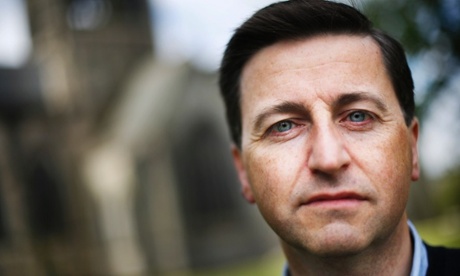
Douglas Alexander, Labour’s shadow foreign secretary, has just been on the Today programme dismissing the Conservative complaints about Ed Miliband’s foreign policy speech as “a manufactured row”.
While blaming Cameron for some failures over Libya – “I do think David Cameron waded in and walked away,” he said – Alexander stressed any direct blame for the recent deaths of hundreds of migrants drowned while trying to cross the Mediterranean was down to a wider failure of the international community to stop Libya slipping into chaos after the end of Muammar Gaddafi’s rule, saying:
It is a failure of post-conflict planning for which the international community bears responsibility. That’s not a matter of dispute, it’s a matter of fact.
Insisting Miliband was serious about foreign policy, despite his relative lack of talk about it before now, Alexander said the Conservative policy that distance from the EU would bring more influence in Washington was “a fantasy of euroscepticism”
Updated
Poll shows Farage on course to win Kent seat
My colleague Jessica Elgot has filed this on good news for the Ukip leader:

Nigel Farage has pulled away from his rivals to be the favourite to win Thanet South, according to a new poll.
Previous polls had suggested the Ukip leader would have to redouble his efforts to win a seat in parliament, with one survey by Conservative peer Lord Ashcroft in November showing him behind the Tories by five points.
But today’s Survation survey, which was commissioned by Ukip donor Alan Brown, found Farage had 39% support in the constituency, far out polling his Conservative rival Craig Mackinlay who is on 30%.
“I’ve said all along we are confident but not complacent, but I now feel much more confident,” Farage told the Telegraph.
The Ukip leader has devoted a considerable amount of his efforts to making inroads locally, with the new poll suggesting that more constituents had received a phonecall, leaflet or personal visit than from either the Tories or Labour.
Around 18% of the respondents said they had met Farage in the past month, compared to 8% who had met Labour’s Will Scobie, and 7% who said they had met MacKinlay.
Comedian Al Murray’s pub landlord seems to be making little impact, with all the minor parties in the constituency polling a combined 3%, with the Liberal Democrats polling just 2% and on course to lose their election deposit.
Survation interviewed 1,057 residents of the South Thanet constituency on 22 April.
New polling 1,057 residents of the South Thanet constituency polled yesterday: pic.twitter.com/RodytvOmkJ
— Survation. (@Survation) April 23, 2015
Liz Truss says Miliband's comments about Cameron are 'outrageous and disgraceful'
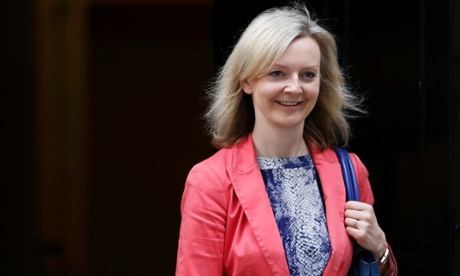
Liz Truss, until the election the Conservatives’ environment secretary, has just been on the Today programme, She was first asked about Ed Miliband’s comments about Libya and migrants (see below), calling them “outrageous and disgraceful”. She said:
Actually accusing the prime minister of causing these deaths - whether directly or indirectly - I think is wrong.
The bulk of the chat was about the details of the England manifesto, about which, it had to be said, Truss sounded slightly uncertain at times. The general gist of the idea, she explained, is that while legislation would be drafted across the whole House of Commons, when measures affected just England, English MPs would get their own, separate vote on this (or English and Welsh MPs when it affects both countries).
This was “preserving the integrity of the union”, Truss insisted, while allowing English MPs a veto on measures affecting just England:
It is a hybrid solution – we’re not proposing an English parliament with completely separate decision making.
Updated
A row is brewing over Ed Miliband’s upcoming speech on foreign policy: the Conservatives are angry at passages in which he criticises the coalition’s policy on Libya, and says the chaos in that country has helped cause the current wave of migrants drowning in the Mediterranean. Miliband will say:
The tragedy is that this could have been anticipated. It should have been avoided. And Britain could have played its part in ensuring the international community stood by the people of Libya in practice rather than standing behind the unfounded hopes of potential progress only in principle.
The Tory view is that Mliband is blaming David Cameron for the recent migrant deaths. They’re busy briefing political correspondents that they’re not happy.
Tory sources: Miliband blaming Cam for Med migrant deaths is 'deeply provocative + shameful..takes Labour's negative campaigning to new low'
— Paul Waugh (@paulwaugh) April 24, 2015
Tory source on Med deaths "Few bad polls and Miliband accuses PM of murder. We can see who's running desperate, negative, personal campaign"
— James Chapman (Mail) (@jameschappers) April 24, 2015
Labour rejects this interpretation:
Labour insist not laying blame for deaths in Mmediterranean at Mr Cameorn's door.
— norman smith (@BBCNormanS) April 24, 2015
Updated
Morning briefing
Good morning once again. It’s less than a fortnight to the election, and we’re here once more with all the latest news. I’m Peter Walker, getting things rolling before your regular host, Andrew Sparrow, takes over later this morning. We’ll be watching your comments below with interest, or else you can take to what people used to once call “the micro-blogging social media platform” that is Twitter. I’m @peterwalker99, he’s @andrewsparrow.

After days of focus on Scotland, and particularly the SNP, today centres very much around England, and the Conservatives’ launch of their mini-manifesto pledges for the English, due to happen just before 11am. This is, needless to say, just the other side of the same story – David Cameron’s efforts to persuade his core support to get out and vote, but now using sweeteners rather than SNP-flavoured warnings.
Ed Miliband, meanwhile, will be trying to shift attention to foreign policy with a speech at the Chatham House thinktank in London, where he will, we are told, lambast Cameron’s “small-minded isolationism” on international affairs.
The big picture
The centrepiece event comes in Lincolnshire – an area with heavy Ukip support – when David Cameron, backed by William Hague, will unveil the English manifesto. At the centre of this is a plan for England-only income tax by 2016, as well as other measures on things like health and housing.
My colleague, Patrick Wintour, has a pretty full preview of the ideas, firmly based around the Conservatives’ core election strategy for squeaking a majority in the new parliament:
Cameron’s repeated warnings to the English of the dangers of the Scottish National party holding the balance of power at Westminster has been directed primarily at the same Ukip vote, and Conservative strategists insist it is working on the doorstep.
Setting out plans for an English income tax, Cameron will begin by referring to changes in Scotland. “Soon the Scottish parliament will be voting to set its own levels of income tax – and rightly so – but that has clear implications. English MPs will be unable to vote on the income tax paid by people in Aberdeen and Edinburgh while Scottish MPs are able to vote on the tax you pay in Birmingham or Canterbury or Leeds. It is simply unfair.”

Jim Murphy, who leads Scottish Labour, has already condemned the plans as “playing with fire”, and likely to stoke further Scottish independence sentiment. Gordon Brown, too, has said Cameron risks the unity of the UK by “retreating to become the party of English nationalism”.
Many of today’s newspaper front pages similarly reflect how astonishingly tight the election race remains. The Telegraph leads on an attack on Labour’s attitudes to the wealth-creating rich by Lord Digby Jones, the veteran former CBI head who – and I must admit I’d forgotten this – was briefly a trade minister under Gordon Brown. Jones writes an open letter which says:
Not once have they heard you say that earning profit is a ‘good thing’. You can’t really suppress the sneer when you talk of putting up taxes for the likes of them.
The Times and Mail front page leads are similarly self-explanatory. The Mail even manages a page one double whammy of immigration and “union baron” Len McCluskey. No one outside the unions, beyond German aristocrats, are ever called a “baron”:
THE TIMES FRONT PAGE: "Labour's £1,000 tax on families" #skypapers pic.twitter.com/DIaTQIP1l1
— Sky News (@SkyNews) April 23, 2015
DAILY MAIL: Miliband will bring back uncontrolled migration #tomorrowspaperstoday #BBCPapers pic.twitter.com/FyAMiYsziT
— Neil Henderson (@hendopolis) April 23, 2015
Arguably the most interesting page one story today is in the Financial Times (paywall). The good news for Cameron is that it’s predicated on the idea business leaders want to see him in power. The bad news? They worry he’s not going about it very well:
In particular, they criticise the strident personal attacks on the opposition and the flurry of big-spending promises that jar with the party’s prudent fiscal record. “The negative campaign has been disastrous,” said one company chairman.
If it’s an end to personal attacks the business leaders seeks, they should maybe stay off the news websites today. Ed Miliband will be doing some of his own in a speech, and Patrick Wintour also has extracts of this, due at 11am.
In a foreign policy speech, the Labour leader will say Britain’s capacity to navigate global turbulence is being undermined by a short-sighted and inward-looking foreign policy. He will say: “Cameron has presided over the biggest loss of influence for our country in a generation. And that has happened because the government he led has stepped away from the world, rather than confidently towards it, sidelined in crucial international events time after time under this government, just at the moment when we needed to engage.”
Today’s diary
What we know so far:
- 7.30am: Douglas Alexander, Labour’s shadow foreign secretary, interviewed on BBC Radio 4’s Today programme.
- 7.45am: Danny Alexander, the Lib Dems’ former chief secretary to the Treasury, makes a speech in Aberdeen on the risks of a single-party government relying on “confidence and supply” arrangements with other parties.
- 10.30am: David Cameron and William Hague unveil the Tories’ English manifesto in Lincolnshire.
- 11am: Ed Mliband’s speech on the UK’s place in international affairs, at the Chatham House thinktank in central London.
Reading list for the day
In the Times (paywall), the resident pro-Labour voice Philip Collins – he was formerly Tony Blair’s speechwriter – talks up the post-election idea of a minority Labour-Lib Dem coalition, which would rely on the informal support of the SNP:
[T]here is another prospect if Labour and the Lib Dems fall short of the magic 323 seats required to form a government. They could come together and seek, in concert, the confidence and supply consent of the SNP. That would pose the SNP the choice of whether to be responsible or not while minimising its actual impact in government. This is how Labour muffles the SNP. Ed Miliband should, right now, be preparing a big, open and comprehensive offer to the Liberal Democrats.
This can work if Nick Clegg retains his seat, as he probably will. Senior Labour people can work with Mr Clegg and he with them. Liberal Democrats would offer reassurance that Labour spending would be controlled and a bit of market sensibility into Ed Miliband’s tendency to command into being a capitalism of his own devising.
Over in the Spectator’s Coffee House blog, Isabel Hardman has spotted a rare thing for this election campaign:
I’ve just witnessed an extraordinary moment on the campaign trail in Edinburgh. No, it’s not this, but a political party leader talking to a real voter.
This is Ruth Davidson, Tory leader, talking to a random voter in Edinburgh. I know he was a random voter because I ran after him to check. You never know, after all.
He wanted to ask Davidson some questions about migrants drowning in the Mediterranean. So he wandered up to her and asked them. And she answered. What’s more, the answer seemed natural, he said.
Well, this is strange. Strange, at least, for this campaign.
The reason the Tories in Scotland are doing these sorts of street stalls is that they want to appear visible and accessible and, I suspect, because they’ve got a fantastic leader who doesn’t look like a stereotypical Conservative and who is a real asset to her party.
Meanwhile at The Conversation, a website where academics offer context on the issues of the day, Matthew Francis, a historian at Birmingham University, has some background on the long tradition of Conservative attacks on Labour’s economic competence. He points us to an elaborate seven-minute Tory animated cartoon from the 1930s:
The film, The Socialist Car of State, shows a car marked “Trade and Employment” carrying the personification of England, John Bull, being skilfully piloted around various economic obstacles by the pipe-smoking Conservative prime minister, Stanley Baldwin.
Things begin to go wrong when, first, the car is struck by the “General Strike Charabanc” (allowing various sinister foreigners to steal its precious cargo of jobs and contracts), and, second, when John Bull takes advantage of a stop at the “General Election 1929 Garage” to change drivers. The new driver, the Labour MP Jimmy Thomas, is unable to get the car moving in the right direction and soon weighs the vehicle down with “Socialist Burdens” which, quite literally, cause the wheels to come off.
You can watch the film on the BFI’s website.
If today were a song …
Resisting the temptation to go for an England-themed song, I’ve opted for something more uplifting, if general, as the election race hots up. This, a lovely tune from Oklahoma’s finest, will get your Friday going.
Non-election news story
Today is the 100th anniversary of the start of the disastrous and appallingly bloody Gallipoli campaign, when Allied troops tried to capture the Turkish peninsula. The failed eight-month battle saw more than 140,000 soldiers die, among them 87,000 Turks, almost 30,000 Britons and 11,000 from Australia and New Zealand. Prince Charles and Prince Harry will be among those attending commemoration events there.
Updated