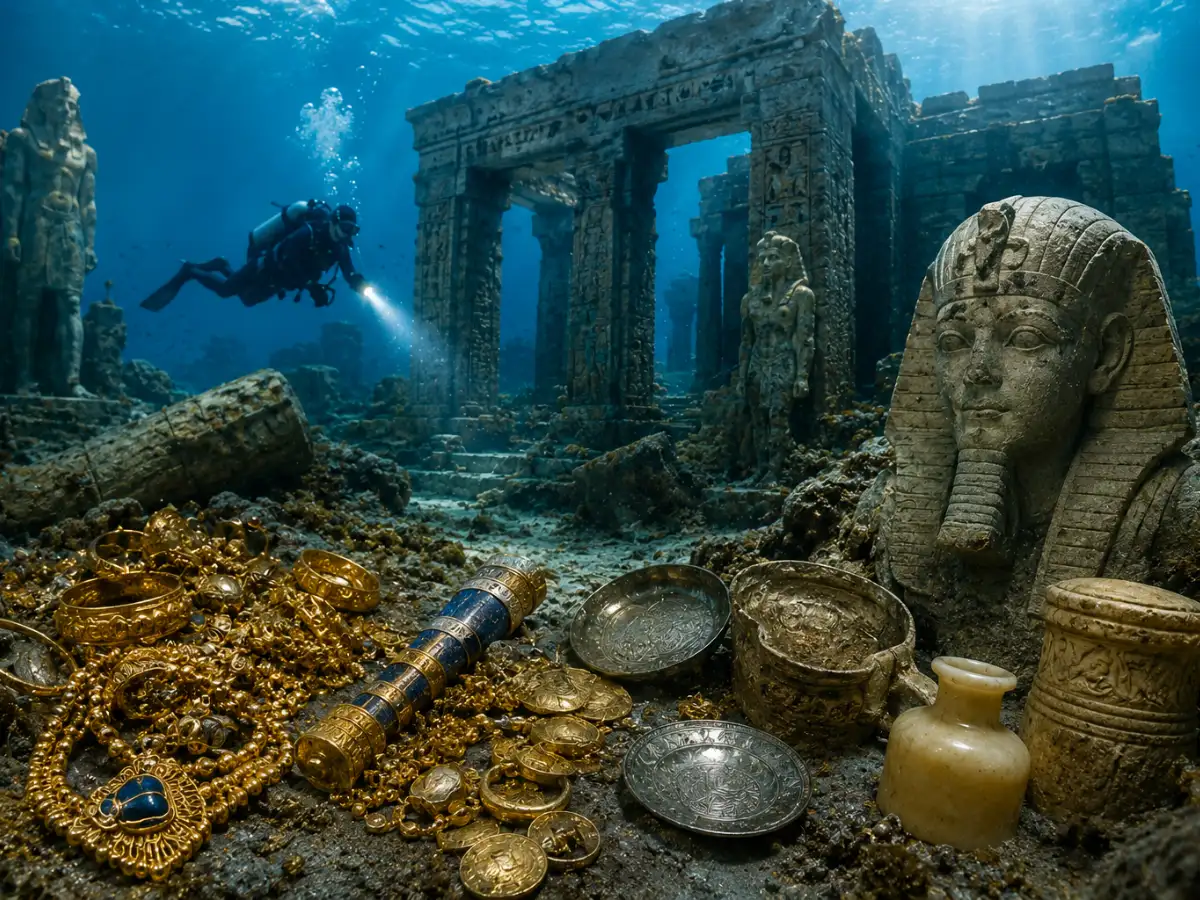
A long-lost city swallowed by the sea more than 2,000 years ago is once again making headlines after archaeologists uncovered dazzling treasures, including gold jewellery, silver ritual objects and the remains of a forgotten Greek temple hidden beneath the waters off Egypt’s coast.
Resting nearly 7 kilometres offshore in Abu Qir Bay, the ancient city of Thonis-Heracleion was once Egypt’s busiest gateway to the Mediterranean. Before the rise of Alexandria, every merchant ship entering Egypt passed through this bustling port. Then disaster struck. A series of earthquakes, tidal waves and rising sea levels caused the ground beneath the city to collapse, dragging temples, homes and treasures into the sea.
Now, underwater archaeologists led by French explorer Franck Goddio have unearthed some of the city's most spectacular discoveries yet.
Gold, Silver and Temple Treasure Frozen in Time
The biggest surprise came from the ruins of the grand Temple of Amun, one of ancient Egypt’s most important religious sites. Hidden beneath massive stone blocks and layers of clay, researchers found a treasure trove that had remained untouched for centuries.
Among the finds were intricate gold jewellery, rare silver ceremonial vessels, alabaster perfume containers and a stunning Djed pillar made from lapis lazuli, a symbol of stability in ancient Egyptian culture. Experts say the discovery offers a rare glimpse into the immense wealth once stored inside the sacred temple.
The temple itself collapsed into a canal during a devastating seismic event in the second century BC. Ironically, the thick clay that buried the ruins helped preserve the treasures in remarkable condition.
Ancient Wooden Structures Leave Experts Puzzled
Beneath the temple floor, archaeologists stumbled upon another mystery. Deep underground, they found wooden beams and posts dating back to the 5th century BC.
The structures appear to be older than the temple above them, suggesting there may have been an earlier settlement or construction phase that historians never knew existed. The survival of the wood for more than 2,500 years has amazed researchers.
Forgotten Greek Temple Emerges from the Depths
The discoveries did not stop there.
Just east of the Temple of Amun, divers uncovered a previously unknown sanctuary dedicated to Aphrodite, the Greek goddess of love. The shrine contained imported Greek ceramics, bronze artefacts and a finely crafted duck-shaped vessel dating back more than 2,300 years.
The find highlights how Thonis-Heracleion was a multicultural hotspot where Egyptian and Greek communities lived, traded and worshipped side by side.
Weapons Reveal Ancient Soldiers Guarded Egypt’s Gateway
Archaeologists also recovered Greek weapons from the underwater city, confirming historical accounts that Greek mercenaries once defended Egypt’s northern frontier. These soldiers protected the strategic Nile entrance centuries before the arrival of Alexander the Great.
Many of the latest discoveries were made possible through advanced underwater scanning technology capable of detecting buried chambers and artefacts beneath thick layers of clay.
Researchers believe vast sections of the lost city remain unexplored, raising hopes that even more treasures are waiting beneath the Mediterranean seabed.
For now, Thonis-Heracleion continues to live up to its reputation as Egypt’s own underwater Atlantis — a forgotten city slowly revealing its secrets, one breathtaking discovery at a time.