March 16--Say what you will about this presidential election through Tuesday's hard-fought primaries in Illinois and four other populous states: It's been volatile, messy, noisy, exhausting, ugly and sometimes even scary.
But you can't say it hasn't been democratic with a small "d" and a big heart. It's hard to remember a campaign for the White House that was so wide-open, so competitive, so galvanizing to voters.
There is no telling who will be inaugurated next January. But it's clear that the familiar presidential election template has been smashed, most likely for good. American democracy, often controlled by powerful insiders, has been taken over by the people.
No one saw it coming. Ever since Barack Obama was re-elected in 2012, the smart money bet that veteran insiders Hillary Clinton and Jeb Bush would enjoy a smooth, straight ride to their parties' 2016 nominations. They had the names, they had the connections, they had the money and they presumably had the good opinion of most of the rank-and-file.
The grousing often heard back then was that Americans were going to be subjected to the political equivalent of a monarchical succession battle. The campaign would follow carefully staged choreography. It was going to be stale, predictable and dull.
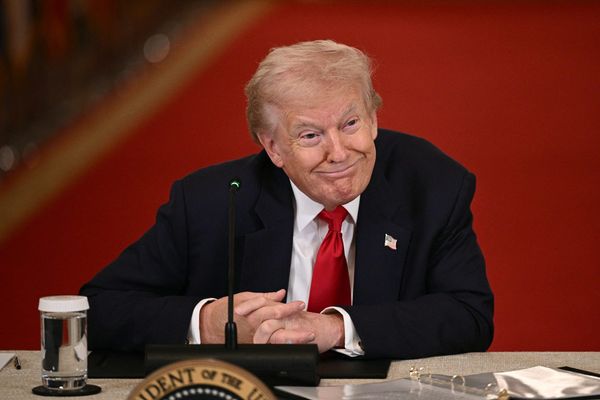
That's not quite how it's turned out. A year ago, no one expected either Donald Trump, an egotistical billionaire, or Bernie Sanders, an irascible socialist, to be in the race at this stage. But Trump has been outfitting himself as the presumptive Republican nominee. And going into Tuesday's primaries, Sanders had won nine of 23 caucus and primary contests.
Their success has been the political equivalent of a volcanic eruption: an unexpected blast that clears the landscape, scorches the soil and creates the conditions for new growth.
In this campaign, money hasn't mattered much. Well-honed campaign skills haven't been the ticket, and neither has rhetorical polish. The blessing of party elders and donors has counted for zip.
Nothing about the Trump and Sanders campaigns has been conventional. Trump has about as much interest in conservative philosophy as he does in occupying a bungalow. Sanders has served more than two decades in Congress while disdaining the party whose nomination he seeks: He was an independent who has caucused with Democrats but kept his own counsel.
Trump rejects the GOP traditions of free trade and muscular internationalism. Sanders has criticized Bill Clinton, a Democratic icon, as an apologist for Wall Street whose welfare reform amounted to "scapegoating some of the most vulnerable people in this country."
You don't have to like either of these candidates, or agree with them, to recognize that they have changed the way the presidential campaign game is played -- by challenging assumptions and upending expectations. They have captured the interest of people who sat on the sidelines in the past. Both have attracted huge throngs to their rallies. Republican turnout has been well above what it was four years ago and, in many states, the highest of any year going back to 1980. Democratic participation has likewise spiked from the 2012 level.