GENEVA - The deadly Ebola outbreak raging in central Africa probably began several months ago, the World Health Organization said on Wednesday, deeming the risk high in the region but low worldwide.
WHO experts said that investigations were under way into the origins of the outbreak, which was declared in eastern Democratic Republic of Congo last Friday, but the suspicion was that the contagious haemorrhagic fever had been spreading under the radar for some time.
“Given the scale, we are thinking that it has started probably a couple of months ago,” Anais Legand, WHO technical officer on viral haemorrhagic fevers, told reporters in Geneva.
Ebola has killed more than 15,000 people in Africa in the past half-century, and the UN health agency declared the latest surge an international health emergency.
The 17th Ebola outbreak to hit the DRC is already suspected of having caused 139 deaths from around 600 probable cases.
“We expect those numbers to keep increasing, given the amount of time the virus was circulating before the outbreak was detected,” WHO chief Tedros Adhanom Ghebreyesus told reporters.
The WHO has highlighted the complexity of detecting and responding to the outbreak, which has been spreading in hard-to-reach areas of the DRC’s conflict-torn Ituri province.
Complicating things further, the less common Bundibugyo species behind the outbreak does not show up on tests for the more common Zaire strain of Ebola.
Not a pandemic
On Sunday, Tedros declared the outbreak a so-called public health emergency of international concern — the second-highest level of alarm under the legally-binding International Health Regulations (IHR), which triggers emergency responses in countries worldwide.
“There are several factors that warrant serious concern about the potential for further spread and further deaths,” he said Wednesday.
However, he said he “determined that the situation was not a pandemic emergency”.
Following a meeting of the WHO’s emergency committee, he said Wednesday that the agency “assesses the risk of the epidemic as high at the national and regional levels, and low at the global level”.
For its part, the European Commission in Brussels insisted that the risk of infection in the EU was “very low” and that “there is no indication” that Europeans should take specific measures.
First identified in 1976 and believed to have originated in bats, Ebola is a deadly viral disease spread through direct contact with bodily fluids. It can cause severe bleeding and organ failure.
To date, the WHO has not recommended specific travel restrictions, although its emergency alert and response director Abdi Rahman Mahamud stressed Wednesday that “all contacts, all cases should not travel”.
Given the global alarm, a number of countries have nonetheless introduced travel restrictions.
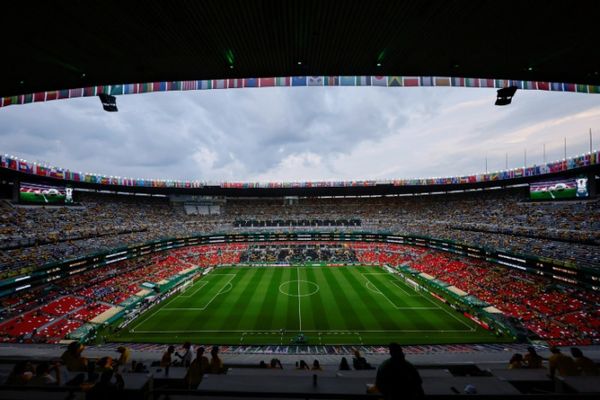
Washington announced on Tuesday it was screening air passengers from outbreak-hit areas and temporarily suspending visa services, although a State Department official said the DRC’s national football team would be allowed to travel to the United States for the World Cup.
Bahrain meanwhile announced a 30-day ban on visitors from the DRC, South Sudan and Uganda.
‘Lack of understanding’
With the recent cases largely concentrated in remote areas, few samples have been laboratory-tested and figures are based mostly on suspected cases.
So far, 51 cases have been confirmed in the DRC’s eastern provinces of Ituri and North Kivu, while two cases have been confirmed in the Ugandan capital Kampala, including one death.
A US national working in the DRC has also been confirmed positive and transferred to Germany.
The first identified case in the current outbreak was a nurse, who went to a health centre on April 24 in the city of Bunia, the capital of Ituri province.
But the epicentre of the outbreak is about 90 kilometres away, in Mongbwalu, which suggests the outbreak originated there and that the cases then spread.
The WHO has said it was alerted to the emergence of a highly lethal disease on May 5, with the first positive Ebola test on May 15. (Story continues below)

Global response needs strengthening
In a related development, a leading pandemic expert has warned that the deadly hantavirus and Ebola outbreaks show that while the response to declared public health crises has improved, awareness of pandemic risks still lags.
Over six years after the WHO declared the Covid-19 pandemic, global efforts to revamp public health crisis response have improved the reaction to the hantavirus and Ebola outbreaks, said Helen Clark, a former New Zealand prime minister and the co-chair of the Independent Panel for Pandemic Preparedness and Response.
“The new international health regulations are working,” she told AFP in an interview in Geneva on Tuesday.
As soon as the alert was sounded last Friday over the new Ebola outbreak in DR Congo, and once the world learned a few weeks ago of the rare hantavirus outbreak on the MV Hondius cruise ship in the Atlantic, “the response has gone quite well”, she said.
“Our issue is now really upstream from that,” she said, insisting that far more work needed to go into identifying risks and how “these outbreaks get away”.
“I think we need a lot more knowledge around risk-informed preparedness,” she said, urging more focus on knowing your risk and “what could crop up”, and “be ready to deal with that”.
“Those basic issues of surveillance, early detection … we’re not there yet.”
Clark said the hantavirus species behind the cruise ship outbreak that triggered a global health scare after three people died was known to be endemic in the area of Argentina where the ship departed from.
“But we’re not clear how much was known about that by ships who depart regularly from there,” she said.
Meanwhile, the outbreak of the Bundibugyo strain of Ebola believed to have killed more than 130 people in a remote province of DRC seems to have spread under the radar for weeks, with tests focused on another strain showing up negative.
“How could this have gone for four to six weeks, … spreading while not getting the testing results that we needed to show that it was a particular variant?” Clark asked.
She called for thorough investigation of “the chain of events here, and what we can learn from it, and what it says about the capacities we need”.
‘Perfect storm’
Clark highlighted that the Ebola outbreak especially had laid bare the dire impact dramatic global aid cuts had on disease prevention efforts.
“There’s a perfect storm,” she warned, pointing to how countries had been “very suddenly expected to make up a lot of investment in the health system which previously came from donors”.
“With the best will in the world, the poorest and most fragile countries just haven’t got money sitting in the bank to do that, so things will get neglected across a range of areas.”