
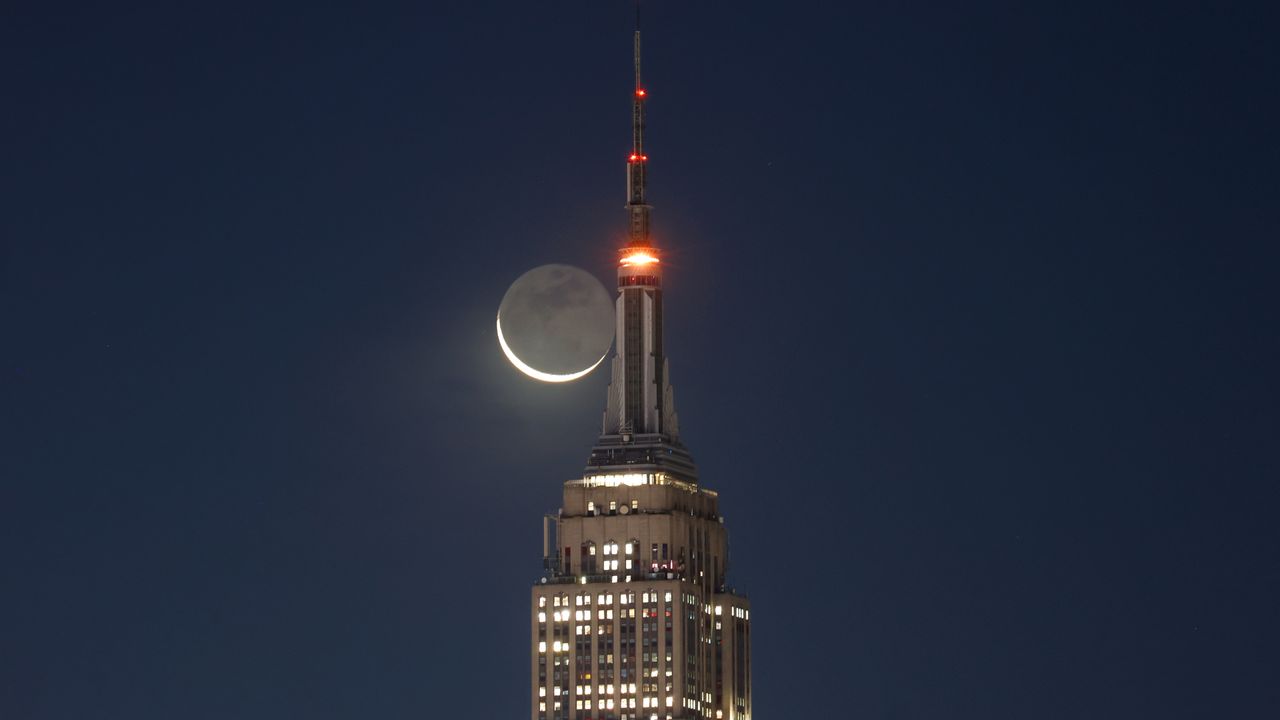
Look to the west after sunset this week for a spectacular sight, as the razor-thin waxing crescent moon hangs low above the horizon with earthshine bathing its unlit surface in a soft, otherworldly glow.
This month's new moon phase occurred at 9:23 p.m. EDT on March 18 (0123 GMT on March 19) as the moon lay between the sun and Earth in the daytime sky. Earthshine — also known as the Da Vinci glow, or romantically as the old moon in the new moon's arms — occurs on the nights directly preceding and following the new moon phase, when sunlight bounces off Earth's surface to strike the shadowed expanse of the lunar disk.
Your first chance to spot earthshine infusing the lunar surface will come immediately after sunset on March 19, though you'll need to be lucky and stake out a viewing spot with a clear view of the western horizon to stand a fighting chance. The whisper-thin waxing crescent moon will be visible to the lower right of Venus 10 degrees above the horizon — approximately the width of your clenched fist held at arm's length.
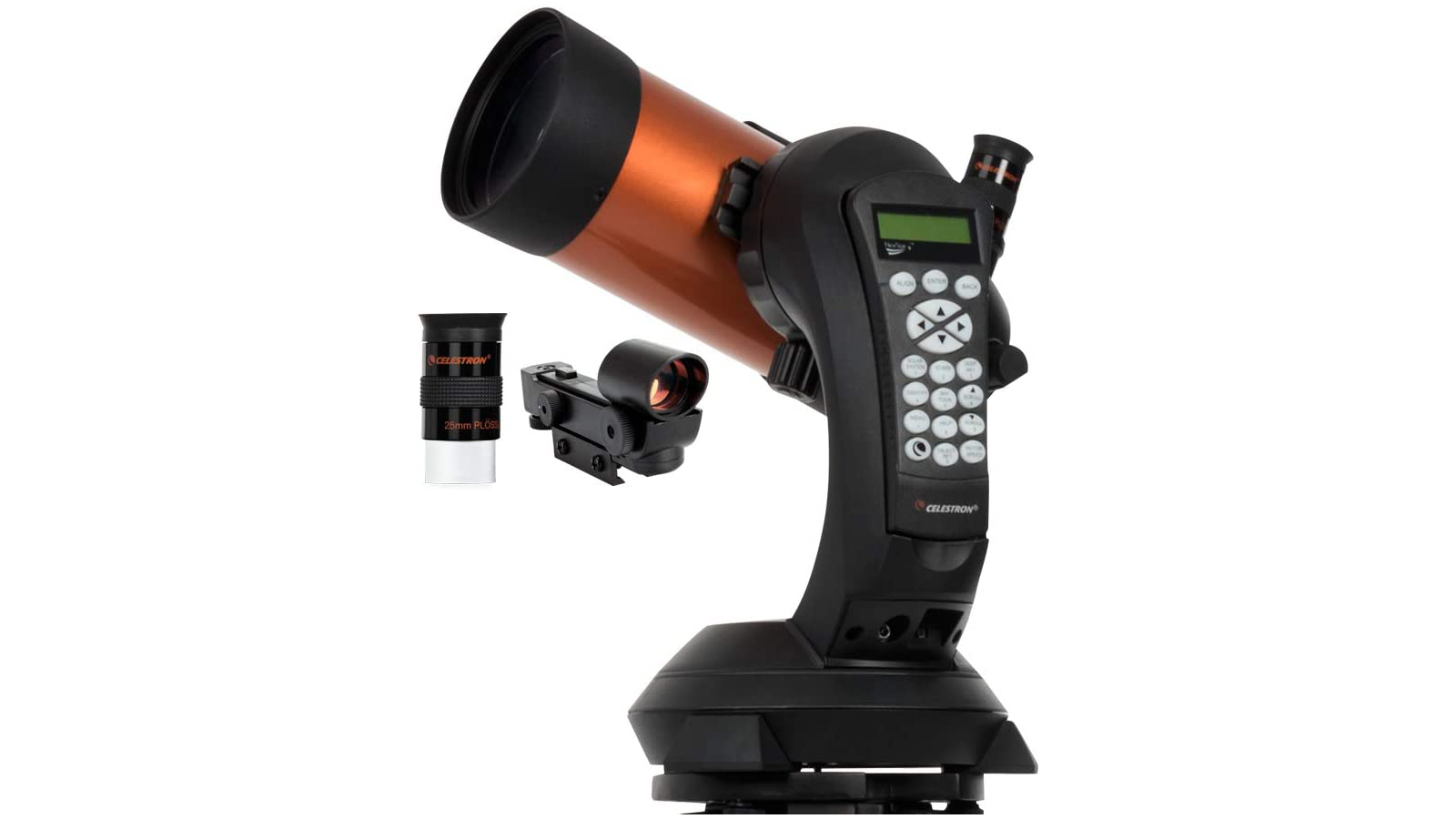
The Celestron NexStar 4SE is ideal for beginners wanting quality, reliable and quick views of the night sky. For a more in-depth look at our Celestron NexStar 4SE review
You'll have a much better chance of spotting the phenomenon at sunset on the following night (March 20), by which time the lunar disk will have leapt above Venus, appearing higher in the southern sky.
Look out for the moon's upturned crescent, now just 2%-lit, above the evening star of Venus, as light reflected from Earth's clouds picks out the faint shapes of lunar seas, or mare, scarring the moon's ancient surface where lava once filled vast networks of impact basins.
Want to get a closer look at the moon? Then be sure to read our guides to the best telescopes and binoculars for observing the night sky. Why not also read our guide to photographing the moon, along with our roundups of the top lenses and camera bodies for astrophotography.
Editor's Note: If you would like to share your moon pictures with Space.com's readers, then please send your photo(s) and comments, along with your name and location to spacephotos@space.com.