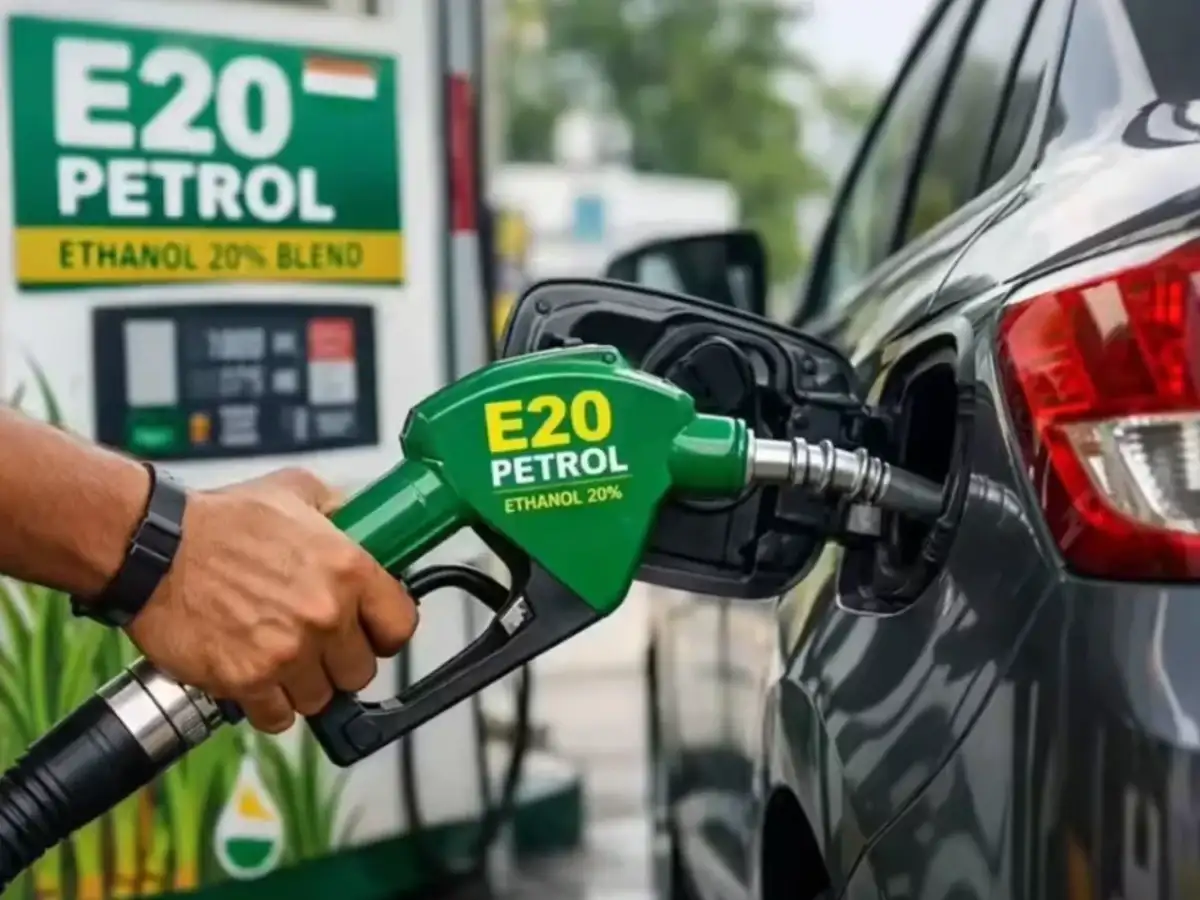
Kanpur: Amid concerns over the nationwide rollout of 20 per cent ethanol-blended petrol (E20), researchers at IIT Kanpur on Tuesday claimed that their studies found no significant drop in fuel efficiency and "no evidence" that E20 harms engines in either existing or older vehicles.
The reported findings follow Oil Ministry's clarification last week stating that E20 can reduce mileage by up to 5 per cent in some vehicles, but the impact is outweighed by several benefits, including a lower lifecycle carbon emissions.
Also Read: India's ethanol surplus spurs export push amid E20 backlash
Dhruv Raj Karana, Project Scientist of the Engine Research Laboratory in Indian Institute of Technology (IIT) Kanpur's Department of Mechanical Engineering, claimed that the fuel efficiency decrease is less than 5 per cent with the E20 fuel, according to the research conducted at the institute.
He told PTI that the up to 5 per cent decrease could be due to factors other than fuel and that a similar result can be obtained "even if back to back tests are repeated with pure petrol".
Karana further said that "extensive testing" showed that E20 does not cause engine damage, corrosion or other technical problems.
He dismissed claims circulating on social media about E20 damaging vehicles as "scientifically unfounded" and advised motorists to rely on their vehicle manufacturer's manual and the Ministry of Petroleum and Natural Gas's guidelines instead of unverified online posts.
Karana also told PTI that IIT-Kanpur's Engine Research Laboratory, headed by Professor Avinash Kumar Agarwal, has been carrying out extensive research on ethanol-blended fuels.
Also Read: E20 Petrol: Why India wants ethanol blending and what are your worries? Key questions answered
The team has also successfully tested E85 fuel, which contains 85 per cent ethanol, though such high blends require specially designed engines and compatible fuel systems.
He claimed the institute's studies also found no significant drop in fuel efficiency due to E20. Any variation in mileage, he said, is influenced more by driving habits, road conditions and vehicle maintenance than by the fuel itself.
In a detailed question-and-answer document recently issued to counter criticism of the Ethanol Blended Petrol Programme, the Ministry of Petroleum and Natural Gas said E20 was a "cleaner, higher-quality and more efficient fuel" than E10 or pure petrol and had been rolled out only after "years of scientific testing, consultations with automobile manufacturers and the expansion of domestic ethanol production".