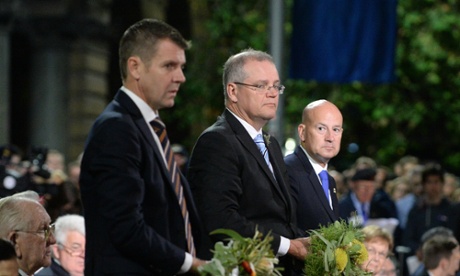
Christmas has come and gone, and with it another sticky leadership change in New South Wales. John Robertson, who unenviably took the reins of NSW Labor in the wake of Icac revelations concerning Eddie Obeid, Eric Roozendahl and Joe Tripodi, resigned, citing a loss of confidence from his colleagues.
He was finished by the information that, in 2011, his office forwarded an appeal from Sydney siege hostage-taker Man Haron Monis to the Department of Family Services, requesting that the man be allowed to visit his children on Father’s Day.
Whether Robertson really is at unusual moral fault for forwarding Monis’ appeal, heinous as the man’s crimes were, is just one of many interesting considerations. Members of parliament make representations for their constituents as a responsibility of office: if vetting were applied to every single citizen seeking help the resources required would overwhelm the business of representation.
But the reality of representative life is not as important as the reality of leadership in NSW, where failure to address internal corruption has blighted both major parties. Former Liberal leader Barry O’Farrell’s receipt of a bottle of $5,000 wine from an enthusiastic lobbyist was arguably a misjudgment of a man accustomed to wealth culture, rather than a crime on the scale of, perhaps, receiving a brown paper bag full of money from a prohibited donor.
In a state where there certainly have been more than a few brown paper bags passed around, O’Farrell, like Robertson after him, was wise enough to realise that whatever the practical context of what had transpired, symbolically, the jig was up.
As a leader, Robertson was unpopular before he was unpopular: one wonders if departure offered an opportunity to honourably abscond: Paul Keating had him pinned as a soul “blackened by opportunism” who had “torn at the entrails” of the ALP over electricity privatisation. If there’s anything worse than being leader of the Labor party in New South Wales, it’s the person who actually wants to be – and Robbo really wanted it. He was hardly eulogised on the way out.
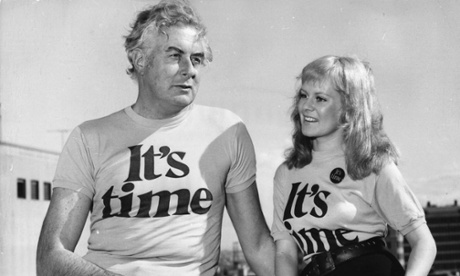
As 2014 draws to its close, true leadership seems a rare quality in Australian political life. We buried Gough Whitlam and witnessed the disastrous consequences of a federal Liberal government elected on the back of Labor leadership infighting; what political leadership looks like in this country is an implicit, ongoing question in the broader civic conversation. Whitlam’s early duumvirate and three brief years of government were enough to transform the social expectations of the nation and its character. His passing illuminated with inconvenient clarity the lack of policy ambition and moral authority in the major party leaders currently governing the nation.
Federally, Abbott and Shorten are effectively duelling sons of the same self-perpetuating political class that elevates party operators rather than activists or visionaries. Both have invested electoral fortunes in strategic negations of their opponents’ claim to leadership, rather than any Whitlamesque striving of their own.
Shorten’s excellent budget reply speech showed glimmers of sincerity, while Abbott for one moment elevated himself a true liberal above his party’s dogwhistle politics when he came out against Muslim-bashing in the wake of the Sydney Siege. But both are committed political careerists and have been since university – perhaps the tactics of the negation game are all they’ve thought to learn. The actual leadership of a community, party, even an idea is a far more challenging obligation.
Abbott realised a lifelong personal dream when he became prime minister, but his engagement with the electorate since has been a confused plunge into unpopularity. His ever-plummeting approval wasn’t inevitable: Liberal predecessors John Howard and Malcolm Fraser respectively introduced gun bans and 200,000 refugees to Australia while managing the possibility of fallout with their conservative base.
They understood that boldness wins respect. I, even I, who came of age in the push-and-shove battles against Howard’s education policies, uranium mines and Iraq adventurism, maintain admiration for the unequivocal stance he took on guns.
Political leadership operates at the intersection of policy imagination, strength and resilience, team management, insight into the political moment and the ability to communicate with appreciable sincerity. Whitlam, Fraser, Hawke, Keating and Howard possessed these talents. Rudd, to his shame, and Gillard, to her tragedy, did not.
So who might, among the Australian leaders marching their governments into 2015? Newly-elected Daniel Andrews in Victoria ran an effective campaign, but whether he can wrangle a government is as yet unknown. Colin Barnett’s comment that no-one “would notice” a GST on fresh food is indicative of his leadership style. In Queensland, Campbell Newman seems to have made a dire mistake in believing that electoral hatred of the Labor Party equates to loving his small-government agenda.
Back in NSW, 10 members of Mike Baird’s party, including the premier he replaced, have fallen foul of Icac. Yet he’s “Mr Untouchable”, “Teflon Mike” whose lead in the polls seems unassailable. After Barry O’Farrell’s resignation he made swift pronouncements about party discipline, delivered with the kind of honest communication style he also offered in public relations around the Sydney siege. His retrograde policies aside, his leadership isn’t in doubt. It’s no wonder that Robertson rescinded himself from the Labor leadership: Baird’s popularity is currently higher than O’Farrell’s was before ICAC started.
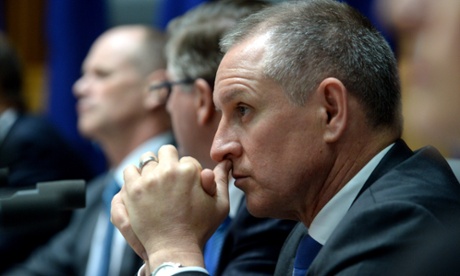
Luke Foley, who will oppose Baird in the 2015 NSW election, has at least one positive example from his own party to inform his run. He won’t have to rely on merely learning from Robertson’s mistakes.
In a Labor party riddled state-to-state with factional skirmishing, South Australia’s Jay Weatherill won his leadership credentials through victories in wars internal and external. During the 2014 state election, Weatherill stared down factional bosses in his own party who were appointing themselves to preselections under a barely-concealed assumption that Weatherill wouldn’t be premier much longer. He threatened to walk out on the state election unless party discipline was maintained. Perhaps because he meant it, the mavericks fell into line. Weatherill subsequently became only the second South Australian, after Don Dunstan, to bring a state government to four terms.
Initially winning minority government with the support of independents, the recent Fisher by-election gave Weatherill government in his own right – and with it, the unobstructed opportunity to put into place a policy agenda of creative enterprise and environmental job creation that his vulnerable state can’t afford to be without.
Those ending the year looking at the federal situation ahead in 2015, despairing of Abbott and as yet unenthusiastic about Shorten, should hold fast to a crucial, political truth: that when true leadership is present, it’s obvious to everybody.