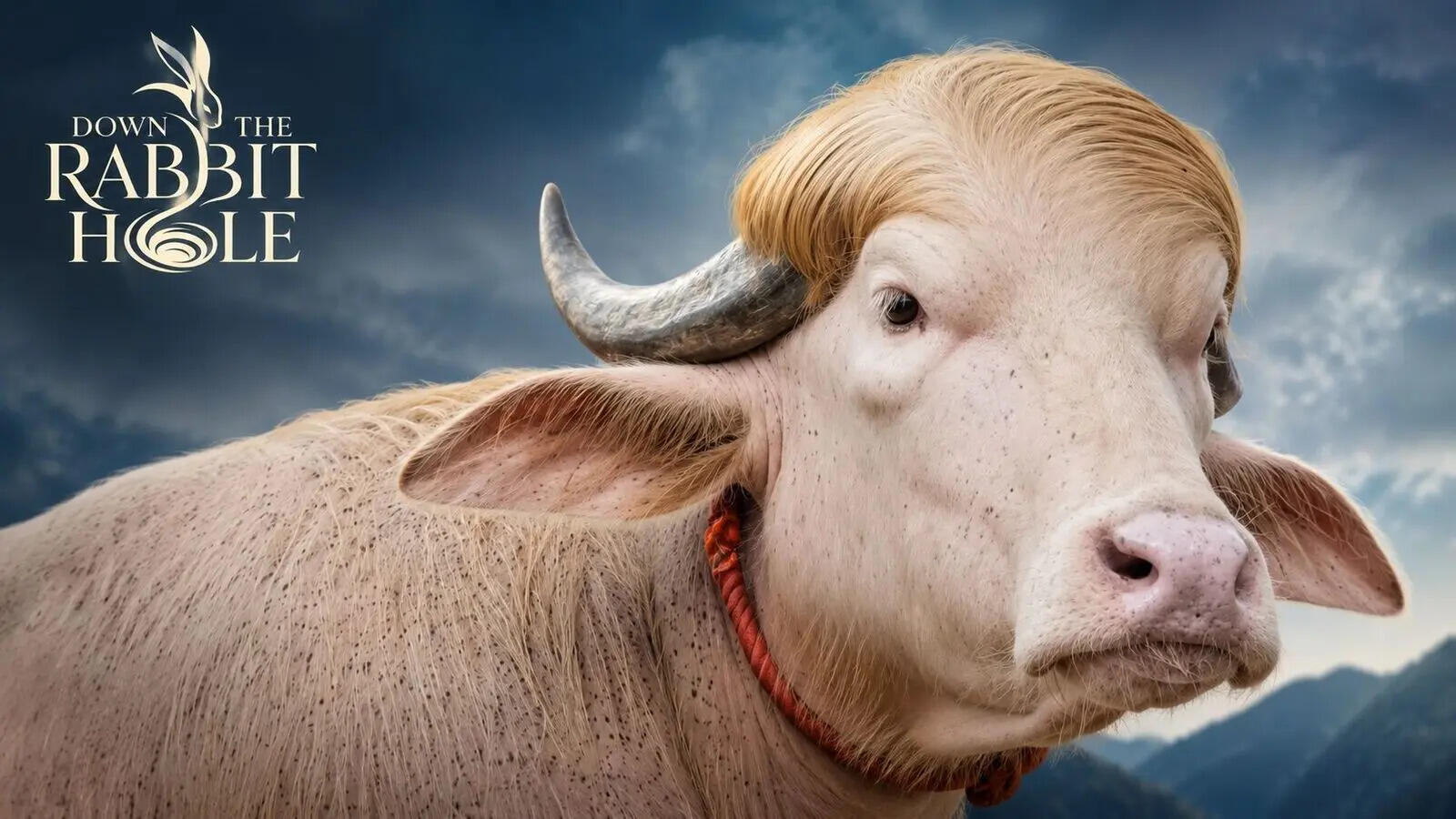
‘Donald Trump’ became a viral sensation overnight. Crowds came from afar to marvel at his visage. They could barely fathom that one like him walked the earth. They were in awe of his blond fringe and fair white skin. They marvelled at his weight. And they were in a state of shock when they learned that he might soon be sacrificed. But the fates had other plans, and the collective globe sighed in relief when he was spared.
Now, while this lede might read like one is describing the leader of the free world, one is merely doing a Yudhishthira here: Donald Trumpo jīvati iti, netā vā mahisho vā.
For those who have forgotten their Mahabharata or Sanskrit, the Donald in question is not the American president, does not eat exclusively off the McDonald’s menu, and has never bombed Iran or tanked the global economy. He is a buffalo in Bangladesh who became an overnight sensation thanks to his resemblance to Trump and is seven times heavier than his namesake.
What began as a routine Eid purchase soon became a global viral sensation. Farm owner Ziauddin Mridha said the majestic beast set him back by 1.5 million taka, or about $12,300, and he has now been compensated, with the Bangladesh government deciding to send Donald to Dhaka’s national zoo instead of letting him end up on someone’s plate.
We live in the era of viral animals, from Larry the Cat, the permanent fixture at 10 Downing Street, to Moo Deng, the cute pygmy hippo in Thailand, and Punch, the lonely monkey whose inability to make friends made the world go aww. Donald Trump the buffalo might be the latest addition to this pantheon. But long before the algorithm turned animals into celebrities, humans were already turning them into gods, omens, and pardoned prisoners.
That is where the rabbit hole begins.
Man, beast, and god
To understand why one buffalo going viral could suddenly become too meaningful to kill, one has to go back to the beginning, when animals were not content but cosmology. Long before Twitter came around, animals helped us decipher the world. We were the original monkey see, monkey do, though, to be fair to our simian cousins, they never did anything as awful as invent LinkedIn. The earliest cave paintings aren’t narcissistic selfies or breakfast pics but sketches of animals: horses, bison, aurochs, deer, lions and wild pigs.
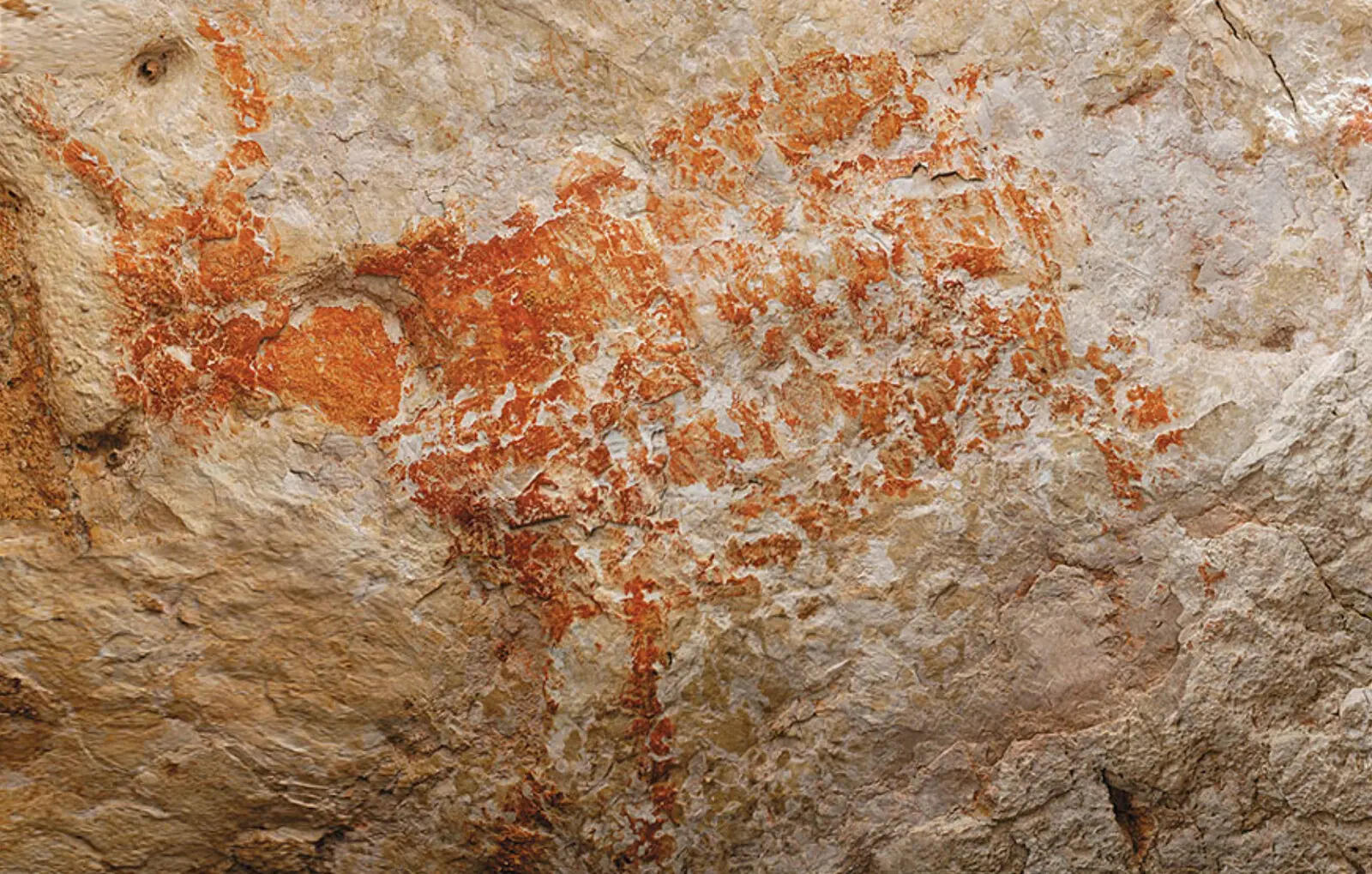
Animals were our first guides and textbooks, teaching us how to hunt, when the seasons were changing, and why communism wouldn’t work.
Animals inspired us and, in turn, manifested our first gods. The lion could stand for courage, the serpent for danger, the bull for force, and the cow for abundance. Once animals became symbols, gods were never far behind.
One of the most iconic images from the Indus Valley Civilisation is the Pashupati seal, which many historians interpret as Shiva, the lord of beasts. The horned, seated figure is surrounded by an elephant, tiger, rhinoceros, buffalo and other creatures, suggesting that one of our earliest ideas of divinity was one who could command the wildebeest like Komaram Bheem in RRR.