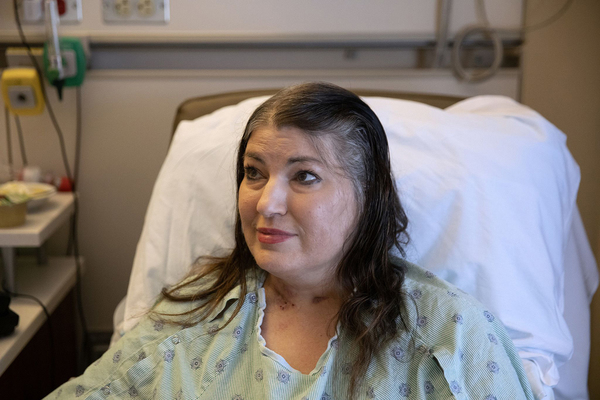
CHICAGO — At a dark moment over the summer, Rodney Wegg was forced to consider removing his wife from life support.
After testing positive for COVID-19 in July, Kari Wegg, a previously healthy nurse, worsened until she was placed on a ventilator and given a grim outlook for survival.
"Give me some more time," Wegg's doctor told her husband, offering him and their two sons a glimmer of hope.
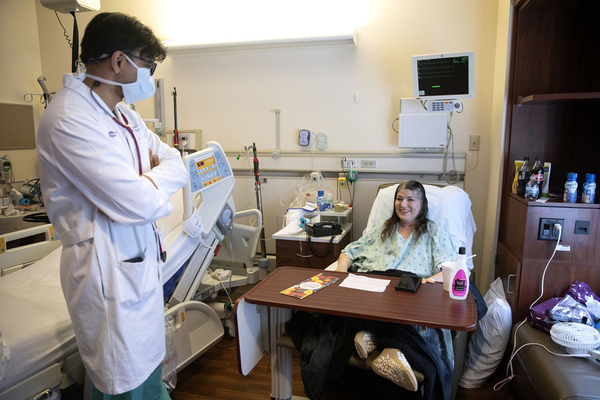
Their perseverance paid off when, months later, Wegg, a 48-year-old neonatal intensive care unit nurse, awoke as the sixth COVID-19 patient at Northwestern Memorial Hospital to receive a groundbreaking lung transplant surgery, free of the disease and breathing with two new lungs.
The double lung transplant surgery for critical COVID-19 patients, which was first performed in the U.S. at Northwestern in June, has now been done seven times at the Chicago hospital by Dr. Ankit Bharat, chief of thoracic surgery and surgical director of the Northwestern Medicine Lung Transplant Program, and a team of surgeons. The surgery is considered more difficult than other lung transplants because of the damage COVID-19 has done to the organ, Bharat said.
Despite the high-risk nature of the surgery, some transplant centers around the country have begun performing the operation. And at least one other Chicago hospital has considered doing the procedure, though the transplant surgeon warned of its difficulties. Meanwhile, calls from across the country continue to come for Northwestern, which has performed more of these surgeries at this point than any other hospital in the world, Bharat said.
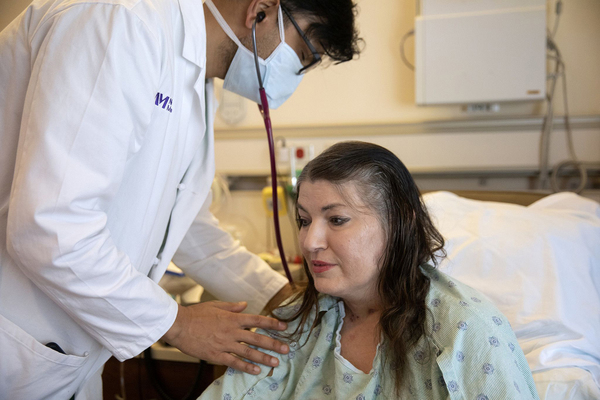
"Every day we get four to six phone calls at a minimum," Bharat said.
The requests can be disheartening because often they come from people who are too sick for the surgery. The hospital also has its own capacity limits for how many people can be accommodated.
But with at least three more patients accepted for surgery, Bharat is hopeful that the hospital has honed a procedure that can offer a last chance for otherwise terminal patients.
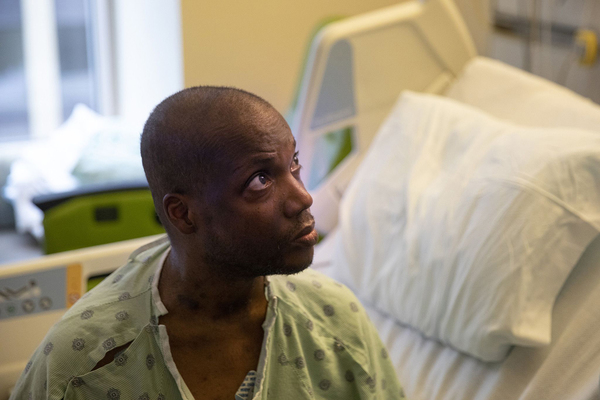
The patients have come from as close as Indiana and as far as Texas and Washington, D.C. They must temporarily relocate to Chicago for about a year after the surgery in order to be near the hospital for recovery and extensive rehab that includes building muscle and mastering walking and even more strenuous activity again.
A number of the patients have rented small apartments, and are staying connected with family and friends back home through video chats.
One of those patients is Wegg, who is from suburban Indianapolis, but was taken to Northwestern after she was approved for the surgery.
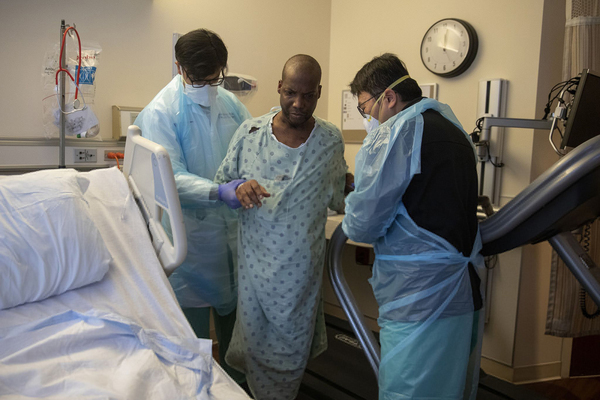
"I feel so lucky," Wegg said from her hospital bed, growing emotional.
As of Wednesday, the United States had surpassed 11.4 million COVID-19 cases since the beginning of the pandemic, with more than 248,000 deaths. Cases across the country, and in Illinois, have been surging upward.
As these most critically ill patients speak out, they have the same message for other people as cases rise to alarming levels:
Wear a mask. Wash your hands. Stay home when you can.
"With all those things, you are saving someone else's life, and even your own," Wegg said.