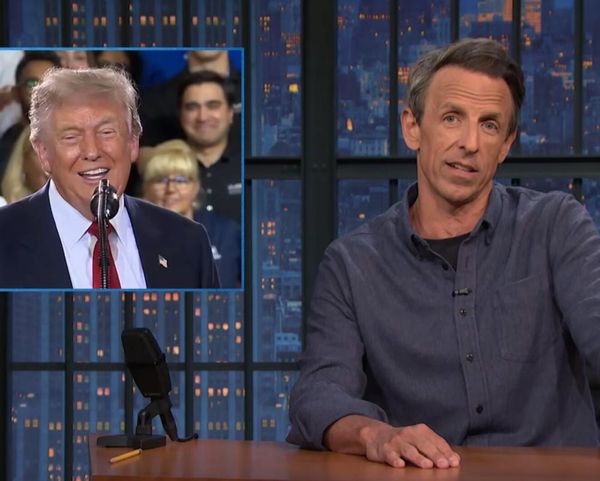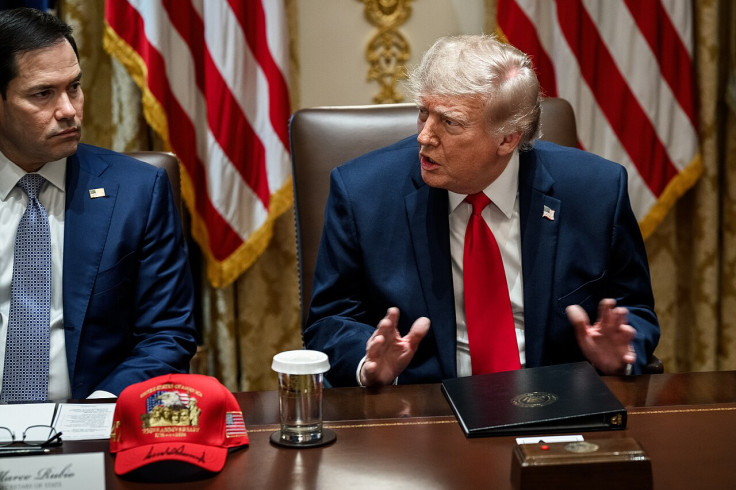
Donald Trump's apparent struggle to stay awake at a White House ceremony on Thursday, 11 June, has turned a routine ocean protections order into a very public embarrassment. The US president was signing a proclamation that rolls back marine conservation rules when cameras caught him looking groggy as North Dakota governor Doug Burgum spoke.
The move is part of Trump's wider campaign to unwind ocean protections created under previous administrations. Those safeguards had placed large stretches of US waters off limits to commercial fishing, a policy conservation groups have long defended as essential to vulnerable marine life and Trump has repeatedly attacked as a burden on the seafood industry.
Groggy Trump Moment Overshadows Lobster Rant
Footage from the event shows Trump sitting behind his desk as Burgum speaks, his eyes drooping and his head bobbing slightly as though he is struggling to stay awake. The clip spread quickly online with users mocking the 'groggy' president and questioning his stamina at a time when his health has been under intense scrutiny after a reported three-hour hospital visit for what one doctor described as a 'painful and disabling' chronic condition.
The White House did not offer a medical explanation for Trump's sleepy appearance, and there has been no fresh official update on his health beyond earlier assurances that he was in 'excellent health'.
Trump seems groggy as he listens to a question from a reporter pic.twitter.com/st6im4BsZc
— Aaron Rupar (@atrupar) June 11, 2026
The optics were not helped by the substance of the speech that preceded it. Trump used the proclamation ceremony to argue that strict marine protections had forced American consumers into absurd workarounds, claiming: 'You had to go to Japan to get a Maine lobster.'
It was a line instantly dismissed by those in Maine's powerful tourism and fishing industries, who pointed out that the state's lobster trade is very much alive and well at home. In trying to portray the US as shut out of its own waters, Trump also accused other nations of exploiting American fishing grounds while domestic fleets were supposedly sidelined.
'You weren't allowed to fish, but Canada was, Japan was,' he told the audience. 'They all came in [to] fish, but our people weren't allowed to fish there. That was put in by Barack Hussein Obama. Have you heard of him? Barack Hussein Obama and Sleepy Joe Biden, and it's a shame.'
The reference to Japan again raised eyebrows, given that the country is nowhere near the US Atlantic coast and would not, in reality, be casting nets off Maine. Still, the point landed with his supporters in the room, who applauded as he signed the document.
Trump Ocean Protection Rollback Sparks Alarm
Beneath the theatrics, the proclamation was substantial. Thursday's order reopens parts of three vast Pacific marine national monuments to commercial fishing: sections of the Mariana Trench and Papahānaumokuākea monuments, and waters between 12 and 50 nautical miles around Rose Atoll.
Created over the past two decades, these zones are among the world's most remote protected sea habitats. Environmental groups warn that industrial fishing there will damage ecosystems that shelter rare and endangered species, from deep‑sea corals to migratory fish and marine mammals.
.@POTUS signs a Proclamation to bring fishing back to the USA — Restoring commercial access to three areas of the Western Pacific Ocean! 🇺🇸 pic.twitter.com/NVrKUhQC4o
— Margo Martin (@MargoMartin47) June 11, 2026
Trump cast the move as an economic fix. He argued that the rules had 'shut down valuable fishing grounds, cost livelihoods, and increased U.S. reliance on foreign products', portraying previous administrations' protections as self‑sabotage in the global seafood market.
His Commerce Secretary, Howard Lutnick, praised the shift, saying: 'President Trump is once again delivering for American fishermen by opening prized Pacific fishing grounds with this Executive Proclamation. By restoring commercial fishing in the remote Pacific, we are creating new economic opportunity for coastal communities and restoring U.S. seafood competitiveness.'
Conservationists counter that this version of 'competitiveness' trades long‑term ocean health for short‑term gains. They say the monuments act as nurseries that replenish fish stocks far beyond their borders, and that eroding them risks undermining the very industry Trump claims to champion. The proclamation does not address those scientific concerns in detail, relying instead on broad claims about the benefits of access.
Politics, Health Questions And A Sleepy Optic
Trump's allies have tried to spotlight the economic message, pointing to struggling coastal communities and arguing that Washington bureaucrats overreached when they locked down large swathes of ocean. Yet the dominant images from the day were not of triumphant fishermen but of a president who looked tired, drifting as another Republican governor made his case.
Online, critics spliced together the 'go to Japan for lobster' line with the brief eyes‑closed moment, painting it as a metaphor for a White House out of touch with reality and running on fumes. Supporters pushed back, calling the focus on his apparent drowsiness petty and pointing to the text of the proclamation as proof he was still prioritising industry.
What the video did underline, though, is how little room there is now for any misstep in public, especially for a president who has already had to fend off questions about age, health and capacity. In that sense, one groggy minute at a desk may end up being remembered far longer than the complex, technical changes to ocean law he signed at the same time.