We usually think of organs as imposing, magnificent instruments that fill the sound-spaces of churches and cathedrals. But throughout their history they also played an integral role in secular and domestic music-making, until they were supplanted in the 19th century by the cheaper reed organ or harmonium. Photograph: Dani Tagen/Horniman Museum and Gardens
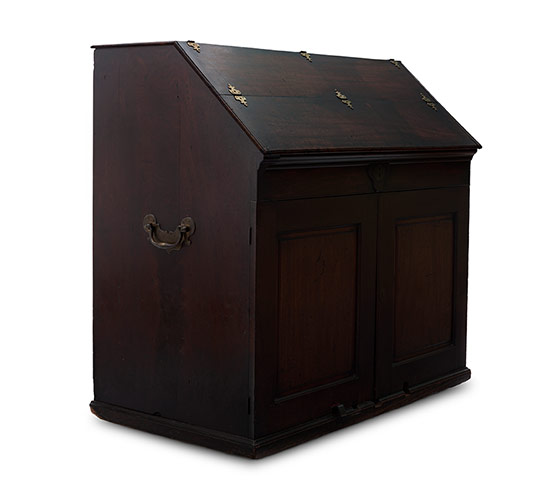
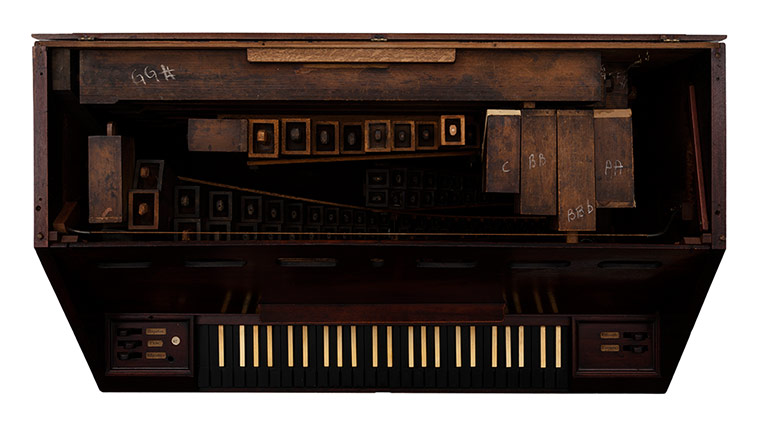
This rare bureau organ, dated 1764, was made in London by John Snetzler, fêted in his own day, and even into the 19th century, for the quality of his work. On first glance it appears to be an ordinary writing desk with a folding lid. Only on lifting the cover is its true function revealed. A miracle of efficient design, the compact organ-case holds five stops, allowing all kinds of music, both solo and ensemble, to be played on it. Photograph: Dani Tagen/Horniman Museum and Gardens

Musical instruments can have multiple lives. If they were unusually well-made, decorative, fine in tone, or beloved by a player, they might be modified or updated rather than replaced. This chamber organ could well number among such favoured objects. Its visible pipework and keyboard appear to be 17th century, whereas its exterior case decoration and interior pipework bear the hallmarks of 19th and 20th century work. A remarkable survivor, its original provenance remains mysterious, although it seems to have served, at different times, both secular and ecclesiastical masters. Photograph: Horniman Museum and Gardens
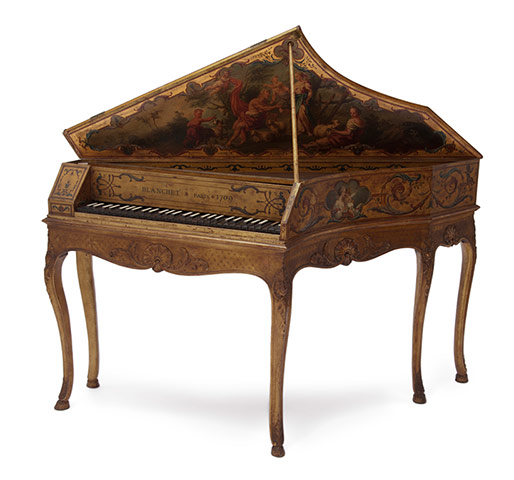
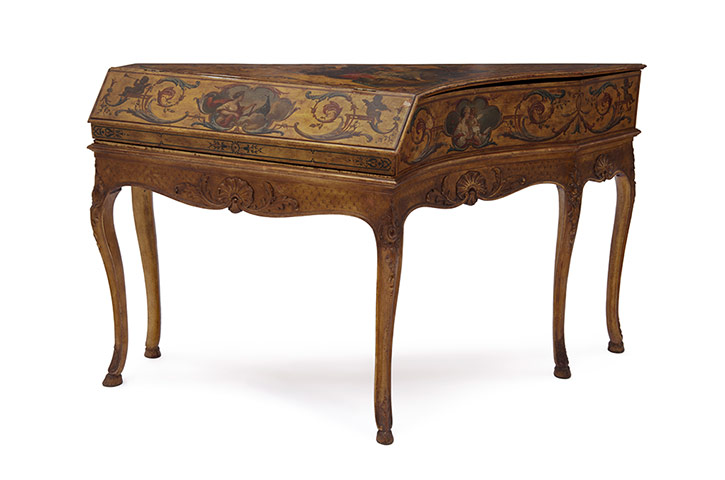
Eighteenth-century French keyboards, in contrast to English ones, often featured painted and gilded finishes. Such lavishly decorated instruments came to symbolise the excesses of the ruling class, and many perished during the Revolution together with their aristocratic owners. Surviving examples are rare. The Blanchet family were among the most prolific harpsichord makers in 17th and 18th century France. Nicholas Blanchet’s 1709 inscription states that this spinet was given leather plectra, which produced a less percussive sound than the more usual bird’s quill. Photograph: Horniman Museum and Gardens
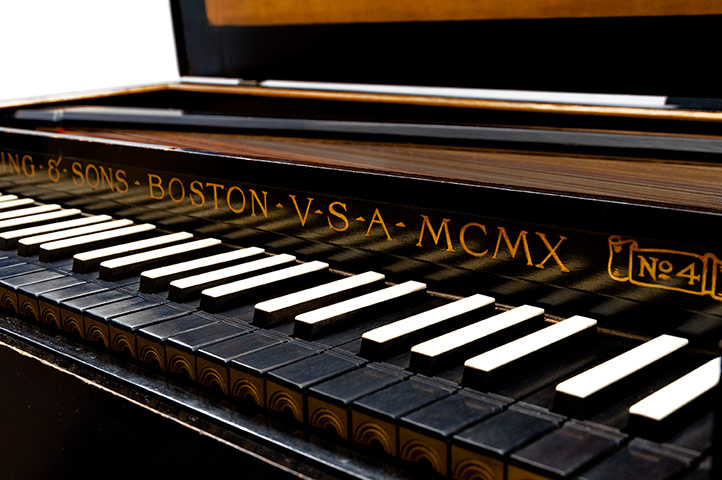
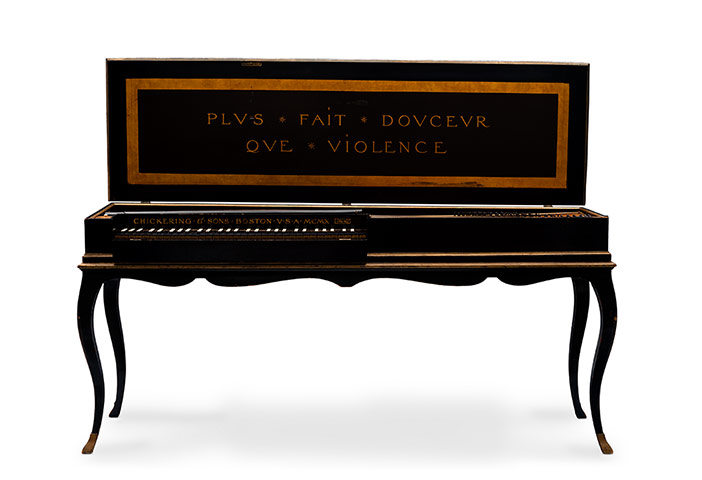
Arnold Dolmetsch, instrument maker and pioneer of the early music revival, was particularly captivated by the clavichord. Although extremely quiet, its music exploits a wide palette of emotions from the gentlest to the most violent. This clavichord, inscribed with two dates, 1904 and 1910, was made during Dolmetsch’s period of collaboration with piano makers Chickering in Boston, USA. It belonged to an American collector, Edward Perry Warren, who moved to Lewes, Sussex where he cultivated an all-male circle of aesthetes called the Lewes House Brotherhood. Photograph: Dani Tagen/Horniman Museum and Gardens
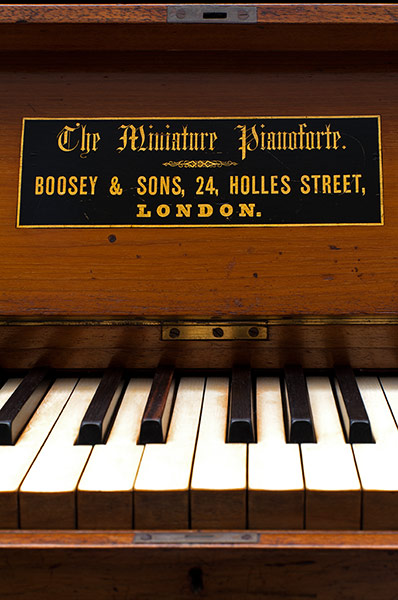
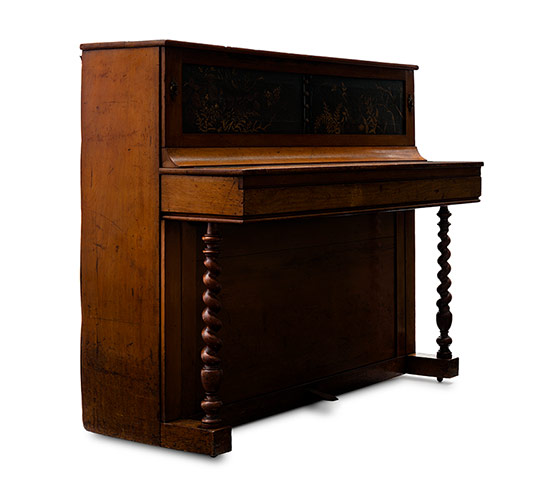
Photograph: Dani Tagen/Horniman Museum and Gardens
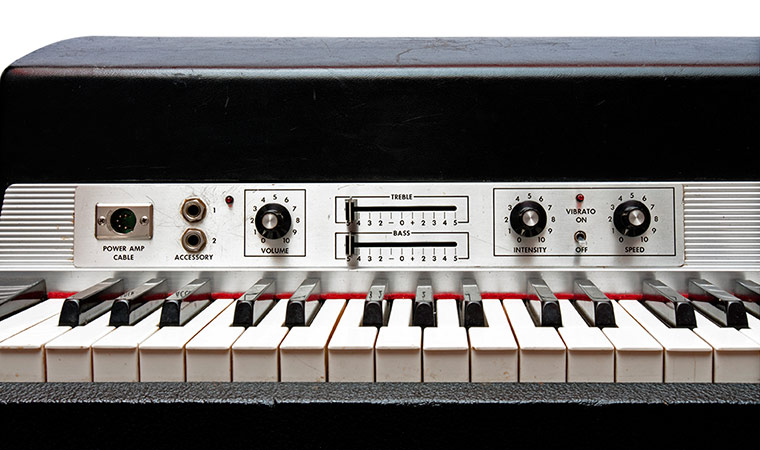
During the second world war, Harold Rhodes was asked to develop a music therapy programme for convalescing GIs. Lacking a supply of pianos, he devised a kit using surplus aeroplane parts that soldiers could assemble and play. After the war, he founded the Rhodes Piano Corporation, later teaming up with Leo Fender who had an established reputation making electric guitars. When CBS bought out Fender in 1965, Rhodes continued on his own developing new designs for the electric piano, including this 73-note suitcase model. Unlike today’s electronic keyboards, these electro-mechanical pianos retained the acoustic piano’s defining feature of hammers hitting strings. Photograph: Horniman Museum and Gardens