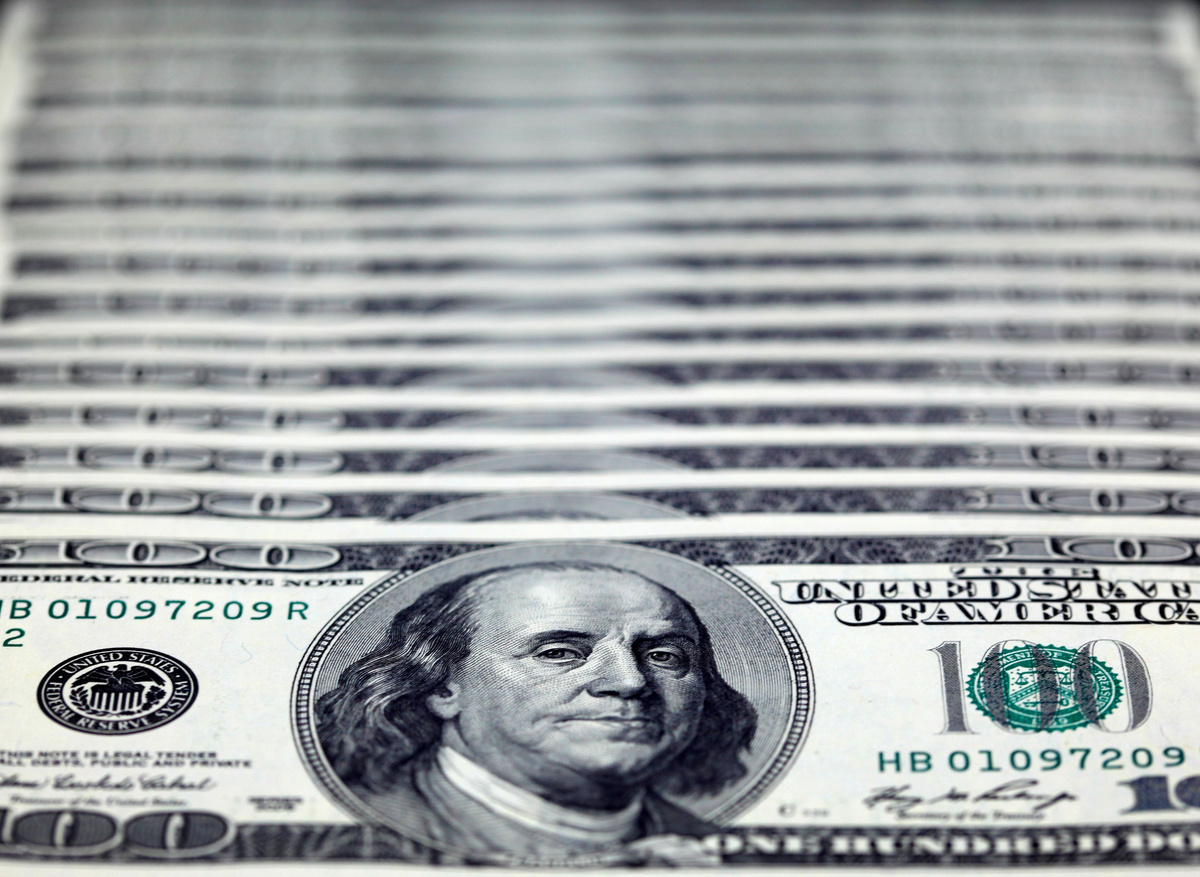
The dollar edged lower against a basket of currencies on Friday, paring some of the week's gains built on increased caution over a global surge in coronavirus cases and fading prospects for a U.S. stimulus package before the Nov. 3 election.
The greenback pared some of the day's losses after strong U.S. retail sales data helped assuage concerns about the health of the U.S. consumer.
The U.S. dollar index was 0.1% lower at 93.676. The index is up 0.7%, for the week, its best weekly gain in three weeks.
Fresh restrictions to combat COVID-19 have been introduced across Europe, and the U.S. Midwest is battling spikes in new cases, threatening to derail the country's economic recovery from the coronavirus shock.
U.S. relief plans remain bogged down in a three-way negotiation between the White House, Senate Republicans and House Democrats.
The U.S. budget deficit hit a record $3.132 trillion during fiscal 2020, more than triple the 2019 shortfall, as a result of massive coronavirus rescue spending, the U.S. Treasury said on Friday.
"Market optimism was punctured this week to the benefit of the greenback amid a quartet of concerns over the virus, stimulus, the U.S. economy and the fast-approaching presidential election," said Joe Manimbo, senior market analyst, at Western Union Business Solutions in Washington.
The safe-haven Japanese yen was headed for a weekly gain of 0.2% against the greenback as investor appetite for safe haven assets remains strong.
U.S. retail sales increased more than expected in September.
"The unexpectedly strong 1.9% rise in retail sales last month suggests the economy was carrying more momentum into the fourth quarter than anticipated, defying fears that the expiry of enhanced unemployment benefits in the summer would harm the economy," Michael Pearce, a senior U.S. economist at Capital Economics, said in a note.
"But with new coronavirus infections on the rise, we are not rushing to revise up our forecast that GDP growth will slow to 4% annualised in the fourth quarter," he said.
Sterling, erased the bulk of its early gains to trade slightly higher on the day in a choppy session on Friday, after British Prime Minister Boris Johnson told businesses to get ready for a no-deal Brexit.
(Reporting by Saqib Iqbal Ahmed; Editing by Marguerita Choy and Tom Brown)