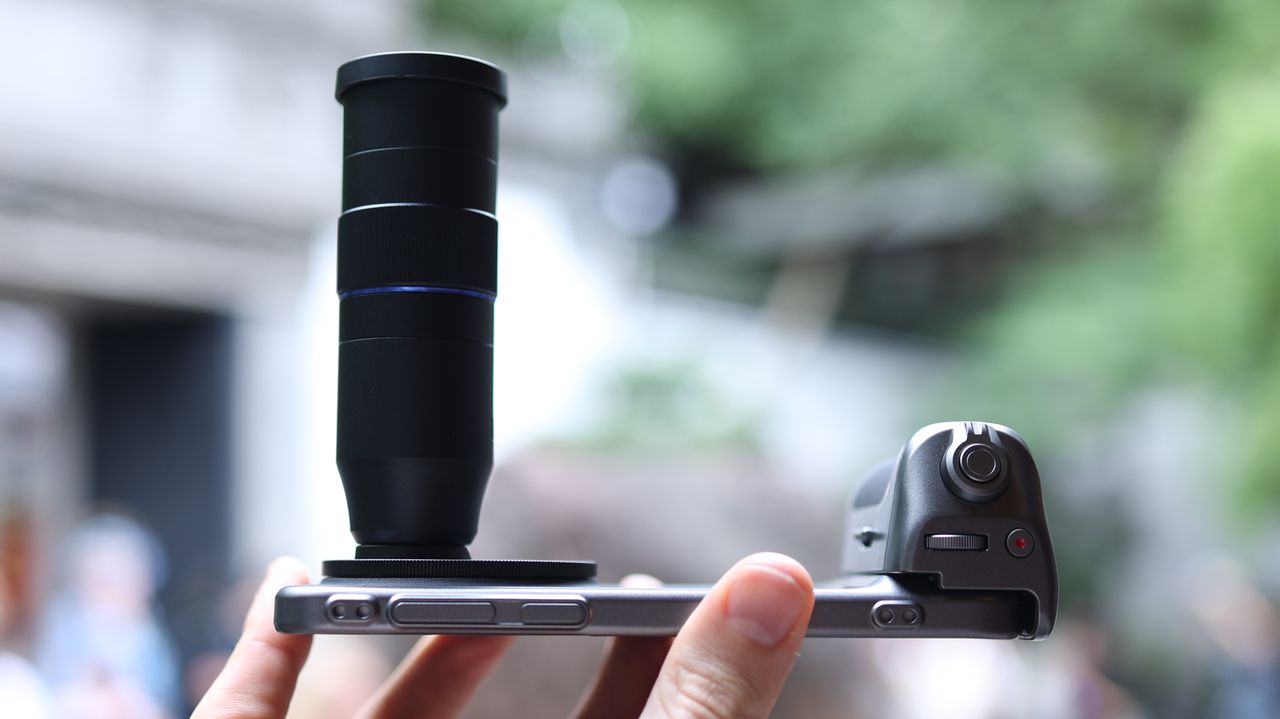
In the last year, we’ve seen two big flagship launches – Vivo’s X300 Series and Oppo’s Find X9 Pro – both arrive with optional bolt-on telephoto adapters. These are physical glass lenses that clip onto the phone to extend its reach.
These aren’t cheap novelty third-party clip-ons. They’re branded, color-matched, optically corrected accessories co-developed with serious lens makers (Zeiss for Vivo, Hasselblad for Oppo). They are built into the native camera apps, they have coatings, and even tripod mount accessories.
Vivo is sporting a Zeiss-designed 2.35x telephoto converter for the X300 and X300 Pro, a continuation of the snap-on extender system it debuted with the X200 Ultra, and now pitched as part of a full “photographer’s kit” that also includes a grip and filter ring.
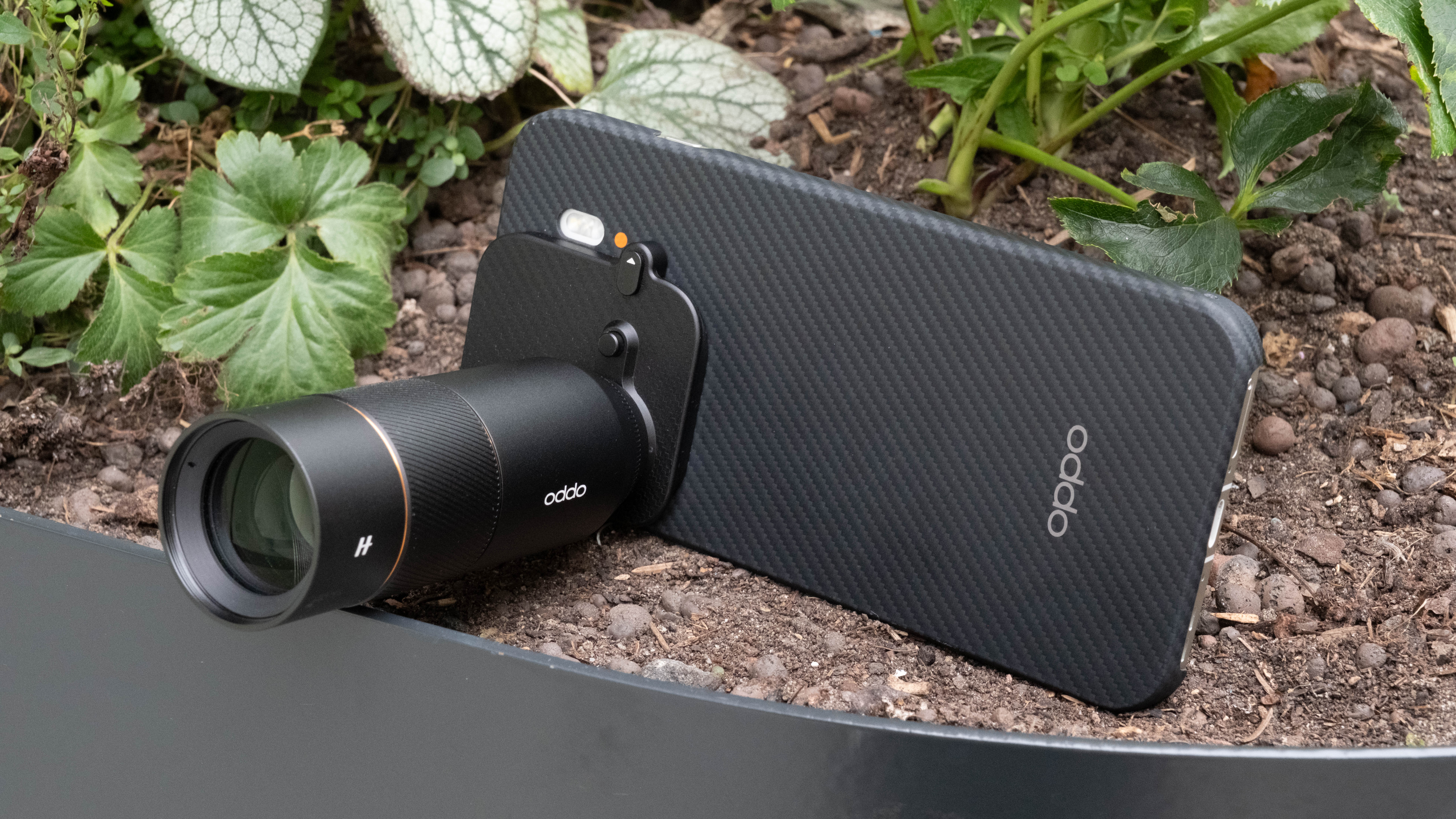
Oppo is doing almost the exact same thing. Alongside the new 200MP telephoto sensor in the phone, it’s Hasselblad Teleconverter clip-on optical extender (about 3.28x) mounts over the phone’s existing telephoto camera via a special case and pushes the effective focal length out toward classic bridge camera territory, extending the range from a “lossless” 230mm–920mm equivalent focal length.
Novelty or necessity?
For the best part of the last decade, the camera system has been the main thing separating the top smartphones, thus smartphone camera design has become an arms race. We have seen the introduction of larger sensors, brighter apertures, folded periscope optics, sensor-shift stabilization, multi-frame fusion, and AI upscaling. But phones are still phones. You can’t defy physics, and bigger optics mean brighter, cleaner, sharper photos.
You can’t fit a large sensor and interchangeable lens mount on a phone and still have it slip into a back pocket. Manufacturers have already worked hard to squeeze periscope modules and 200MP sensors into the back of the device without making the camera bulge ridiculous. But with chunky camera bumps like on the Vivo X300 or Xiaomi 15 Ultra, we are clearly running right up against the physical limits of what fits inside a pocketable slab.
External teleconverters neatly dodge that barrier. Instead of redesigning the entire phone around a longer periscope lens, which would make the handset comically thick, brands can ship a normal-ish flagship and upsell a modular “telephoto kit” to the enthusiasts who actually need that reach, as most people will never shoot wildlife or sports at 800mm equivalent.
But selling these kits is also an implicit admission that, for certain shots, even with "lossless" zoom and AI enhancements, the phone alone isn’t enough anymore – you need to leverage additional glass.
Does that mean phones are done innovating internal smartphone zoom cameras? Far from it. We are only just seeing the first 200MP sensors make their way into devices, which combine those high-resolution pixel counts into better zoom, and it still has a lot of headroom to develop. And there is still the growing shift to AI-assisted photography, which can enhance images, or just straight-up invent what optics can’t manage to capture clearly.
But in terms of pure unadulterated optical reach – the ability to get clean, stabilized, optically magnified shots of something half a sports pitch away – you might find over the next few years it is going to become increasingly commonplace to reach for a telephoto adapter in your pocket.
You might also like...
For more, check out our picks for the best Android phones for photography and the best camera phones.